Introduction
What you drink throughout the day matters nearly as much as what you eat when it comes to managing chronic inflammation. Many commonly consumed beverages — sugary sodas, sweetened juices, energy drinks, and commercial flavored coffees — are among the most consistently pro-inflammatory items in the modern diet. At the same time, a number of beverages have been extensively studied for their ability to reduce inflammatory markers, protect cells from oxidative damage, and support the biological systems that regulate the immune response. Because beverages are consumed multiple times daily, the cumulative anti-inflammatory or pro-inflammatory effect of beverage choices is substantial. Improving your drink choices is one of the most leveraged dietary changes you can make.
Why Your Beverage Choices Affect Inflammation
Sugar-sweetened drinks directly elevate blood glucose and insulin levels, triggering inflammatory cytokine release. Anti-inflammatory beverages deliver polyphenols, antioxidants, and anti-inflammatory compounds directly into the bloodstream, where they can modulate inflammatory signaling. The frequency with which beverages are consumed — far more often than individual foods — makes their cumulative impact on the body’s inflammatory environment significant and often underappreciated.
10 Best Anti-Inflammatory Drinks
1. Green Tea
Green tea is the single most evidence-supported anti-inflammatory beverage available. Its primary anti-inflammatory compound, EGCG, is one of the most potent natural inhibitors of NF-kB — the master switch of inflammatory gene expression — and has been shown to reduce levels of CRP, TNF-alpha, and multiple other inflammatory markers in clinical studies. Green tea also contains L-theanine, which reduces cortisol and supports a calmer physiological stress response, indirectly reducing stress-related inflammation.
Population studies from East Asia consistently show associations between regular green tea drinking and lower rates of inflammatory diseases, cardiovascular disease, and neurodegenerative conditions. Drinking two to four cups of green tea per day provides a meaningful daily anti-inflammatory dose.
2. Tart Cherry Juice
Tart cherry juice has earned significant scientific attention for its specific anti-inflammatory and pain-reducing properties. Its anthocyanin concentration is among the highest of any commonly consumed fruit product, and its inhibition of COX-1 and COX-2 enzymes — the same targets as ibuprofen — has been demonstrated in controlled clinical studies. Research has found that drinking tart cherry juice reduces post-exercise muscle inflammation, lowers gout attack frequency by reducing uric acid, and decreases joint pain in osteoarthritis.
Choosing unsweetened tart cherry juice or a small amount of concentrate diluted with water provides the most therapeutic effect without added sugar.
3. Golden Milk (Turmeric Latte)
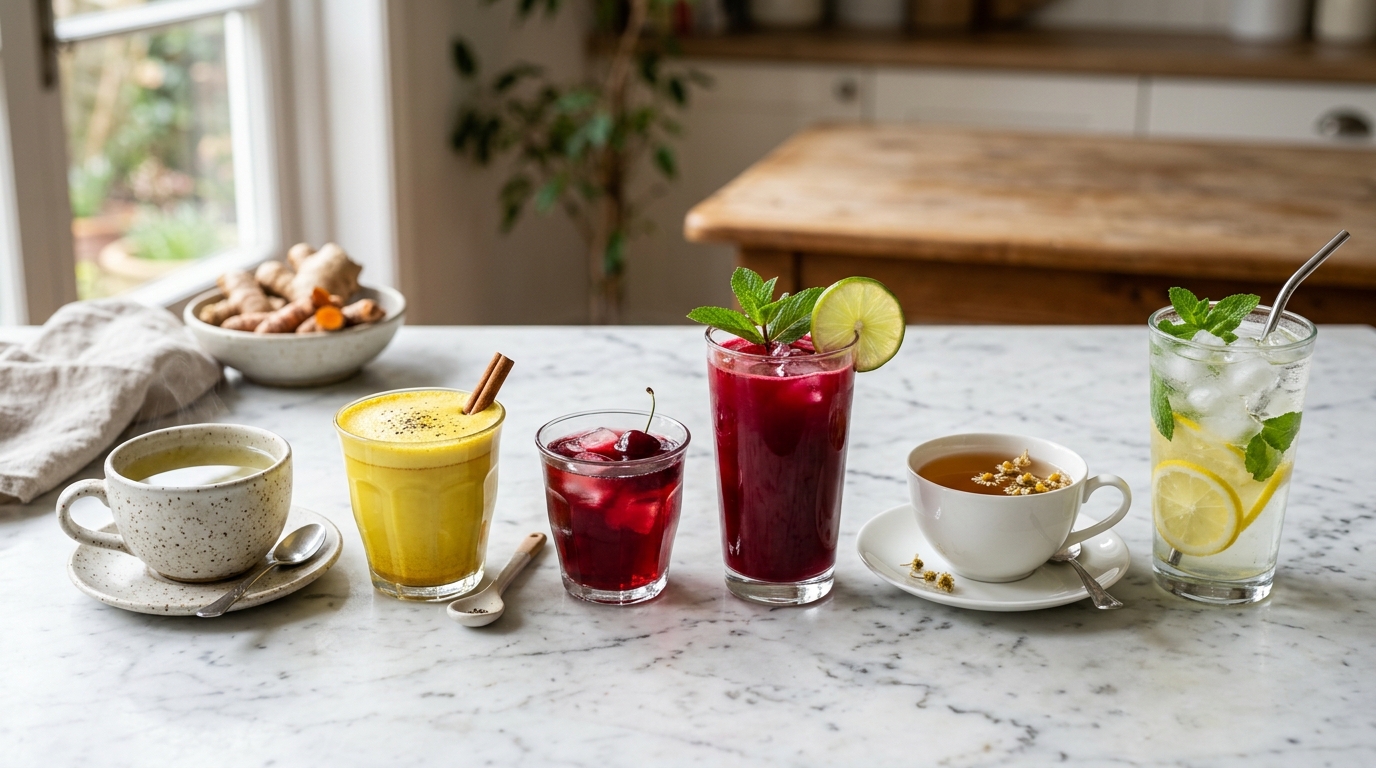
Golden milk — a warm drink made with milk or plant-based milk, turmeric, black pepper, ginger, and sometimes cinnamon and honey — delivers a direct therapeutic dose of curcumin in an enjoyable and comforting format. The fat in milk improves curcumin absorption, while piperine from black pepper enhances it by up to 2,000 percent, making golden milk one of the most bioavailable curcumin delivery vehicles available through everyday food.
Drinking golden milk daily has been associated in clinical studies with reductions in CRP and other inflammatory markers. The combination of turmeric, ginger, and cinnamon provides a broad-spectrum anti-inflammatory effect that makes this drink an excellent daily ritual.
4. Ginger Tea or Ginger Water
Fresh ginger brewed as a tea or infused in cold or warm water creates one of the most potent anti-inflammatory beverages from a simple whole ingredient. Ginger tea has been shown in clinical studies to reduce CRP and IL-6 — two primary markers of systemic inflammation — when consumed regularly. It is also beneficial for reducing nausea, improving digestion, and supporting circulation.
A cup of hot water with two to three thick slices of fresh ginger steeped for ten minutes is one of the simplest and most effective anti-inflammatory drink preparations available.
5. Water
Plain water is the most fundamental anti-inflammatory drink — not because it contains specific anti-inflammatory compounds, but because adequate hydration is essential for the kidney’s ability to filter and excrete inflammatory metabolites, for maintaining blood volume that supports efficient immune cell circulation, and for the proper function of all cellular processes that regulate inflammation. Chronic mild dehydration increases concentrations of inflammatory markers in the bloodstream.
Drinking 8 to 12 cups of water per day maintains the hydration status needed for optimal inflammatory regulation. Infusing water with lemon slices, cucumber, fresh mint, or berries adds polyphenols and makes plain water more appealing.
For a broader picture of how beverages fit into an anti-inflammatory lifestyle, you may also want to read our guide on Anti-Inflammatory Diet for Beginners.

6. Bone Broth
Bone broth made from simmering animal bones extracts collagen, gelatin, glucosamine, and amino acids including glycine and proline that have anti-inflammatory and gut-supportive properties. Glycine in particular has been shown to inhibit the activation of immune cells that produce inflammatory cytokines and to reduce intestinal permeability — a key driver of systemic inflammation.
Consuming one to two cups of bone broth daily as a warm drink provides these benefits in an easy, satisfying format. Its anti-inflammatory amino acid content and support for gut barrier integrity have meaningful scientific backing.
7. Pomegranate Juice
Pomegranate juice is one of the most potent sources of anti-inflammatory polyphenols available in beverage form. Its punicalagins and ellagic acid are metabolized by gut bacteria into urolithins — powerful anti-inflammatory compounds. Clinical studies have found that daily pomegranate juice consumption reduces CRP, IL-6, and other inflammatory markers in populations with high baseline inflammation.
Choosing 100 percent pure pomegranate juice without added sugar provides the most therapeutic benefit.
8. Beet Juice
Beet juice is rich in betalains — the red-violet pigments that give beets their distinctive color — and nitrates that convert in the body to nitric oxide. Betalains have demonstrated anti-inflammatory properties, reducing COX-2 enzyme activity and inflammatory cytokine production. Research has shown that regular beet juice consumption reduces blood pressure, improves exercise performance, and reduces markers of cardiovascular inflammation.
Drinking 8 to 12 ounces of beet juice per day provides these benefits, though the earthy flavor may benefit from blending with apple juice or ginger for palatability.
9. Chamomile Tea
Chamomile contains apigenin, luteolin, and quercetin — flavonoids that inhibit the release of inflammatory histamines, reduce COX-2 activity, and modulate immune responses. Chamomile tea’s ability to reduce gut inflammation and calm intestinal spasms makes it particularly beneficial for those with digestive inflammation. Its mild anxiolytic effects also reduce stress-related inflammatory signaling, making it an excellent evening drink that combines anti-inflammatory and relaxation benefits.
10. Lemon Water
Warm lemon water consumed in the morning provides vitamin C — an essential water-soluble antioxidant that reduces inflammatory markers and supports immune function — along with d-limonene, a compound in lemon peel that has demonstrated anti-inflammatory and digestive-supportive properties. Even a simple habit of squeezing half a lemon into warm water each morning is an easy and enjoyable entry point to anti-inflammatory beverage habits.
Conclusion
The drinks you choose throughout the day add up to a significant cumulative effect on your body’s inflammatory environment. Replacing just one or two pro-inflammatory beverages — a soda, a sweetened juice, or a commercial energy drink — with any of the anti-inflammatory drinks discussed here represents a meaningful positive change. Green tea, tart cherry juice, golden milk, ginger tea, and plain water are among the most accessible and evidence-supported options for consistent daily use. Building a daily rotation of these beverages creates a reliable anti-inflammatory input throughout the day that complements the anti-inflammatory foods in your diet and supports long-term health from the inside out.
Frequently Asked Questions
Is coffee anti-inflammatory? Moderate coffee consumption — two to four cups per day — is actually associated with lower inflammatory markers in many large studies, likely due to its chlorogenic acid and other polyphenols. However, adding large amounts of sugar or commercial creamers reverses these benefits.
How much green tea should you drink per day for anti-inflammatory benefits? Research suggests that two to four cups per day provides meaningful anti-inflammatory benefits through EGCG. Decaffeinated green tea retains most of its EGCG while eliminating caffeine for those sensitive to stimulants.
Can drinking anti-inflammatory beverages replace an anti-inflammatory diet? No. Anti-inflammatory drinks are beneficial additions to a healthy diet, not substitutes for it. The most meaningful results come from combining anti-inflammatory beverages with a diet rich in vegetables, fatty fish, whole grains, legumes, and healthy fats.
Related Articles
- 10 Best Anti-Inflammatory Foods to Eat Daily
- Anti-Inflammatory Diet for Beginners
- Best Anti-Inflammatory Breakfast Foods