Introduction
After the age of 50, maintaining brain health becomes one of the most important aspects of overall wellbeing. Cognitive decline does not have to be inevitable, and a growing body of research shows that what you eat in your 50s, 60s, and beyond has a profound effect on how well your brain ages. From memory and processing speed to the risk of neurodegenerative conditions like Alzheimer’s disease, dietary choices are among the most modifiable factors influencing brain health in the second half of life. The right foods provide the antioxidants, healthy fats, vitamins, and minerals that the aging brain needs to stay sharp, resilient, and protected.
Why Brain Health Becomes More Critical After 50
The brain undergoes natural changes with age. Neuronal communication slows, oxidative stress accumulates, inflammation increases, and the blood-brain barrier becomes more permeable over time. These changes contribute to the gradual decline in memory, processing speed, and cognitive flexibility that many people begin to notice in their 50s. However, research from major studies including the MIND diet study has shown that dietary patterns rich in vegetables, berries, whole grains, fish, and healthy fats are associated with significantly slower rates of cognitive decline. The brain remains highly responsive to nutrition even in later years, making the investment in a brain-healthy diet one of the most impactful decisions an older adult can make.
10 Best Foods for Brain Health After 50
1. Fatty Fish
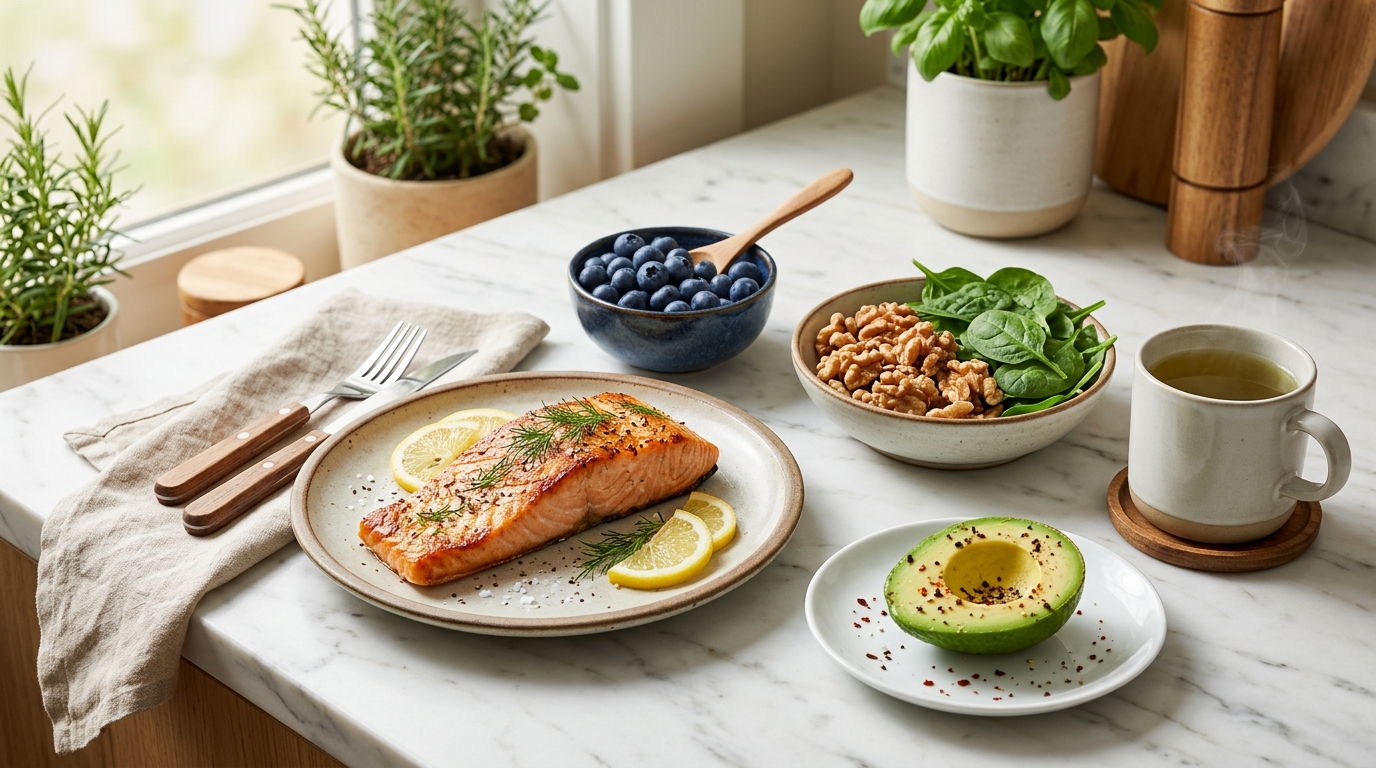
Fatty fish remains the cornerstone dietary recommendation for brain health at any age, but it becomes even more important after 50. DHA, the primary omega-3 fatty acid found in fish like salmon, mackerel, and sardines, makes up a significant portion of the brain’s structural fat. As the brain ages, maintaining DHA levels is critical for preserving the integrity of neuronal membranes, supporting communication between brain cells, and reducing neuroinflammation.
Research has consistently linked higher dietary fish consumption with better memory performance and a reduced risk of cognitive decline in older adults. Adults over 50 who eat fatty fish at least twice a week tend to show better preservation of brain volume in areas associated with memory. Grilled or baked salmon, canned mackerel, and sardines on whole grain crackers are all practical options.
2. Blueberries
Blueberries have been called one of the best dietary tools for aging brains, and the research supports this strongly. Their high anthocyanin content — the pigments that give them their deep blue color — has been shown to improve communication between neurons, reduce oxidative stress in brain tissue, and even promote the growth of new brain cells in animal studies.
A landmark study from Harvard found that women who consumed two or more servings of blueberries per week experienced cognitive aging that was approximately two and a half years slower than those who consumed few or no berries. For adults over 50, incorporating blueberries into the daily diet as a regular habit rather than an occasional treat is a practical step with potentially significant long-term benefits.
3. Leafy Green Vegetables
The MIND diet, one of the most extensively researched dietary patterns for brain health, specifically recommends eating leafy green vegetables at least six times per week. Greens such as spinach, kale, collards, and Swiss chard are rich in vitamins K, E, folate, and lutein — all of which have been associated with slower cognitive decline in older adults.
A study published in Neurology found that adults who consumed one serving of leafy greens daily had cognitive abilities equivalent to those of people approximately 11 years younger than those who rarely ate greens. The combination of nutrients in leafy greens works synergistically to reduce neuroinflammation, support myelin integrity, and protect against the oxidative damage that accumulates in the aging brain.
4. Walnuts
Walnuts deserve special recognition among nuts for their brain-protective properties. They contain ALA omega-3 fatty acids, polyphenols, and vitamin E — a combination that targets multiple mechanisms of brain aging simultaneously. Polyphenols in walnuts reduce inflammation and oxidative stress, while vitamin E acts as a fat-soluble antioxidant that specifically protects cell membranes, including those of neurons.
A study from UCLA found that walnut consumption was associated with significantly better cognitive function across multiple measures in a large representative US population. For adults over 50, consuming about one ounce of walnuts — roughly a small handful — daily is a simple habit with meaningful cognitive benefits.
5. Turmeric
Turmeric is one of the most researched spices for brain health, primarily due to its active compound curcumin. Curcumin has potent anti-inflammatory and antioxidant effects, and it has been shown in research to cross the blood-brain barrier, where it can directly reduce amyloid plaques — one of the hallmark pathological features of Alzheimer’s disease.
Studies have also shown that curcumin may help clear abnormal protein aggregates in the brain and support the growth of new neurons through its effects on brain-derived neurotrophic factor (BDNF). Adding turmeric to soups, roasted vegetables, or warm milk with black pepper (which enhances curcumin absorption) is a practical way to incorporate this powerful compound into daily meals.
For more guidance on anti-inflammatory foods that also benefit the brain, you may want to explore our guide on 10 best anti-inflammatory foods to eat daily.

6. Extra Virgin Olive Oil
Extra virgin olive oil is a cornerstone of the Mediterranean diet, which is consistently ranked as one of the most beneficial dietary patterns for brain health and longevity. It is rich in oleocanthal, a polyphenol that has been shown to activate mechanisms that clear amyloid proteins from the brain, and in oleic acid, a monounsaturated fat that supports the structural integrity of brain cell membranes.
Olive oil also has potent anti-inflammatory properties that help reduce the chronic low-grade inflammation that accelerates brain aging. Using extra virgin olive oil as the primary cooking fat and salad dressing base is one of the most impactful dietary swaps an adult over 50 can make for long-term brain health.
7. Eggs
Eggs provide a combination of nutrients that are particularly valuable for the aging brain. Choline, one of the most important of these, supports the production of acetylcholine, a neurotransmitter that declines significantly with age and is closely linked to memory and learning capacity. Adequate choline intake becomes more important as natural levels of acetylcholine decline in the aging brain.
Eggs also provide vitamins B6, B12, and folate, which together help lower homocysteine — an amino acid that, at elevated levels, is associated with increased risk of brain atrophy and cognitive decline in older adults. Including eggs regularly in the diet of adults over 50 provides a cost-effective and highly bioavailable source of these critical brain nutrients.
8. Beans and Legumes
Beans, lentils, and chickpeas are excellent foods for brain health after 50 because they provide a combination of complex carbohydrates, fiber, protein, and B vitamins that support stable blood sugar and sustained cognitive energy. Stable blood glucose levels are particularly important for the aging brain because neurons are highly dependent on a consistent glucose supply for normal function.
The fiber in legumes also feeds beneficial gut bacteria, supporting the gut-brain axis — the bidirectional communication pathway between the intestinal microbiome and the brain. Research increasingly suggests that a healthy gut microbiome is an important contributor to cognitive health and mood regulation in older adults.
9. Green Tea
Green tea provides both immediate and long-term benefits for the aging brain. In the short term, the combination of caffeine and L-theanine supports alertness and calm focus. Over the long term, the EGCG in green tea has been shown in research to reduce the accumulation of beta-amyloid and tau proteins — the two main pathological hallmarks of Alzheimer’s disease.
Population studies from Japan, where green tea consumption is high, have found that regular green tea drinkers have lower rates of cognitive decline and a reduced risk of dementia. Drinking two to three cups of green tea daily is a practical way for older adults to take advantage of these neuroprotective benefits.
10. Dark Berries and Pomegranate
Beyond blueberries, other dark-colored berries including blackberries, raspberries, and strawberries also provide powerful antioxidant compounds for the aging brain. Pomegranate is another exceptionally potent option — it is rich in punicalagins and punicalins, antioxidants that have been shown to reduce brain inflammation and improve memory in both animal and early human studies.
These berries are versatile and can be added to yogurt, oatmeal, salads, or smoothies. Varying the types of berries you consume helps ensure a broader range of phytochemicals, each of which may contribute to brain protection through different mechanisms.
Conclusion
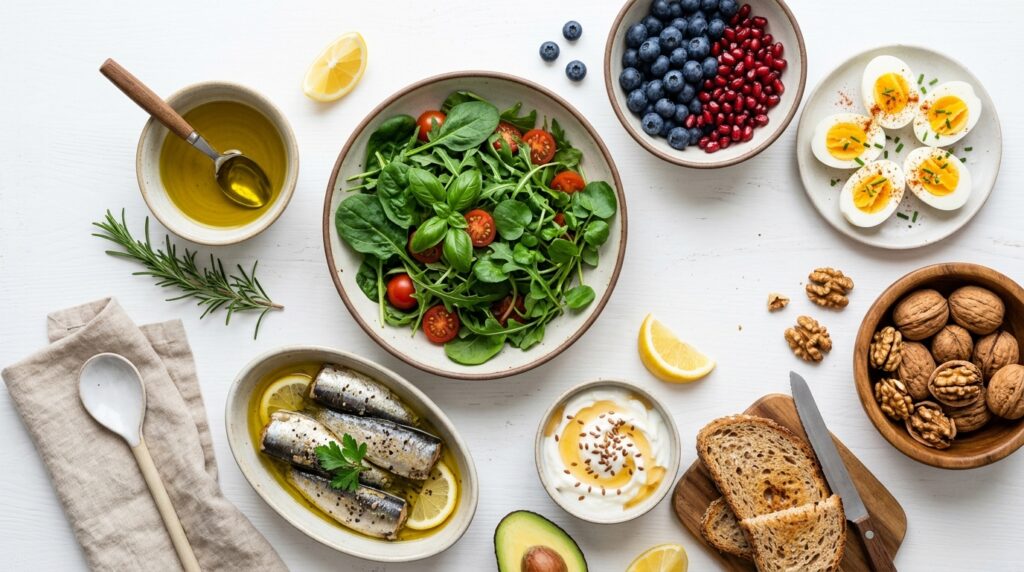
Protecting your brain after 50 is not about waiting for symptoms of decline and then reacting. It is about building the dietary habits that keep the brain nourished, protected, and resilient over the long term. Fatty fish, blueberries, leafy greens, olive oil, eggs, and walnuts are among the most evidence-supported foods for cognitive health in the second half of life. These are not exotic superfoods — they are accessible, everyday ingredients that form the foundation of some of the world’s healthiest diets. Starting or strengthening these habits today is one of the most meaningful investments you can make in your cognitive future.
Frequently Asked Questions
At what age should you start eating for brain health?
Brain-healthy eating is beneficial at any age, but beginning strong dietary habits in your 40s and 50s is particularly impactful because the brain begins to show measurable aging changes around this time. The earlier you start, the more protection you accumulate.
Does the Mediterranean diet really help with brain aging?
Yes. The Mediterranean diet is one of the most extensively studied dietary patterns for brain health and has been associated with slower cognitive decline, reduced risk of Alzheimer’s disease, and better memory performance in large population studies.
Can supplements replace brain-healthy foods for people over 50?
While certain supplements like omega-3s and vitamin D may be beneficial in cases of deficiency, they do not replicate the complex combination of nutrients, fiber, and phytochemicals found in whole foods. A food-first approach is always recommended before relying on supplements.
Related Articles
- 10 Best Foods for Brain Health
- Foods That Protect the Brain from Aging
- Best Vitamins for Brain Health