Introduction
Your digestive system does far more than simply process food. It is home to trillions of microorganisms that collectively form your gut microbiome, a complex ecosystem that influences your immunity, mood, metabolism, and even how you think and feel from day to day. When your gut microbiome is balanced and thriving, many aspects of your health improve alongside it.
What you eat is the most powerful daily lever you have for shaping your gut health. Foods rich in fiber, fermented foods containing live beneficial bacteria, and prebiotic compounds that feed your existing gut flora all work together to maintain a healthy and diverse microbiome.
These ten gut-friendly recipes are built around those principles. They are delicious, easy to prepare, and designed to actively support your digestion with every bite.
Why Gut-Friendly Cooking Matters
Modern diets high in processed foods, refined sugars, and artificial additives can disrupt the balance of your gut microbiome, reducing microbial diversity and allowing less beneficial bacteria to take hold. This disruption, often called dysbiosis, has been associated with digestive discomfort, weakened immunity, increased inflammation, and even changes in mood and cognitive function.
Gut-friendly cooking focuses on restoring and maintaining this balance by prioritizing whole foods that are high in both soluble and insoluble fiber, fermented foods that introduce beneficial bacteria, and polyphenol-rich ingredients that serve as fuel for good bacteria to grow and multiply.
1. Overnight Oats with Banana and Chia Seeds
Rolled oats are one of the best sources of beta-glucan, a type of soluble fiber that feeds beneficial bacteria in the large intestine. Bananas, especially slightly underripe ones, contain resistant starch that acts as a powerful prebiotic. Combine half a cup of rolled oats with chia seeds, sliced banana, unsweetened almond milk, and a spoonful of almond butter. Refrigerate overnight and enjoy in the morning. This breakfast is gentle on digestion and actively nourishes your gut flora.
2. Miso Soup with Tofu and Seaweed
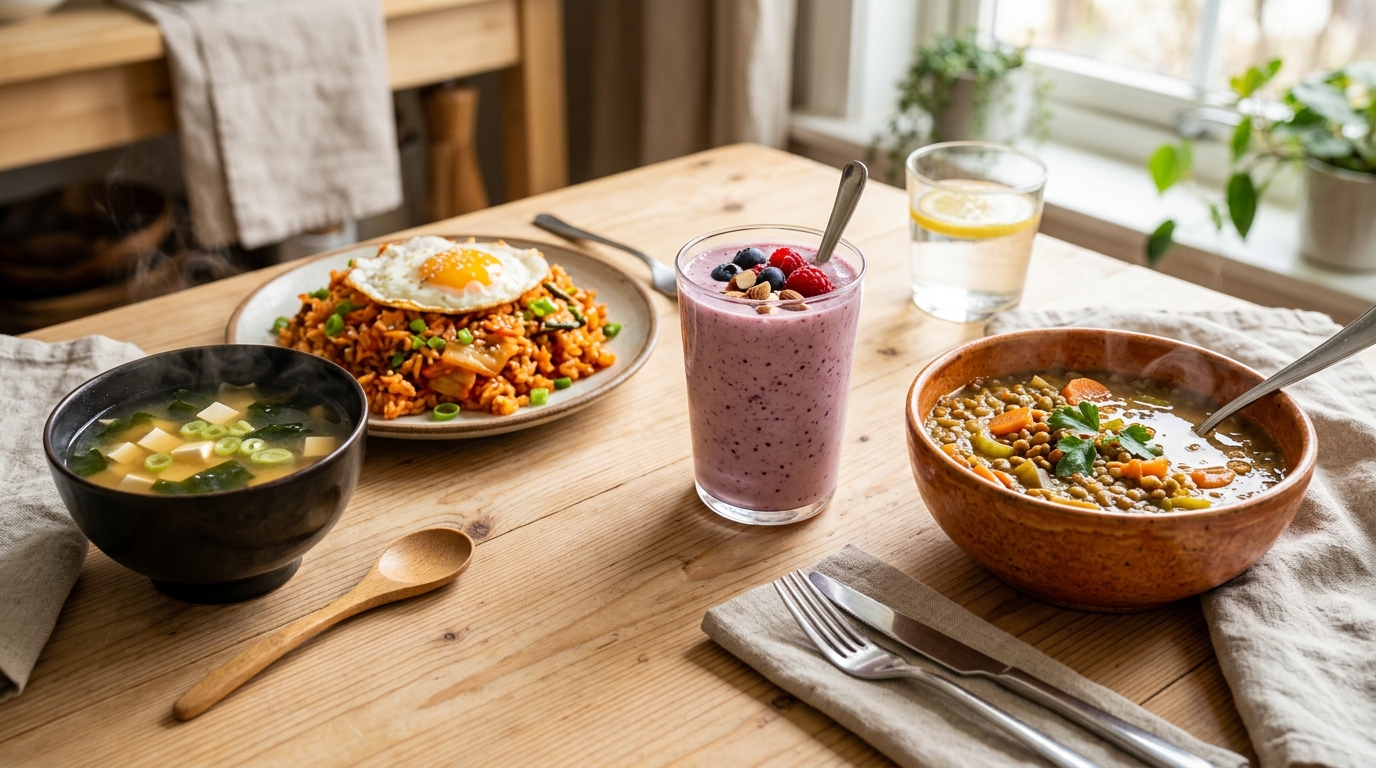
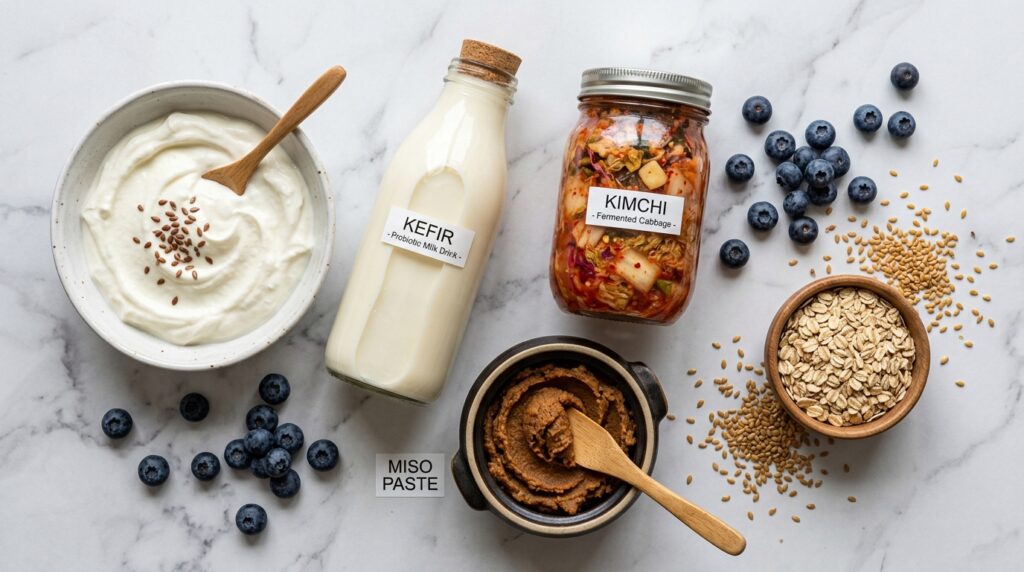
Miso is a fermented soybean paste that contains beneficial probiotics along with a rich profile of minerals and enzymes that support digestive health. Dissolve a tablespoon of white or yellow miso paste in warm water, never boiling water, which can destroy the beneficial bacteria. Add cubed silken tofu, dried wakame seaweed, and thinly sliced green onions. This simple soup is a traditional Japanese staple that has supported digestive health for centuries.
3. Kefir Berry Smoothie
Kefir is a fermented dairy drink that contains a far broader range of probiotic strains than most yogurts. Blend plain kefir with frozen mixed berries, a handful of spinach, ground flaxseed, and a drizzle of raw honey. The combination of probiotics from kefir, fiber from berries and flaxseed, and polyphenols from the berries creates an exceptionally gut-supportive smoothie that works equally well as a breakfast or a snack.
4. Kimchi Fried Rice
Kimchi is a Korean fermented vegetable dish that is rich in Lactobacillus bacteria, one of the most studied and beneficial probiotic strains. Stir-fry day-old cooked brown rice with chopped kimchi, diced onion, garlic, a drizzle of sesame oil, and a splash of low-sodium soy sauce. Push the rice to the side of the pan and scramble two eggs into the empty space before mixing everything together. Top with sliced green onions and toasted sesame seeds. This recipe is quick, flavorful, and full of gut-supporting fermented ingredients.
5. Lentil Soup with Garlic and Cumin
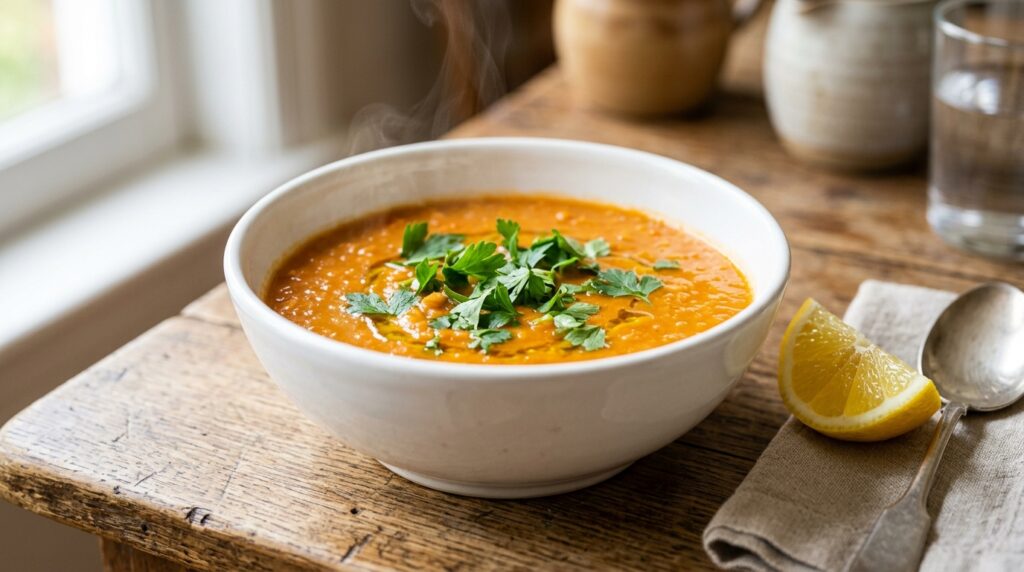
Lentils are one of the richest dietary sources of prebiotic fiber, feeding beneficial bacteria and supporting the production of short-chain fatty acids that maintain the health of your gut lining. Simmer red or green lentils with sautéed onion, garlic, tomatoes, cumin, coriander, turmeric, and vegetable broth for about 25 minutes. Finish with a squeeze of lemon juice and fresh parsley. This hearty soup is also exceptionally easy to digest compared to other legumes, making it a great starting point for those new to increasing fiber intake.
For more ideas on how to build gut health through diet, you may also want to explore our guide on best probiotic foods for a healthy gut.
6. Greek Yogurt Parfait with Flaxseed and Berries
Plain Greek yogurt is packed with Lactobacillus and Bifidobacterium strains that support gut health. Layer it in a glass with fresh berries, a tablespoon of ground flaxseed, and a small handful of granola made with oats and honey. Flaxseed provides both soluble fiber and lignans, which have additional anti-inflammatory and prebiotic properties. This parfait works as a breakfast, dessert, or snack and requires no preparation beyond assembly.
7. Roasted Asparagus and Hummus Bowl
Asparagus is one of the highest dietary sources of inulin, a prebiotic fiber that selectively feeds Bifidobacterium and promotes microbial diversity in the gut. Roast asparagus spears with olive oil, salt, and pepper at 400°F for about 15 minutes until tender. Serve over a bed of brown rice or farro alongside a generous scoop of homemade or store-bought hummus. The chickpeas in hummus add additional fiber and resistant starch, making this a deeply prebiotic-rich meal.
8. Sauerkraut and Avocado Toast
Sauerkraut, fermented cabbage, is one of the simplest and most accessible fermented foods available. Spread mashed avocado on thick-cut whole grain bread, top with a generous forkful of raw unpasteurized sauerkraut, and finish with cracked pepper, lemon juice, and a sprinkle of pumpkin seeds. The key is using raw, refrigerated sauerkraut rather than the shelf-stable canned variety, as pasteurization destroys most of the beneficial bacteria. This combination delivers probiotics, prebiotics, and healthy fats in one satisfying bite.
9. Chickpea and Spinach Stew with Turmeric
This warming one-pot stew is deeply gut-nourishing. Sauté onion and garlic in olive oil, then add drained chickpeas, crushed tomatoes, a large handful of fresh spinach, turmeric, cumin, and a splash of coconut milk. Simmer for about 15 minutes until the stew has thickened. Chickpeas are among the best plant-based sources of prebiotic fiber, while turmeric supports the gut lining through its anti-inflammatory curcumin content. Serve with whole grain bread or over brown rice.
10. Baked Salmon with Steamed Broccoli and Brown Rice
This simple, nutrient-dense combination is one of the best complete meals for gut health. Salmon provides omega-3 fatty acids that reduce gut inflammation and support the integrity of the gut lining. Broccoli is rich in sulforaphane and fiber that feed beneficial bacteria. Brown rice provides resistant starch that survives digestion and reaches the colon intact, where it acts as food for good bacteria. Season the salmon simply with olive oil, lemon, and herbs and bake at 375°F for 20 to 22 minutes.
Conclusion
Supporting your gut health through food does not require complicated protocols or expensive supplements. It requires consistently cooking with ingredients that your gut microbiome has evolved to thrive on: fermented foods, prebiotic fiber, anti-inflammatory fats, and a wide variety of plant-based whole foods.
The ten recipes in this guide give you practical, delicious ways to do exactly that. Start with one or two that appeal to you most and build from there. With consistency, your digestive health, and quite possibly your energy, immunity, and mood, will reflect the investment you have made.
Frequently Asked Questions
What are the best probiotic foods to cook with regularly? Miso, kefir, plain yogurt, kimchi, sauerkraut, tempeh, and kombucha are among the most effective probiotic foods for everyday cooking. The key is to consume them in their raw or minimally processed forms, as heat destroys beneficial bacteria.
Can gut-friendly recipes help with bloating? Yes. Many gut-friendly foods help reduce bloating by supporting a healthier balance of gut bacteria, improving motility, and reducing fermentation of poorly digested foods. However, dramatically increasing fiber intake too quickly can temporarily worsen bloating, so it is best to increase fiber gradually.
How much fiber should I aim for each day for good gut health? Most guidelines recommend 25 to 38 grams of dietary fiber per day, with most people consuming far less than this. Prioritizing whole grains, legumes, vegetables, fruits, and seeds in your daily cooking is the most effective way to reach this target through food alone.
Related Articles
Healthy Salad Recipes You Will Actually Love
10 Best Foods for Gut Health
Best Probiotic Foods for a Healthy Gut