Introduction
Snacking gets a bad reputation — and for good reason, given that most commercially available snack foods are engineered for maximum palatability with minimal nutritional value. But snacking itself is not the problem. The problem is the snacks most people reach for when hunger strikes between meals.
Healthy snacks serve an important function in a balanced diet. They prevent excessive hunger that leads to overeating at main meals, maintain stable blood sugar between meals, and provide an additional opportunity to consume nutrients that might otherwise be missed. The key is choosing snacks that actually deliver nutrition rather than empty calories.
This guide covers ten of the best healthy snack recipes that are simple to prepare, genuinely satisfying, and packed with the nutrients your body needs between meals.
Why Snack Quality Matters as Much as Meal Quality
Many people eat three nutritious main meals but undermine their overall dietary quality with poor snack choices. Chips, candy, sweetened granola bars, crackers, and processed cheese products consumed between meals can add significant amounts of refined carbohydrates, unhealthy fats, and added sugar to an otherwise healthy diet.
Replacing these with nutrient-dense snacks that contain protein and fiber meaningfully improves satiety, reduces total calorie intake at subsequent meals, and contributes positively to daily nutrient targets. A well-chosen snack is not a dietary indulgence — it is a strategic nutrition opportunity.
Best Healthy Snack Recipes
1. Hummus with Sliced Vegetables
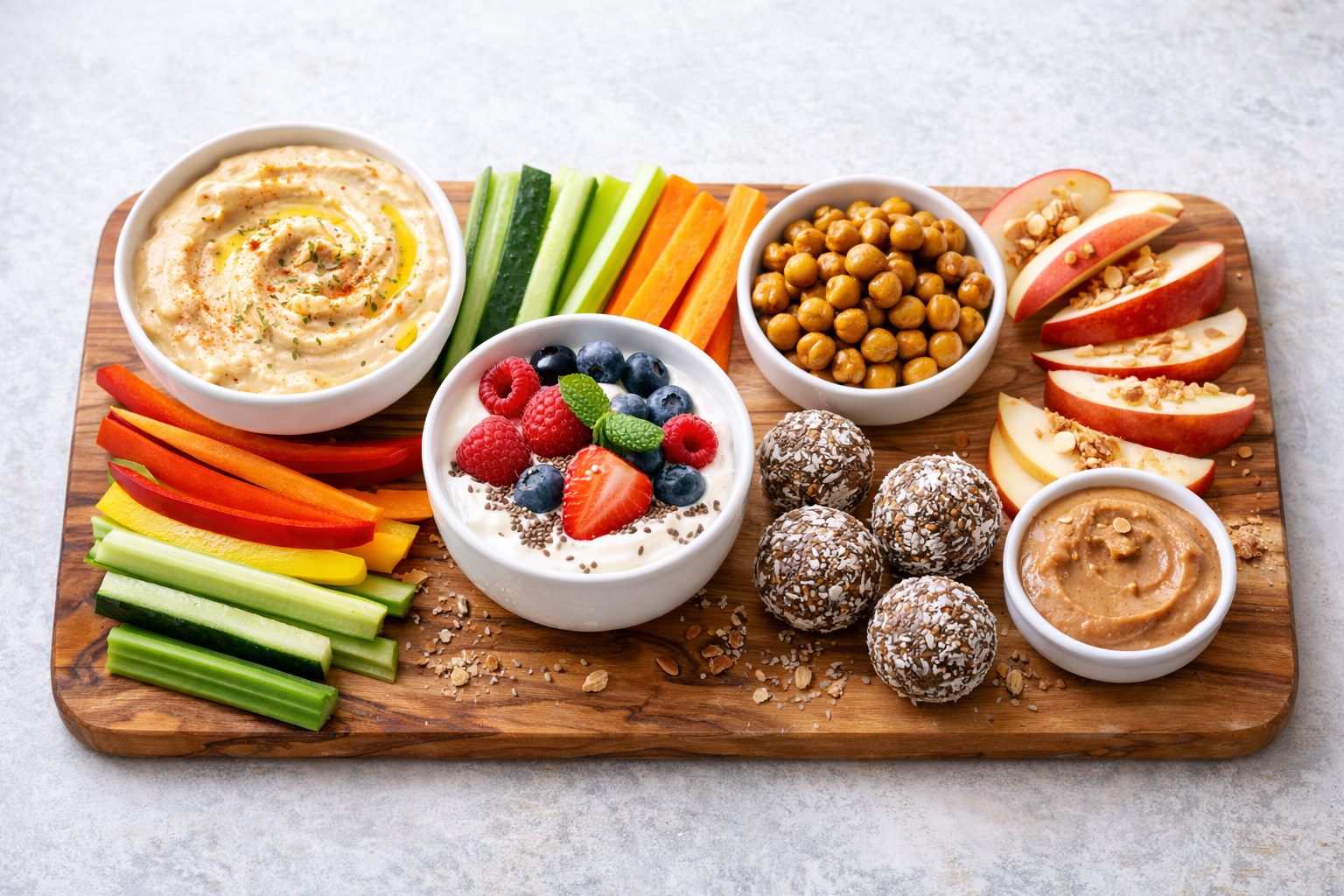
Make a simple homemade hummus by blending a can of chickpeas with two tablespoons of tahini, the juice of one lemon, a clove of garlic, two tablespoons of olive oil, and a pinch of cumin until smooth. Serve alongside sliced carrots, cucumber, celery, and bell pepper strips.
Hummus provides plant-based protein and fiber from the chickpeas, healthy fats from the tahini and olive oil, and numerous micronutrients including iron, folate, and manganese. The vegetables add additional fiber, vitamins, and the satisfying crunch that makes this snack genuinely enjoyable rather than merely functional.
2. Apple Slices with Almond Butter
Slice a crisp apple into wedges and serve with two tablespoons of natural almond butter for dipping. Sprinkle with a small amount of cinnamon and a few hemp seeds for additional nutrition.
This is one of the simplest and most effective healthy snacks available. The natural sugars and fiber in the apple combine with the protein and healthy fats in the almond butter to create a satisfying snack that stabilizes blood sugar rather than spiking it. Choose an almond butter with no added sugar, oil, or salt for the cleanest nutritional profile.
3. Greek Yogurt with Berries and Honey
Spoon plain full-fat or 2% Greek yogurt into a bowl and top with a handful of fresh or frozen berries, a light drizzle of raw honey, and a tablespoon of pumpkin or sunflower seeds.
Greek yogurt is one of the most protein-dense snack foods available, providing eighteen to twenty-two grams of protein per cup. The berries add antioxidants and natural sweetness while the seeds provide magnesium, zinc, and healthy fats. This snack can double as a light breakfast and takes less than two minutes to assemble.
4. Energy Balls with Oats and Nut Butter
Combine one cup of rolled oats, half a cup of natural peanut or almond butter, a quarter cup of honey, two tablespoons of chia seeds, two tablespoons of dark chocolate chips, and a teaspoon of vanilla extract in a bowl. Mix until combined, refrigerate for thirty minutes, then roll into small balls.
These energy balls require no baking and store in the refrigerator for up to two weeks. Each ball provides a balanced combination of complex carbohydrates, protein, healthy fats, and fiber that delivers sustained energy without the sugar crash associated with commercial energy bars.
5. Roasted Chickpeas
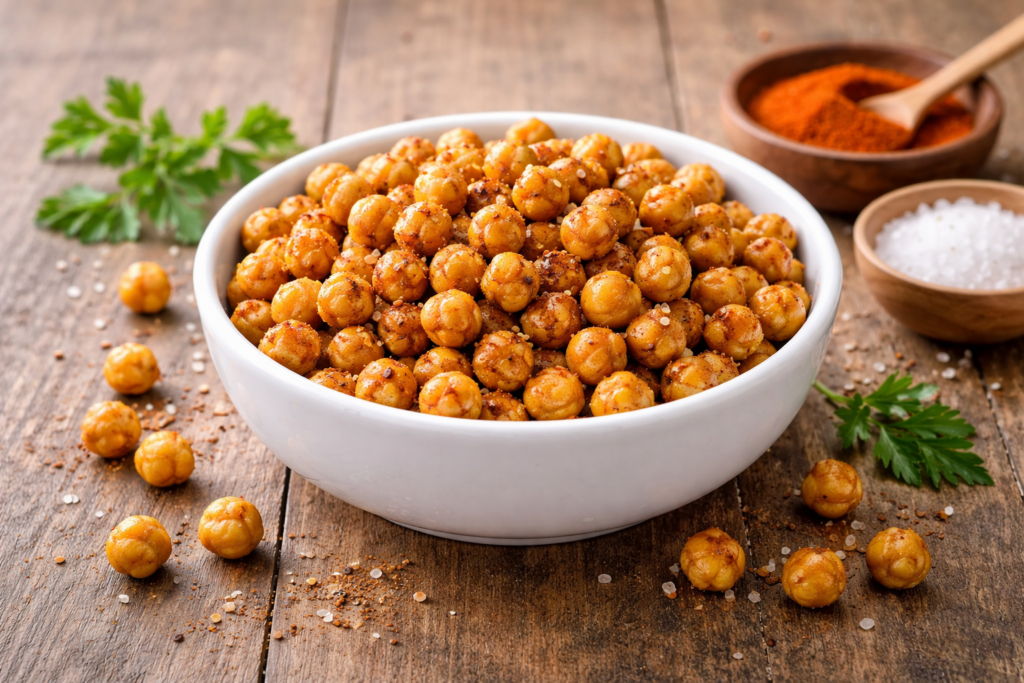
Drain and rinse a can of chickpeas and pat completely dry. Toss with olive oil, smoked paprika, garlic powder, cumin, and sea salt. Spread on a baking sheet and roast at 400°F for twenty-five to thirty minutes, shaking halfway through, until crispy.
Roasted chickpeas are one of the most satisfying crunchy snack alternatives to chips available. They provide significant amounts of plant-based protein and fiber in a format that satisfies the craving for something crispy and savory. They can be stored in an airtight container at room temperature for up to three days.
If you are looking to incorporate more anti-inflammatory ingredients into your snacking routine, our article on best anti-inflammatory snacks covers additional options worth exploring.
6. Avocado and Cottage Cheese Rice Cakes
Spread plain rice cakes with a layer of cottage cheese, top with sliced avocado, a squeeze of lemon juice, red pepper flakes, and a sprinkle of everything bagel seasoning.
This snack provides a satisfying combination of textures — the crunch of the rice cake, the creaminess of the cottage cheese, and the richness of the avocado. Cottage cheese contributes significant protein, avocado adds healthy monounsaturated fats, and the combination keeps hunger at bay for two to three hours.
7. Hard-Boiled Eggs with Everything Bagel Seasoning
Boil eggs for nine to ten minutes until hard, transfer to cold water to stop cooking, and peel. Halve lengthwise and sprinkle generously with everything bagel seasoning, a drizzle of sriracha, or simply sea salt and black pepper.
Hard-boiled eggs are the most portable and practical high-protein snack available. Preparing six to eight at the start of the week provides an effortless protein-rich snack for every day. Each egg contains six to seven grams of complete protein along with choline, vitamins B12 and D, and selenium.
8. Banana and Walnut Bites
Slice a banana into rounds and top each slice with half a walnut and a small amount of almond butter or dark chocolate. Arrange on a plate and serve immediately or refrigerate for thirty minutes for a firmer texture.
This no-cook snack provides natural energy from the banana, omega-3 fatty acids and antioxidants from the walnuts, and protein and healthy fats from the almond butter. It is particularly effective as a pre-workout snack, providing quick energy from the banana alongside sustained fuel from the fat and protein.
9. Homemade Trail Mix
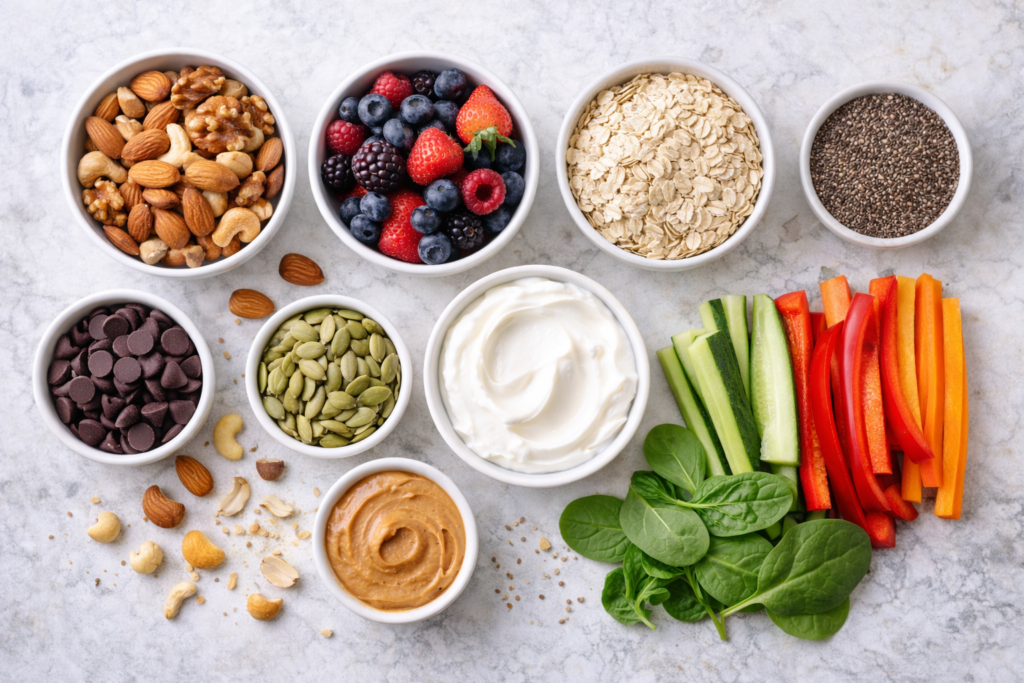
Combine a quarter cup each of raw almonds, walnuts, pumpkin seeds, dried cranberries, and dark chocolate chips. Store in small portions in airtight containers or resealable bags for grab-and-go snacking.
Homemade trail mix is far superior to commercial versions, which often contain added sugars, oil-roasted nuts, and excessive amounts of chocolate or candy. This recipe provides magnesium from the pumpkin seeds, omega-3s from the walnuts, antioxidants from the dark chocolate, and a broad range of vitamins and minerals from the mixed nuts.
10. Cucumber Rounds with Smoked Salmon and Cream Cheese
Slice a cucumber into thick rounds and top each with a small amount of light cream cheese and a piece of smoked salmon. Finish with a squeeze of lemon and a small amount of fresh dill or capers.
These cucumber bites are elegant enough to serve as appetizers but practical enough for everyday snacking. Smoked salmon provides omega-3 fatty acids, protein, and vitamin D in a convenient format that requires no cooking. The cucumber base keeps the snack light while adding hydration and crunch.
Conclusion
Healthy snacking is about replacing nutrient-poor convenience foods with options that actively contribute to your daily nutritional goals. Hummus with vegetables, Greek yogurt with berries, energy balls, roasted chickpeas, hard-boiled eggs, and homemade trail mix are all practical, delicious snacks that provide protein, fiber, and healthy fats in the right combinations.
Preparing snacks in advance — portioning trail mix, boiling eggs, making energy balls, and roasting chickpeas at the start of the week — removes the friction that sends people reaching for vending machines and packaged snacks. A small investment of preparation time creates an entire week of healthy snacking without daily effort.
Frequently Asked Questions
What are the healthiest snacks to eat between meals? Snacks that combine protein and fiber are the most effective for managing hunger between meals. Greek yogurt with berries, apple slices with almond butter, hard-boiled eggs, hummus with vegetables, and roasted chickpeas are all nutritionally strong options that prevent overeating at the next meal.
How many snacks should I eat per day? Most people benefit from one to two small snacks per day — typically mid-morning and mid-afternoon — timed to prevent excessive hunger before main meals. The need for snacks varies based on meal size, activity level, and individual metabolism. Choosing nutrient-dense options ensures snacks contribute positively to daily nutritional targets.
Are homemade snacks healthier than store-bought options? In most cases, yes. Homemade snacks give you complete control over ingredients, allowing you to avoid added sugar, refined oils, preservatives, and artificial additives that are common in commercial products. Even simple homemade options like trail mix, energy balls, and roasted chickpeas are significantly cleaner nutritionally than their packaged equivalents.