Introduction
One of the biggest challenges in weight loss is not the calorie math — it is the hunger. Feeling persistently hungry while eating less is one of the primary reasons people abandon caloric deficits before they produce lasting results. The solution is not to simply eat less of the same foods — it is to eat more of the right foods.
Low-calorie, high-volume eating is a strategy built around the principle that the physical size and weight of food in your stomach plays a major role in triggering satiety signals, independent of calorie content. Foods with high water and fiber content fill your plate generously and your stomach substantially while contributing relatively few calories. This approach allows you to eat satisfying portions, feel genuinely full, and still maintain the caloric deficit necessary for weight loss.
Why Volume Matters for Satiety
Research in food science has consistently demonstrated that the volume of food consumed — its physical bulk — is one of the most important determinants of satiety. Stretch receptors in the stomach respond to physical distension and send fullness signals to the brain. Foods with high water and fiber content activate these receptors more effectively per calorie than calorie-dense foods, which means you can feel just as full from a large bowl of vegetables as from a small portion of calorie-dense processed food.
This physiological reality is the foundation of volume eating as a weight management strategy. The foods below are among the highest-volume, lowest-calorie options available — each one a powerful tool for managing hunger without sacrificing satisfaction.
Best Low-Calorie High-Volume Foods
1. Cucumbers
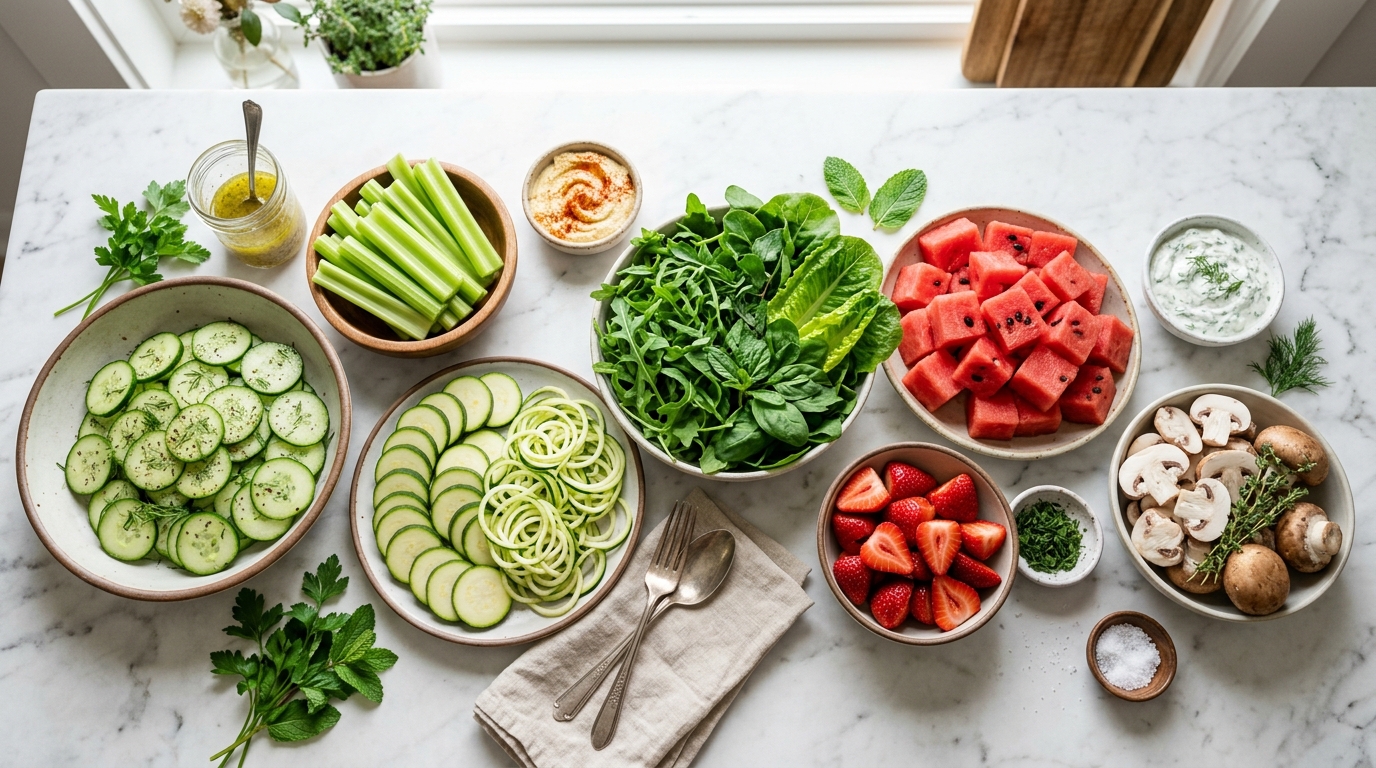
Cucumbers are composed of approximately 96 percent water, making them one of the most hydrating and lowest-calorie foods available. A full cup of sliced cucumber contains just 16 calories while providing meaningful volume and a satisfying crunch. They are also a source of vitamin K and potassium. Cucumbers can be eaten as a standalone snack, added to salads, layered into sandwiches, or served with hummus for a low-calorie, high-volume snack that genuinely takes the edge off hunger.
2. Celery
Celery is famously low in calories — a full cup of chopped celery provides just 16 calories — while offering significant crunch, volume, and fiber. Its high water content and crisp texture make it one of the most satisfying low-calorie snack foods available. Celery also contains antioxidants including luteolin and apigenin, and provides vitamin K, folate, and potassium. Pairing celery sticks with a small portion of nut butter or hummus creates a snack that combines volume and satiety without exceeding a modest caloric budget.
3. Leafy Greens
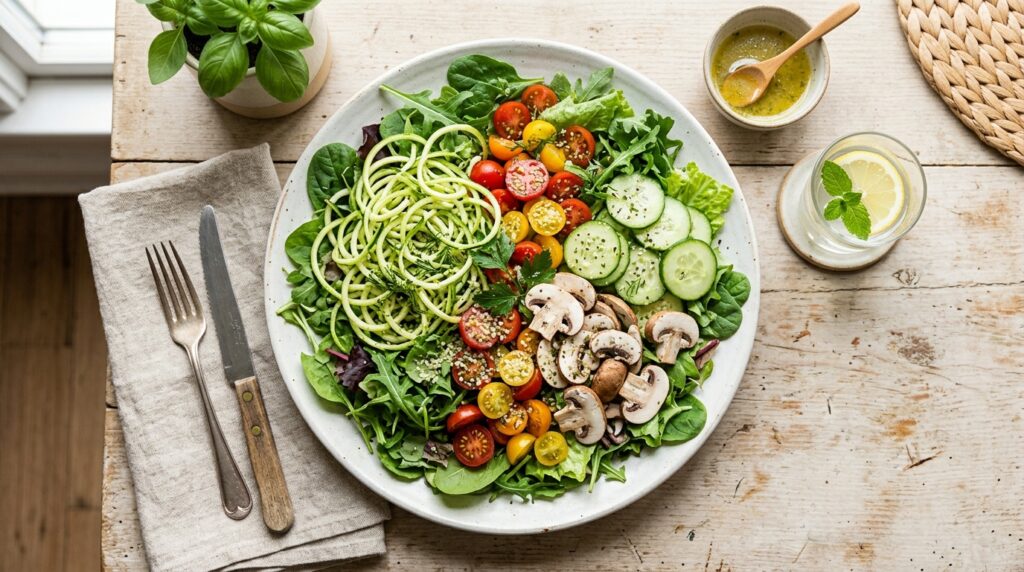
Spinach, romaine lettuce, arugula, and mixed greens are among the most calorie-efficient foods on earth. A full two-cup serving of raw spinach contains only about 14 calories while providing vitamin K, folate, iron, magnesium, and a range of antioxidants. The sheer volume of leafy greens you can eat for very few calories makes them an ideal base for meals designed to maximize fullness. Building salads and grain bowls with large quantities of leafy greens is one of the most effective volume eating strategies available.
4. Broth-Based Soups
Research has consistently shown that consuming soup before a meal significantly reduces overall calorie intake during that meal. Broth-based soups are particularly effective because they combine water volume with soluble fiber from vegetables, creating a warm, filling experience for very few calories. A large bowl of vegetable broth soup can contain as few as 80 to 120 calories while providing substantial stomach volume and warmth that enhances satiety. Starting a meal with a low-sodium broth-based soup is one of the most evidence-backed appetite management strategies in nutrition research.
5. Berries
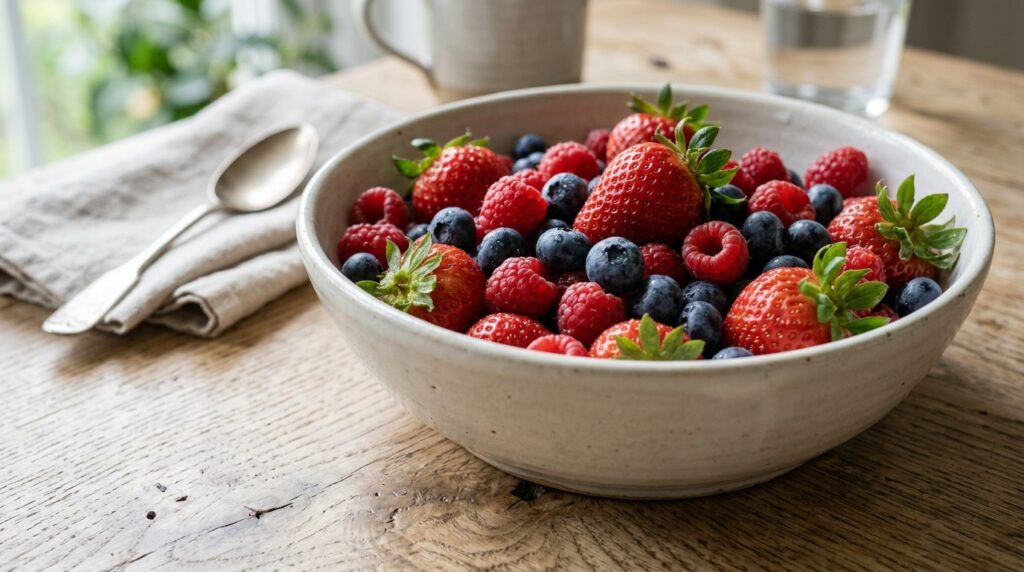
Strawberries, raspberries, and blueberries are sweet, satisfying, and remarkably low in calories relative to their volume and fiber content. A full cup of strawberries provides only about 50 calories along with 3 grams of fiber, significant vitamin C, and natural sweetness that satisfies dessert cravings without the caloric cost of processed sweets. Raspberries are especially notable for providing 8 grams of fiber per cup for just 65 calories. Berries are one of the most satisfying low-calorie sweet options available and are far more effective at managing sugar cravings than processed alternatives.
If you are looking to understand which high-fiber foods beyond berries are most effective for weight management, our guide on the best high-fiber foods for weight loss covers the full spectrum of fiber-rich whole foods worth incorporating into a volume eating approach.
6. Zucchini
Zucchini is exceptionally low in calories — about 20 calories per cup — while providing meaningful fiber and volume. It also contains vitamin C, potassium, and manganese. Spiralized zucchini, commonly known as zoodles, serves as a popular low-calorie pasta substitute that significantly increases meal volume while reducing caloric density. Zucchini can also be grilled, roasted, added to stir-fries, or incorporated into soups and casseroles as a bulking ingredient that adds volume without meaningfully increasing calorie counts.
7. Watermelon
Watermelon is approximately 92 percent water and provides only about 46 calories per cup while offering genuine sweetness, satisfying texture, and meaningful volume. It is also a source of lycopene, vitamin C, and citrulline, an amino acid with potential cardiovascular benefits. As a sweet, high-volume, low-calorie food, watermelon is particularly valuable for satisfying sugar cravings in a weight-loss-friendly way. It also contributes to daily hydration, which supports metabolic function and reduces confusion between thirst and hunger.
8. Cabbage
Cabbage is one of the highest-volume, lowest-calorie vegetables available, providing just 22 calories per cup while offering fiber, vitamin C, vitamin K, and glucosinolates with anti-inflammatory and cancer-preventive properties. Its mild flavor makes it extremely versatile — it can be eaten raw in slaws, steamed, stir-fried, or added to soups and stews. Cabbage-based dishes tend to be genuinely filling due to the substantial physical volume it adds to meals, making it a staple ingredient in high-volume, low-calorie cooking.
9. Mushrooms
Mushrooms have a meaty texture and savory umami flavor that makes them exceptionally satisfying despite their low calorie content — typically 15 to 25 calories per cup. Their substantial texture when cooked also slows eating pace and increases feelings of fullness more effectively than other low-calorie vegetables. Mushrooms are also a source of B vitamins, selenium, and potassium. Substituting mushrooms for higher-calorie proteins in dishes like stir-fries, pasta sauces, and tacos is a practical volume eating strategy that reduces overall calorie density while maintaining meal satisfaction.
10. Air-Popped Popcorn
Plain air-popped popcorn provides approximately 30 calories per cup while delivering 1 gram of fiber and significant physical volume. Three to four cups of air-popped popcorn — a genuinely satisfying snack quantity — contains only about 90 to 120 calories, making it one of the most calorie-efficient whole-grain snack options available. The key is preparation: air-popped popcorn seasoned with a small amount of olive oil, nutritional yeast, or spices is a very different food from commercial microwave popcorn loaded with butter, salt, and artificial flavorings.
Conclusion
The most sustainable weight loss strategy is one that leaves you feeling satisfied rather than deprived, and volume eating is one of the most effective ways to achieve that. By anchoring your meals around high-water, high-fiber foods that fill your stomach without overwhelming your calorie budget, you create a dietary environment where maintaining a caloric deficit feels manageable rather than miserable. Start by adding larger portions of vegetables, incorporating broth-based soups before meals, and choosing whole fruits over processed sweets. Over time, these habits transform how you experience eating for weight loss — from a sacrifice into a genuinely satisfying way to nourish your body.
Frequently Asked Questions
Can I really lose weight by eating more food? Yes, if you are eating more of the right foods. Low-calorie, high-volume foods allow you to consume larger quantities and feel more satisfied while still maintaining a caloric deficit. The key is shifting the composition of your diet toward foods with high water and fiber content rather than calorie-dense processed options.
What is the most filling low-calorie food? Broth-based soups consistently rank among the most satiating low-calorie options in research, as their combination of liquid volume, warmth, and vegetable fiber effectively activates fullness signals. Leafy greens, cruciferous vegetables, and berries are also among the most filling options relative to their calorie content.
Is volume eating a sustainable long-term strategy? Volume eating is considered one of the most sustainable dietary approaches for weight management because it does not require strict portion control or calorie counting of every food. By building meals around naturally low-calorie, high-fiber, high-water foods, hunger is managed through food quality and composition rather than willpower alone — which is a far more durable long-term strategy.
Related Articles
- 10 Best Foods for Weight Loss
- Best High-Fiber Foods for Weight Loss
- Foods That Speed Up Your Metabolism