
Introduction
Being a student means asking your brain to perform at its highest level day after day — attending lectures, absorbing new information, retaining complex concepts, and performing under the pressure of exams and deadlines. While study techniques and sleep are often discussed as keys to academic success, diet is one of the most underrated and overlooked factors. The foods you eat directly fuel your brain, affect your ability to concentrate and remember, and determine how well you recover from mental fatigue. Understanding which foods give your brain the nutrients it needs to function at its best can make a genuine difference in how you study and how you perform.
Why Nutrition Matters for Student Performance
The brain consumes roughly 20 percent of the body’s total energy despite accounting for only about 2 percent of its mass. For students who are working through long study sessions, the quality and consistency of that energy supply matters enormously. Diets high in refined carbohydrates, sugar, and ultra-processed foods create unstable blood sugar levels that result in energy crashes, poor concentration, and increased irritability. In contrast, diets rich in whole foods, healthy fats, complex carbohydrates, and micronutrients support sustained cognitive performance, better memory consolidation, and more stable mood. The investment in eating well pays off in the classroom and in life beyond it.
10 Brain-Boosting Foods for Students
1. Fatty Fish
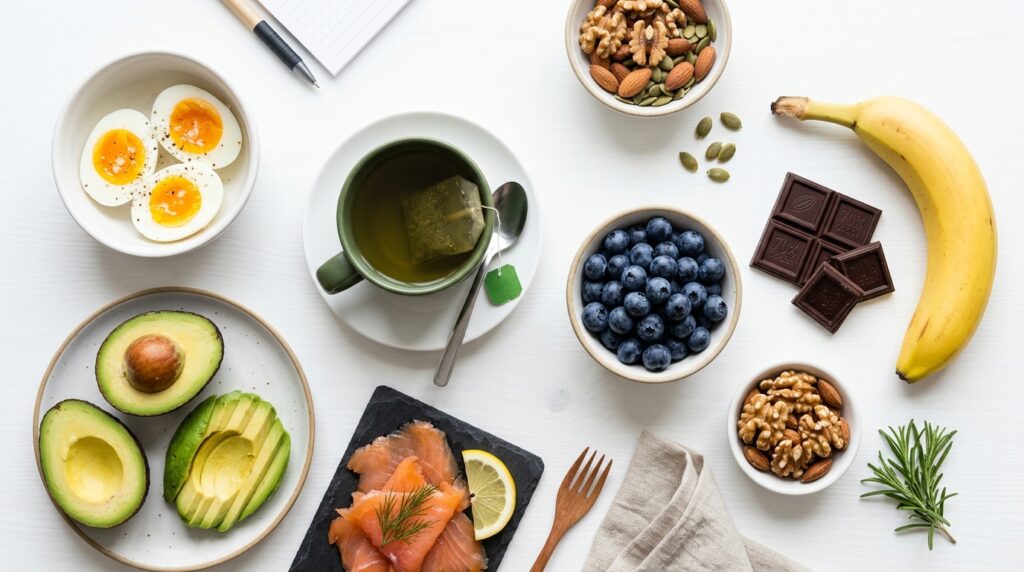
Salmon, tuna, mackerel, and sardines are at the top of the list for brain-supporting nutrition. These fish are packed with DHA and EPA, the omega-3 fatty acids that form the structural basis of neuronal membranes and support efficient communication between brain cells. DHA is particularly abundant in the prefrontal cortex, the area of the brain responsible for planning, decision-making, and working memory — all functions that are critical for academic performance.
Multiple studies have found that students with higher omega-3 intake perform better on tests of memory, reading, and attention. If preparing fish is challenging during a busy student schedule, canned sardines or salmon are affordable, quick alternatives that retain their nutritional value.
2. Oats
Oats are one of the best breakfast foods for students because they provide slow-releasing complex carbohydrates that deliver a steady supply of glucose to the brain throughout the morning. Unlike sugary cereals or pastries, oats prevent the blood sugar crashes that impair concentration and lead to mental fatigue by mid-morning.
Oats also contain beta-glucan, a type of soluble fiber that supports gut health, which in turn affects brain function through the gut-brain axis. They also provide B vitamins and iron that support energy metabolism. A bowl of oatmeal before a long study session or morning class provides reliable, sustained mental fuel.
3. Blueberries
Blueberries are among the most studied foods for cognitive function. Their high concentration of flavonoid antioxidants, particularly anthocyanins, has been shown in research to improve memory recall, processing speed, and attention in both young and older individuals. These antioxidants protect brain cells from oxidative damage that accumulates during periods of high mental demand and stress.
Blueberries are also convenient and versatile — they can be eaten fresh, frozen, or blended into smoothies. Adding a portion of blueberries to breakfast or as a snack during study sessions is one of the easiest dietary upgrades a student can make.
4. Eggs
Eggs are an excellent food for students because they are affordable, quick to prepare, and extraordinarily nutritious. One of their most important contributions to brain health is choline, a nutrient that supports the synthesis of acetylcholine, the neurotransmitter central to memory formation and learning. Many students do not consume enough choline, which can impair the brain’s ability to form and retain new memories effectively.
Eggs also provide complete protein, which supports sustained alertness and helps prevent the afternoon energy slumps that interfere with afternoon study sessions. Two or three eggs at breakfast or lunch can make a meaningful positive difference in how sharp and focused a student feels.
5. Nuts and Seeds
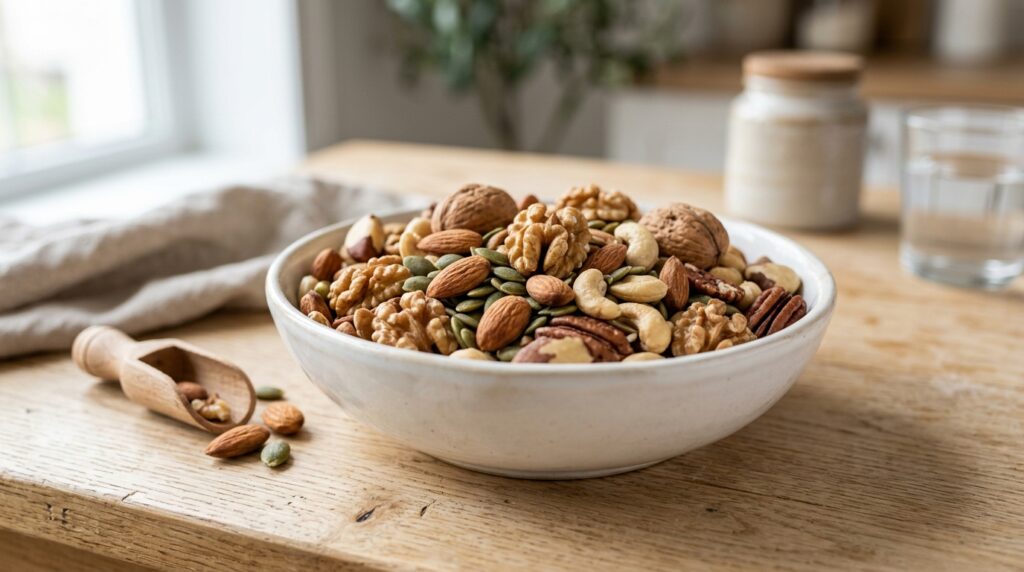
Walnuts, almonds, pumpkin seeds, and sunflower seeds are all excellent brain-supporting snacks for students. Walnuts are particularly notable for their ALA omega-3 content, while almonds are rich in vitamin E, an antioxidant that protects the brain from oxidative stress. Pumpkin seeds are an excellent source of zinc and magnesium, two minerals critical for memory and nerve signaling.
The advantage of nuts and seeds for students is their convenience — they require no preparation and can be eaten anywhere. Keeping a small container of mixed nuts in a bag or on a desk provides accessible, sustained-energy nutrition that supports long study sessions.
For more detailed guidance on how foods affect focus, you may also want to read our guide on foods that help with focus and concentration.
6. Dark Chocolate
Dark chocolate is a legitimately useful study snack when consumed in moderation. It provides flavanols that improve cerebral blood flow, along with a combination of caffeine and theobromine that supports alertness and mood without the jitteriness associated with strong coffee. Research has shown that consuming dark chocolate improves attention, memory, and processing speed in the short term.
Choosing chocolate with at least 70 percent cocoa content maximizes the beneficial flavanol content while minimizing added sugar. A small portion of one to two squares during a study break is enough to enjoy these cognitive benefits.
7. Avocados
Avocados provide monounsaturated fatty acids that support healthy blood flow to the brain, ensuring a steady supply of oxygen and glucose to working neurons. They are also rich in folate, which supports the production of neurotransmitters including dopamine and serotonin — chemicals that influence motivation, focus, and emotional resilience under academic pressure.
Avocados are calorie-dense, which makes them a satisfying food that helps prevent the hunger distraction that interrupts long study sessions. Half an avocado on whole grain toast is a practical, brain-supportive meal or snack that is quick to prepare.
8. Green Tea
Green tea is an ideal beverage for students because it provides a balanced cognitive boost. The caffeine in green tea improves alertness and concentration, while L-theanine promotes a calm, focused mental state that is ideal for studying. This combination produces a state of relaxed alertness that many students find more effective for sustained focus than coffee alone.
Green tea also contains antioxidants that protect brain cells from the oxidative stress that accumulates during demanding cognitive work. Swapping one or two cups of coffee for green tea each day can provide a smoother, more sustained mental lift.
9. Bananas
Bananas are a practical and underrated brain food for students. They provide a fast-acting source of natural glucose for immediate energy, along with potassium and vitamin B6. Vitamin B6 is directly involved in the synthesis of serotonin, dopamine, and GABA — neurotransmitters that regulate mood, concentration, and stress response. During exam periods when anxiety levels run high, adequate B6 intake can support a more stable emotional state.
Bananas are also incredibly convenient and inexpensive, making them one of the most practical brain-supporting foods for students on a tight budget.
10. Water
Hydration is one of the most important and most neglected aspects of student performance. The brain is highly sensitive to even mild dehydration, and studies have shown that fluid loss of as little as one to two percent of body weight can significantly impair concentration, short-term memory, and reaction time. For students sitting through long lectures or study sessions, it is easy to lose track of fluid intake.
Keeping a water bottle within sight during study sessions is a simple but effective reminder to drink consistently. Staying well hydrated supports clear thinking, better energy levels, and improved emotional regulation — all essential for academic success.
Conclusion
The best study tool available to any student might not be a new app or a better notebook — it might be the food on their plate. Consistently eating brain-supportive foods like fatty fish, eggs, blueberries, and oats while staying well hydrated creates the neurological conditions for better focus, stronger memory, and more effective learning. These dietary habits do not require elaborate meal preparation or expensive supplements. They require awareness and consistency. Building better eating habits during your student years is not just an investment in academic performance — it is an investment in lifelong cognitive health.
Frequently Asked Questions
What is the best snack while studying?
Walnuts, blueberries, and a small piece of dark chocolate make an excellent study snack because they provide antioxidants, healthy fats, and gentle stimulation that support sustained focus without causing energy crashes.
Does skipping breakfast affect performance?
Yes. Breakfast skipping has been consistently associated with poorer concentration, slower recall, and reduced attention span during morning hours. Even a quick meal of oats or eggs before class can make a measurable difference in cognitive performance.
Can diet help with exam anxiety?
Diet alone cannot eliminate anxiety, but foods rich in magnesium, B vitamins, and omega-3 fatty acids support a more stable mood and nervous system response. Limiting caffeine and sugar during high-stress periods can also help reduce anxiety symptoms.
Related Articles
- Best Foods for Mental Clarity
- Foods That Help with Focus and Concentration
- 10 Best Foods for Brain Health