Foods That Cause Brain Fog (and What to Eat Instead)
Introduction
Brain fog is one of the most frustrating experiences a person can have. The feeling of mental cloudiness, difficulty concentrating, slow thinking, and persistent fatigue that characterizes brain fog can interfere with work, relationships, and quality of life. While there are many potential contributors — poor sleep, stress, hormonal changes, and underlying health conditions among them — diet is one of the most powerful and modifiable factors influencing how clearly your brain functions on a daily basis.
The foods you eat directly affect brain inflammation, blood sugar stability, neurotransmitter production, and gut health — all of which have measurable impacts on cognitive clarity. Understanding which foods commonly trigger brain fog, and what to replace them with, gives you a practical and effective tool for reclaiming your mental sharpness.
Why Food Affects Mental Clarity
The brain accounts for roughly two percent of body weight but consumes approximately 20 percent of daily energy. It is highly sensitive to fluctuations in blood sugar, inflammation, and nutrient availability. When you eat foods that spike and crash blood sugar, promote systemic inflammation, or disrupt the gut-brain axis, the cognitive effects can be rapid and noticeable. Conversely, foods that stabilize blood sugar, reduce inflammation, and nourish the brain’s structural and functional needs support sustained mental clarity throughout the day.
Foods That Cause Brain Fog
1. Refined Sugar and Sugary Foods
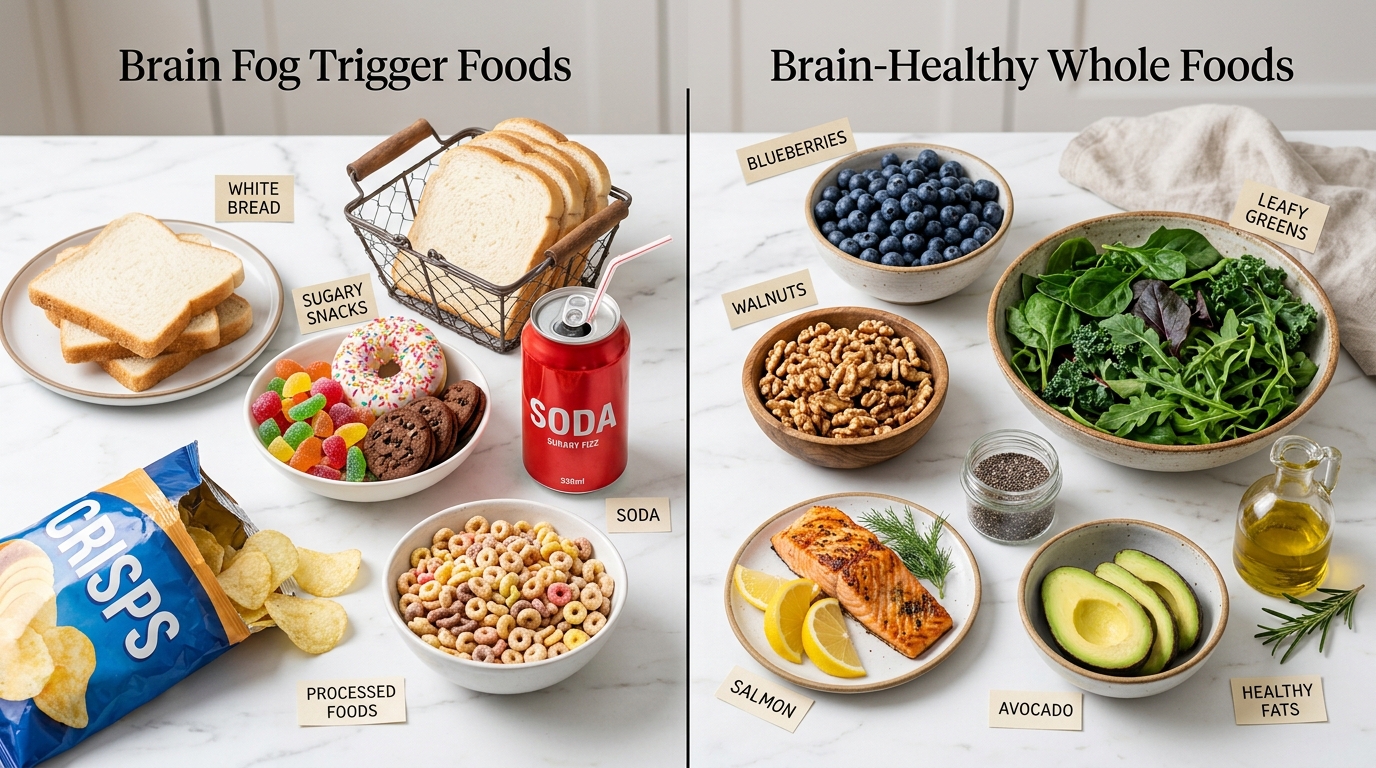
Refined sugar causes a rapid spike in blood glucose followed by an equally rapid crash. During the crash phase, the brain — which depends on a steady supply of glucose — experiences a sudden energy shortage that manifests as fatigue, difficulty concentrating, irritability, and mental sluggishness. Repeated blood sugar spikes also promote inflammation in the brain and impair the function of brain-derived neurotrophic factor (BDNF), a protein critical for learning and memory. Cookies, pastries, candy, flavored beverages, and sweetened cereals are among the most common dietary contributors to brain fog.
2. Highly Processed Foods
Ultra-processed foods — including packaged snacks, fast food, frozen meals, and processed meats — are high in refined carbohydrates, industrial seed oils, artificial additives, and preservatives that promote neuroinflammation and disrupt the gut microbiome. The gut-brain axis is a bidirectional communication system connecting the digestive tract and the brain, and diets high in processed foods negatively alter gut bacteria composition in ways that impair neurotransmitter production and increase brain inflammation. Studies consistently link high ultra-processed food intake with worse cognitive performance and greater risk of depression and anxiety.
3. Artificial Trans Fats
While largely phased out in many countries, artificial trans fats — found in partially hydrogenated oils in some commercial baked goods, margarins, and fried products — are directly toxic to brain function. They increase LDL cholesterol, promote systemic inflammation, and have been associated with impaired memory and greater risk of cognitive decline. Even small amounts consumed regularly can negatively affect brain health. Checking ingredient labels for partially hydrogenated oils is the most reliable way to avoid them.
4. Alcohol
Alcohol is a central nervous system depressant that directly impairs neurotransmitter function, disrupts sleep architecture, promotes dehydration, and depletes B vitamins — particularly thiamine (B1) and folate — that are essential for brain function. Even moderate alcohol consumption affects sleep quality, which has a profound downstream effect on cognitive clarity the following day. Regular heavy drinking accelerates brain cell loss and is a significant risk factor for early cognitive decline and dementia.
5. Gluten and Dairy (for Sensitive Individuals)
For individuals with celiac disease, non-celiac gluten sensitivity, or dairy intolerance, consuming these foods can trigger immune responses that promote gut permeability and systemic inflammation — both of which have documented effects on brain function. Symptoms including brain fog, fatigue, and mood changes are commonly reported by sensitive individuals after consuming gluten or dairy. While neither food causes brain fog in people without these sensitivities, ruling them out through an elimination protocol can be a valuable diagnostic step for those experiencing persistent cognitive cloudiness.
If you want to understand which foods actively support mental clarity and cognitive function, our guide on the best foods for mental clarity provides a practical overview of what to prioritize in place of brain fog triggers.

6. Vegetable and Seed Oils High in Omega-6
Corn oil, soybean oil, sunflower oil, and other refined vegetable oils are extremely high in omega-6 fatty acids. While omega-6 fats are essential in appropriate amounts, the modern Western diet provides them in quantities far exceeding what the body can balance against omega-3 intake. This imbalance promotes chronic low-grade inflammation throughout the body and brain. Replacing refined vegetable oils with olive oil, avocado oil, or coconut oil in cooking shifts the dietary omega-6 to omega-3 ratio in a direction that supports rather than undermines brain health.
7. Artificial Sweeteners
Despite being marketed as healthier alternatives to sugar, some artificial sweeteners — particularly aspartame and sucralose — have been linked to negative effects on gut microbiome composition and neurotransmitter function in emerging research. Aspartame is metabolized into phenylalanine and methanol, compounds that can affect dopamine and serotonin production in sensitive individuals. While the evidence is still developing, some people report notable improvements in cognitive clarity and mood after eliminating artificial sweeteners from their diet.
8. High-Sodium Processed Foods
Excessive sodium from processed foods can contribute to high blood pressure and reduced cerebral blood flow — both of which impair cognitive function and contribute to brain fog. Chronic high sodium intake is associated with reduced brain plasticity and cognitive performance in research. Processed soups, canned goods, deli meats, and packaged condiments are the primary sources of excess dietary sodium for most people.
9. Refined Carbohydrates
Beyond sugar specifically, refined carbohydrates including white bread, white rice, regular pasta, and most commercial breakfast cereals have a high glycemic index that drives the same blood sugar instability as refined sugar. The resulting insulin spikes and crashes directly impair concentration, working memory, and sustained cognitive performance. Swapping refined carbohydrates for whole grain alternatives — which release glucose gradually due to their fiber content — is one of the most straightforward dietary interventions for reducing diet-induced brain fog.
10. Excessive Caffeine
While moderate caffeine consumption supports alertness and focus, excessive intake — particularly from energy drinks or multiple large coffees — can trigger anxiety, disrupt sleep quality, and paradoxically worsen brain fog over time. Caffeine consumed too late in the day reduces deep sleep, impairing the memory consolidation and cellular repair that occur during sleep. The resulting sleep debt compounds into persistent cognitive sluggishness that caffeine itself can no longer fully counteract.

Conclusion
Brain fog is rarely the result of a single food or meal — it typically reflects a pattern of dietary habits that collectively impair brain function through inflammation, blood sugar instability, nutrient depletion, and gut dysbiosis. The good news is that dietary changes can produce noticeable improvements in mental clarity relatively quickly. Start by reducing your intake of refined sugar, ultra-processed foods, and refined carbohydrates, and replace them with whole foods that stabilize blood sugar, reduce inflammation, and nourish the brain. Many people notice meaningful improvements in focus and cognitive clarity within a few weeks of making these changes consistently.
Frequently Asked Questions
How quickly can dietary changes improve brain fog? Many people notice improvements in energy, focus, and mental clarity within one to two weeks of reducing refined sugar, processed foods, and refined carbohydrates. More significant cognitive improvements typically emerge after four to six weeks of consistent dietary change, as inflammation decreases and gut microbiome composition begins to shift in a healthier direction.
Can gluten cause brain fog even without celiac disease? Yes, in some individuals. Non-celiac gluten sensitivity is a recognized condition in which gluten consumption triggers immune and inflammatory responses without causing the intestinal damage associated with celiac disease. Brain fog, fatigue, and mood changes are among the most commonly reported symptoms. An elimination diet under the guidance of a healthcare provider is the most reliable way to assess whether gluten sensitivity is a contributing factor.
What is the fastest dietary fix for brain fog? Cutting out sugary beverages and refined sugar, drinking adequate water, and adding a source of omega-3 fatty acids such as walnuts or fatty fish are among the quickest and most impactful changes. Dehydration alone can cause significant cognitive impairment, and many people are chronically mildly dehydrated without realizing it.