Foods That Protect the Brain from Aging
Introduction
Cognitive decline is not an inevitable consequence of growing older. While the brain does change with age, the pace and severity of those changes are significantly influenced by lifestyle factors — and diet sits at the top of the list. Research into the eating habits of populations with the lowest rates of dementia and the longest periods of cognitive vitality consistently points toward the same pattern: diets rich in anti-inflammatory, antioxidant-dense, and omega-3-rich whole foods.
Understanding which specific foods have the strongest neuroprotective evidence behind them allows you to make dietary choices that actively work to preserve your brain health over the long term — not just for the next few years, but across decades.
Why the Brain Ages and How Diet Intervenes
Brain aging is driven by several interconnected processes: oxidative stress, chronic neuroinflammation, declining neuroplasticity, reduced cerebral blood flow, and the accumulation of toxic protein aggregates like amyloid plaques associated with Alzheimer’s disease. Diet influences all of these processes.
Antioxidant-rich foods neutralize the free radicals that drive oxidative damage. Anti-inflammatory foods reduce the chronic low-grade neuroinflammation that accelerates cognitive decline. Omega-3 fatty acids maintain the structural integrity of neuronal membranes. And certain plant compounds directly stimulate the production of BDNF (brain-derived neurotrophic factor), a protein that promotes the growth of new neurons and the maintenance of existing ones — a process that continues throughout life.
Foods That Protect the Brain from Aging
1. Fatty Fish
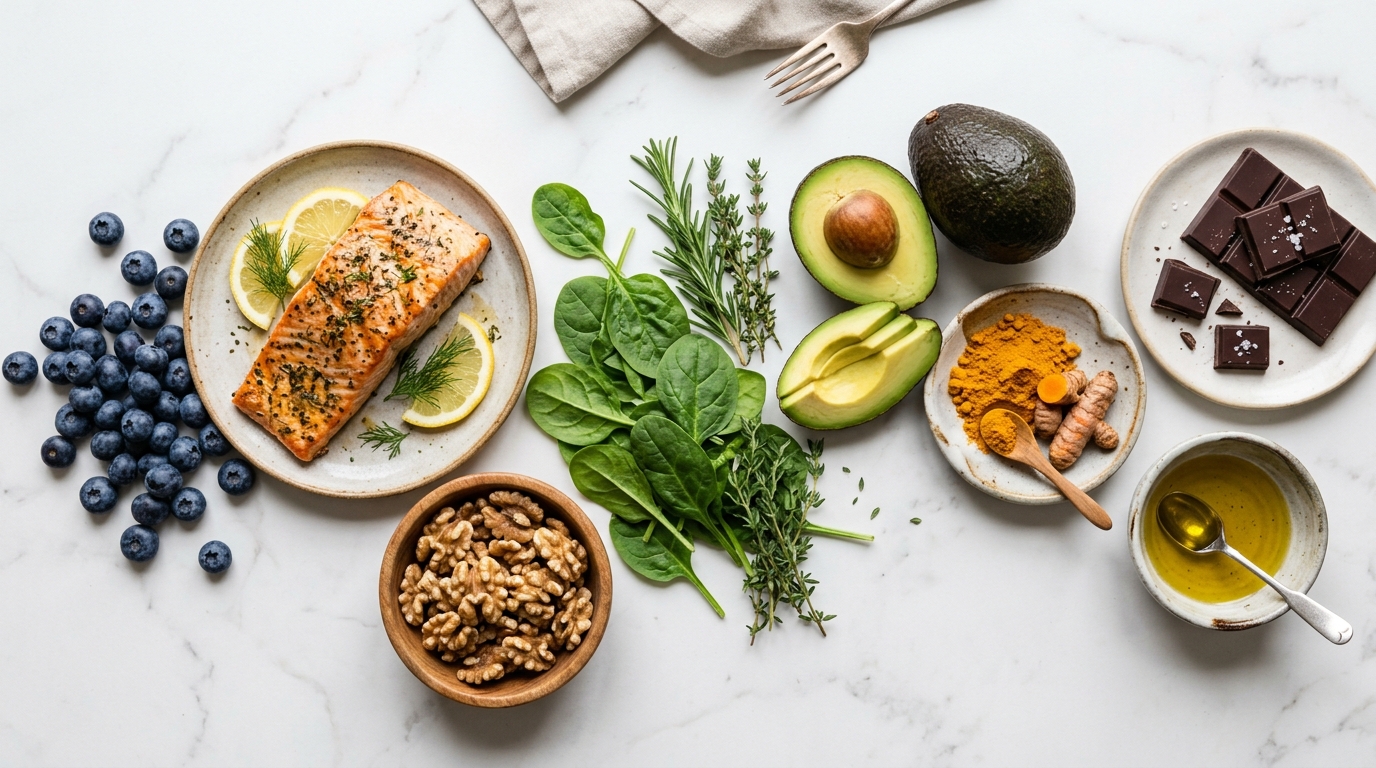
The omega-3 fatty acid DHA found in salmon, sardines, mackerel, and trout is a structural component of brain cell membranes throughout life, and maintaining adequate DHA intake is one of the most consistently supported strategies for preserving cognitive function with age. Lower DHA levels are associated with smaller brain volume, accelerated atrophy, and greater risk of Alzheimer’s disease. Regular fatty fish consumption — at least twice weekly — is a cornerstone recommendation in virtually every evidence-based dietary framework for brain longevity.
2. Blueberries
Blueberries have accumulated more research supporting their brain-protective effects than perhaps any other single food. Their high anthocyanin content crosses the blood-brain barrier and directly reduces oxidative stress and neuroinflammation in brain regions associated with memory and learning. Long-term studies have found that regular blueberry consumption is associated with delayed cognitive aging by up to two and a half years. Fresh, frozen, and freeze-dried forms all retain significant anthocyanin content.
3. Leafy Greens
The MIND diet — a dietary pattern specifically designed based on research into foods that reduce dementia risk — places leafy greens as the single most important food category for brain protection. Spinach, kale, collard greens, and arugula provide folate, vitamin K, lutein, and beta-carotene, all of which have been associated with slower rates of cognitive decline in large prospective studies. Consuming at least one serving of leafy greens daily is associated with a brain age that is approximately 11 years younger than peers of the same chronological age who rarely eat them.
4. Walnuts
Walnuts are uniquely valuable among nuts for brain health due to their combination of plant-based omega-3 fatty acids, vitamin E, polyphenols, and melatonin — a compound that protects neurons from oxidative damage. Their overall antioxidant capacity is among the highest of any tree nut. Population studies have linked regular walnut consumption to better working memory, faster information processing speed, and lower risk of clinical depression. Even a small daily serving of one ounce makes a meaningful contribution to long-term brain protection.
5. Extra Virgin Olive Oil
Extra virgin olive oil is the cornerstone fat of the Mediterranean diet, which is the most extensively studied dietary pattern for dementia prevention. Its primary active compound, oleocanthal, is a natural anti-inflammatory agent that has been shown in research to enhance the clearance of amyloid beta plaques from the brain — the protein aggregates most closely associated with Alzheimer’s disease. Oleocanthal inhibits the same inflammatory enzymes as ibuprofen, though through different mechanisms. Regular olive oil consumption is associated with significantly better cognitive outcomes in long-term studies.
If you are interested in the broader landscape of foods that support everyday brain performance alongside long-term protection, our guide on the best vitamins for brain health covers the key nutrients involved in cognitive function and where to find them.

6. Dark Chocolate
High-quality dark chocolate with 70 percent or higher cocoa content is rich in flavanols that increase cerebral blood flow, enhance neuroplasticity, and protect neurons from oxidative stress. Research has found that regular consumption of high-flavanol cocoa is associated with better performance on memory and attention tests. The flavanols in dark chocolate also stimulate BDNF production, supporting the growth of new neurons. A modest daily portion — one to two squares — provides these benefits without an excessive caloric or sugar burden.
7. Turmeric
Curcumin, the active compound in turmeric, has been studied extensively for its neuroprotective properties. It crosses the blood-brain barrier and has been shown to reduce amyloid plaque formation, decrease neuroinflammation, boost BDNF levels, and support the growth of new neurons. Epidemiological data from regions with high turmeric consumption — notably India, where curry is a dietary staple — show significantly lower rates of Alzheimer’s disease compared to Western populations. Combining turmeric with black pepper increases curcumin absorption by up to 2,000 percent.
8. Eggs
Eggs provide choline, a nutrient essential for the production of acetylcholine — a neurotransmitter involved in memory, learning, and brain signaling throughout life. They also provide B12, vitamin D, and lutein, all of which support cognitive health. Choline intake is particularly critical during fetal development and again in older adulthood, when acetylcholine production declines and memory impairment becomes more common. Regular egg consumption is a practical and affordable way to ensure consistent choline intake across the lifespan.
9. Green Tea
The combination of L-theanine and EGCG in green tea produces a unique cognitive profile: calm, sustained alertness without the anxiety or jitteriness associated with coffee. EGCG has demonstrated neuroprotective effects in research, including the ability to reduce amyloid plaque formation, protect neurons from oxidative damage, and support the survival of new neurons generated in the hippocampus — the brain region most vulnerable to age-related decline. Population studies in Japan, where green tea consumption is high, consistently show lower rates of cognitive decline and dementia.
10. Avocados
Avocados provide oleic acid — the same monounsaturated fat as olive oil — along with folate, vitamin K, vitamin C, and lutein, which has been specifically linked to better cognitive performance and brain health in research. Their folate content supports healthy homocysteine metabolism, and elevated homocysteine is one of the most well-established dietary risk factors for brain atrophy and Alzheimer’s disease. Avocados also improve cerebral blood flow by supporting cardiovascular health, ensuring that the brain receives the oxygen and nutrients it needs.
Conclusion
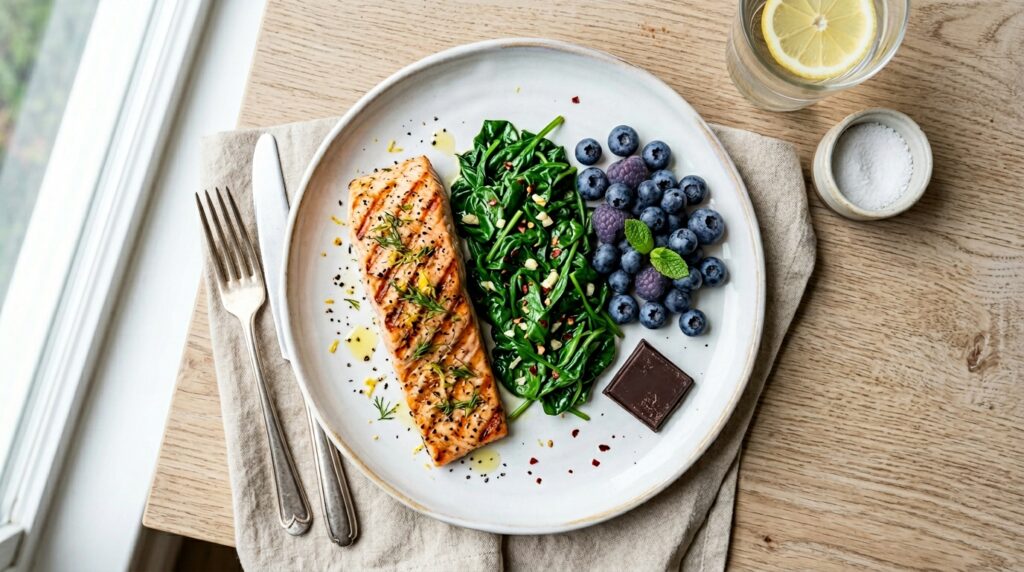
The foods that most powerfully protect the brain from aging are not exotic or difficult to access — they are whole, minimally processed foods that appear consistently in research on healthy aging and cognitive longevity. Fatty fish, berries, leafy greens, olive oil, walnuts, and turmeric form the core of virtually every evidence-based dietary framework for brain protection. Building meals around these foods does not require abandoning the way you currently eat — it requires gradual, consistent additions that accumulate into a meaningfully different dietary pattern over time. The investment is modest. The cognitive return, across decades, is substantial.
Frequently Asked Questions
At what age should I start eating for brain protection? The earlier the better. Brain changes associated with dementia can begin decades before symptoms appear, and the dietary habits of midlife have a particularly strong influence on cognitive health in later years. However, research consistently shows that dietary improvements at any age can meaningfully slow cognitive decline and reduce dementia risk — it is never too late to start.
Is the Mediterranean diet the best diet for brain health? The Mediterranean diet and the MIND diet — a hybrid of the Mediterranean and DASH diets specifically optimized for brain health — are the most extensively researched and consistently supported dietary patterns for cognitive protection. Both emphasize fatty fish, leafy greens, olive oil, nuts, berries, and legumes while limiting red meat, processed foods, and added sugar.
Can diet reverse cognitive decline that has already started? Diet alone cannot reverse established neurodegeneration, but it can slow its progression and in some cases improve cognitive symptoms by reducing inflammation, improving cerebral blood flow, and supporting the brain’s natural repair mechanisms. The earlier dietary improvements are implemented, the greater the potential benefit.
Related Articles
- Best Vitamins for Brain Health
- Foods That Cause Brain Fog
- 10 Best Foods for Brain Health