Introduction
Most people know that eating well matters — but knowing it and actually doing it consistently are two very different things. The gap between intention and action is often not about information. It is about habits. The foods you eat most often are largely determined by the patterns, routines, and default behaviors you have built over time, often without consciously thinking about them.
The good news is that habits can be changed, and the most effective dietary improvements tend to come not from dramatic overhauls but from small, repeatable shifts that gradually replace less healthy defaults with better ones. These changes compound over weeks and months into a meaningfully different way of eating.
Here are ten healthy eating habits to start today — each one practical, evidence-informed, and genuinely sustainable for the long term.
Why Habits Matter More Than Willpower
Willpower is a limited resource. Research in behavioral science has consistently shown that people who rely primarily on willpower to maintain healthy behaviors are far more likely to fail than those who design their environment and routines to make good choices the default. Building habits works because once a behavior becomes automatic, it no longer requires conscious effort or decision-making energy to carry out.
Every small dietary habit you establish today reduces the mental load of eating well tomorrow. Over time, the cumulative effect of these habits is a fundamentally different relationship with food — one built on consistency rather than constant effort.
1. Eat Breakfast Every Day
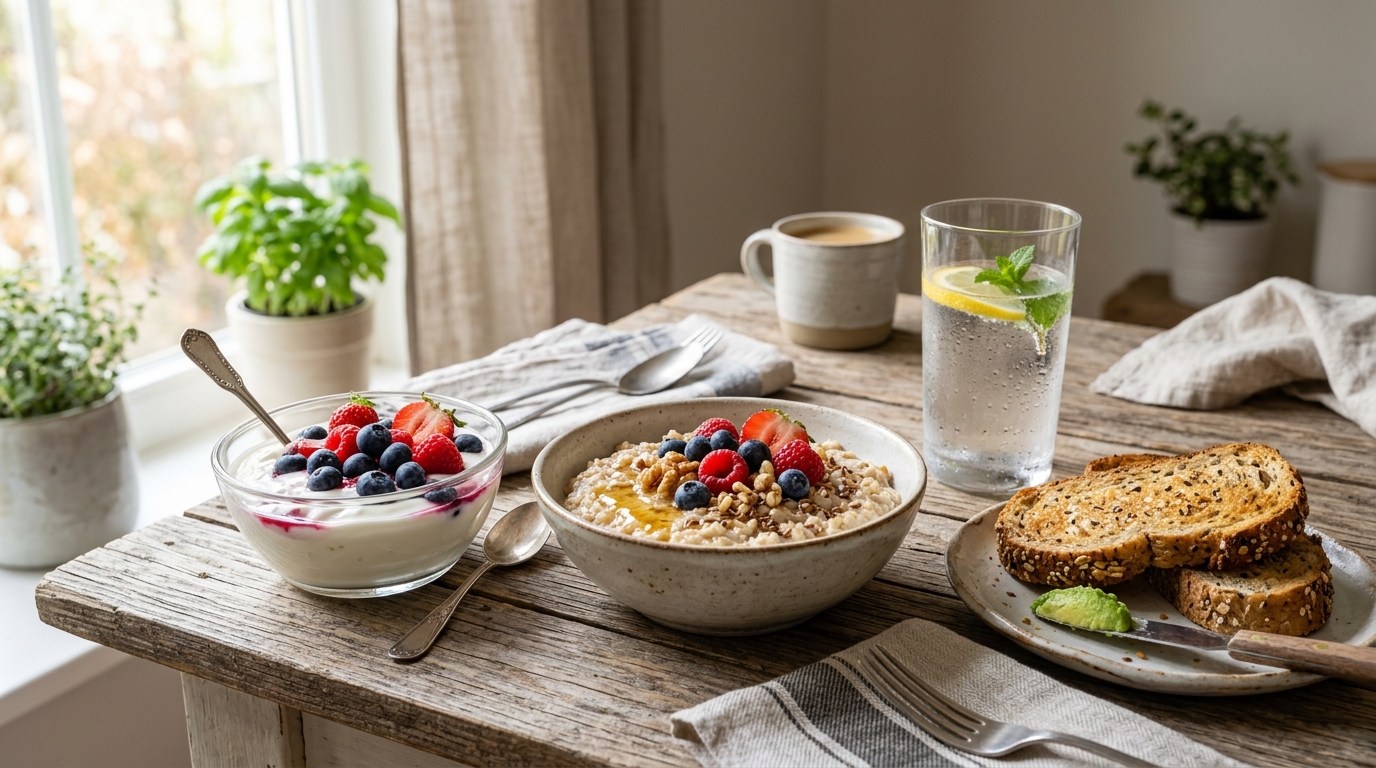
Starting the day with a nutritious breakfast sets a positive tone for your food choices throughout the morning and reduces the likelihood of energy crashes that lead to poor snacking decisions. A balanced breakfast including protein, fiber, and healthy fat stabilizes blood sugar and reduces hunger hormones more effectively than skipping the meal entirely. Even a simple combination of eggs with vegetables or plain Greek yogurt with fruit qualifies as a genuinely good breakfast.
2. Drink Water Before Meals
Drinking a glass of water before eating is one of the simplest habits with a surprising amount of research behind it. Water consumption before meals has been shown to reduce total calorie intake at that meal by helping the stomach begin to signal fullness before food arrives. It also supports hydration, which many people chronically underestimate, and can reduce the likelihood of confusing thirst for hunger — a common and well-documented phenomenon.
3. Fill Half Your Plate with Vegetables
Rather than focusing on what to eliminate from your diet, this habit focuses on addition. When half your plate is consistently filled with non-starchy vegetables — leafy greens, cruciferous vegetables, peppers, zucchini, or tomatoes — the remaining space naturally accommodates less of everything else. This simple visual habit gradually shifts your overall diet toward more fiber, vitamins, and antioxidants without requiring calorie counting or strict restriction.
4. Slow Down and Chew Thoroughly
Eating too fast is one of the most overlooked contributors to overeating. Satiety signals from the stomach and hormones like leptin and GLP-1 take approximately 15 to 20 minutes to reach the brain after eating begins. Slowing down — putting down your utensils between bites, chewing thoroughly, and taking pauses during the meal — allows time for these signals to register before you have already consumed more than your body needed.
5. Choose Whole Grains Over Refined Grains
Replacing white bread, white rice, and refined pasta with their whole grain counterparts is one of the most impactful single dietary substitutions available. Whole grains retain the bran and germ layers that contain fiber, B vitamins, iron, and magnesium — all of which are largely removed during the refining process. They digest more slowly, sustain energy levels more effectively, and support better long-term blood sugar control. The swap requires no new cooking skills — simply choosing brown rice instead of white or whole grain bread instead of white bread.
For a broader look at which foods are worth prioritizing across all major food groups, our guide on the best foods to eat for long-term health provides a comprehensive overview of the most research-supported dietary choices.

6. Plan at Least One Meal in Advance
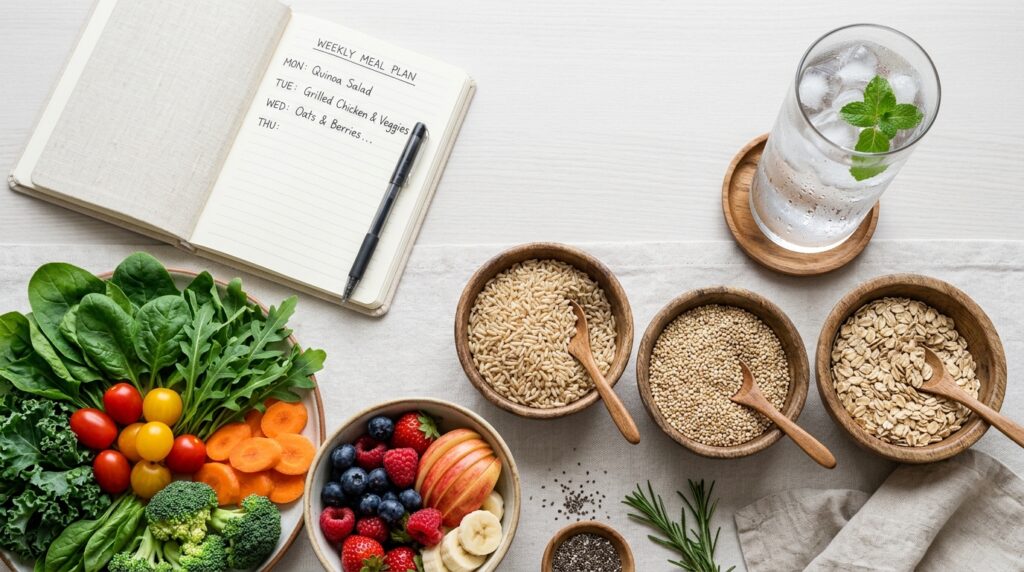
Spontaneous meal decisions are typically worse nutritional choices than planned ones because they are made under conditions of hunger, time pressure, and limited options. Planning even a single meal the night before — knowing what you will have for breakfast or what you are making for dinner — reduces the number of impulsive decisions you need to make and makes healthy eating considerably easier to follow through on during busy periods.
7. Keep Healthy Foods Visible and Accessible
Environmental design has a powerful influence on food behavior. Studies have found that people eat more of whatever food is most visible and convenient in their environment. Placing a bowl of fruit on the counter, keeping cut vegetables at eye level in the refrigerator, and storing less nutritious snacks in less accessible locations all increase the likelihood of choosing healthier options without requiring any additional willpower. Making healthy food the path of least resistance is one of the most effective dietary strategies available.
8. Stop Eating When You Are 80 Percent Full
This concept — borrowed from the Japanese principle of hara hachi bu — involves pausing to check in with your hunger level before reaching fullness and stopping eating before you feel completely full. Because satiety signals are delayed, stopping at the point where you feel mostly satisfied rather than stuffed typically results in a comfortable full feeling 15 to 20 minutes later. Practicing this habit over time recalibrates portion awareness and makes overeating a less frequent occurrence.
9. Minimize Ultra-Processed Foods
Ultra-processed foods — including packaged snacks, sugary beverages, fast food, and many convenience meals — are engineered to override natural satiety signals and encourage overconsumption. They are typically high in refined carbohydrates, unhealthy fats, sodium, and added sugars while being low in fiber and micronutrients. No single food needs to be permanently off-limits, but habitually reducing your reliance on ultra-processed options and replacing them with whole food alternatives meaningfully improves overall diet quality over time.
10. Eat More Meals at Home
Home-cooked meals are, on average, lower in calories, sodium, and saturated fat than restaurant or takeout meals of equivalent perceived size. Cooking at home also gives you full control over ingredients, portion sizes, and preparation methods. You do not need to cook elaborate meals — simple combinations of a protein, a vegetable, and a whole grain prepared with minimal added fat and salt are nutritionally superior to most restaurant equivalents. Even shifting just two or three meals per week from eating out to eating at home makes a measurable difference over time.
Conclusion
The healthy eating habits to start today outlined in this guide are not complicated, and none of them require perfection. What they require is consistency — repeating them often enough that they become your default rather than an exception. Begin with one or two that feel most manageable and build gradually. Over weeks and months, these small behavioral shifts accumulate into a fundamentally healthier relationship with food, one that supports your energy, your long-term health, and your quality of life without the stress of restrictive dieting.
Frequently Asked Questions
How long does it take to form a healthy eating habit? Research suggests that habit formation typically takes between 18 and 66 days, depending on the complexity of the behavior and how consistently it is practiced. Simpler habits, such as drinking water before meals, tend to become automatic more quickly, while more complex changes may take longer. The key is consistency over perfection — even imperfect practice accumulates into real change over time.
Is it okay to eat unhealthy foods occasionally while building healthy eating habits? Yes. Occasional indulgences do not derail long-term progress when the overall dietary pattern is sound. Treating individual meals or days as isolated events rather than indicators of overall failure is an important mindset shift. What matters most is what you eat most of the time, not what you eat in any single sitting.
What is the easiest healthy eating habit to start with? Drinking a glass of water before each meal and filling half your plate with vegetables are two of the simplest, most impactful habits to begin with because they require no special ingredients, cooking skills, or significant time investment. Starting with habits that are easy to execute reduces the barrier to consistency and builds momentum for more involved changes later on.
Related Articles
How to Build a Healthy Meal Plan Best Low-Calorie Foods That Keep You Full 10 Best Healthy Foods to Eat Every Day