
Best Evening Foods for Better Sleep and Brain Recovery
Introduction
Sleep is not passive downtime for the brain — it is one of the most metabolically active and neurologically critical periods of the day. During sleep, the brain consolidates memories, clears metabolic waste through the glymphatic system, repairs damaged cells, regulates hormones, and restores the cognitive resources depleted during waking hours. The quality and quantity of sleep you get directly determines how well your brain functions the following day and, over a lifetime, how resilient it remains against age-related decline.
What you eat in the hours before bed has a direct and measurable influence on both sleep quality and the brain’s overnight recovery processes. Certain foods contain nutrients that promote the production of melatonin and serotonin, support GABA activity, reduce pre-sleep cortisol, and provide the amino acids required for cellular repair. Understanding which evening foods support rather than disrupt this critical nightly process is a practical strategy for improving both sleep and long-term brain health.
Why Evening Nutrition Affects Sleep Quality
Several dietary compounds directly influence the neurochemical processes involved in sleep onset and sleep architecture. Tryptophan, an amino acid found in many protein-rich foods, is the precursor to serotonin and then melatonin — the two compounds most directly involved in sleep regulation. Magnesium and calcium support GABA activity, the brain’s primary inhibitory neurotransmitter that promotes relaxation and sleep onset. B vitamins, particularly B6, are cofactors in melatonin synthesis.
Conversely, foods and beverages that spike blood sugar, stimulate the central nervous system, or promote inflammation can delay sleep onset, reduce time in deep sleep, and impair the brain’s overnight recovery processes. Choosing the right evening foods — and avoiding the wrong ones — creates a biochemical environment that supports the deepest, most restorative sleep possible.
Best Evening Foods for Better Sleep and Brain Recovery
1. Tart Cherries
Tart cherries are one of the few natural whole food sources of melatonin — the hormone that regulates the sleep-wake cycle. Multiple clinical trials have found that consuming tart cherry juice increases melatonin levels, extends total sleep time, and improves sleep efficiency in both healthy adults and older adults with insomnia. Tart cherries also contain anthocyanins with anti-inflammatory properties that support overnight cellular repair. Drinking a small glass of tart cherry juice or eating a portion of dried tart cherries in the evening is a well-supported, evidence-based sleep strategy.
2. Kiwi
Kiwi has emerged in recent research as one of the most effective foods for improving sleep outcomes. A clinical study found that eating two kiwis one hour before bedtime for four weeks significantly reduced time to fall asleep, increased total sleep time, and improved sleep efficiency. Kiwi is rich in serotonin precursors, vitamin C, vitamin K, and folate — nutrients that support the neurochemical pathways involved in sleep regulation. The mechanism is not fully understood, but the consistent results across multiple studies make kiwi one of the most compelling evidence-based evening food choices for sleep.
3. Warm Milk or Fortified Plant Milk
The association between warm milk and sleep is not merely folklore. Milk contains tryptophan, calcium, and small amounts of melatonin — all of which support sleep onset. Calcium helps the brain use tryptophan to produce melatonin, and its calming effect on the nervous system is well-established. The warmth of the beverage also has a physiologically soothing effect that supports the gradual drop in core body temperature associated with sleep onset. Fortified plant milks like soy milk provide comparable tryptophan and calcium for those who do not consume dairy.
4. Almonds
Almonds are an excellent source of magnesium, a mineral that plays a critical role in sleep quality by activating the parasympathetic nervous system — the calming branch of the nervous system that promotes rest and recovery. Magnesium also regulates melatonin production and has been shown in clinical trials to improve sleep quality, particularly in older adults. A small handful of almonds in the evening provides a meaningful dose of sleep-supporting magnesium along with healthy fats that stabilize blood sugar overnight and prevent middle-of-the-night waking due to hunger.
5. Oats
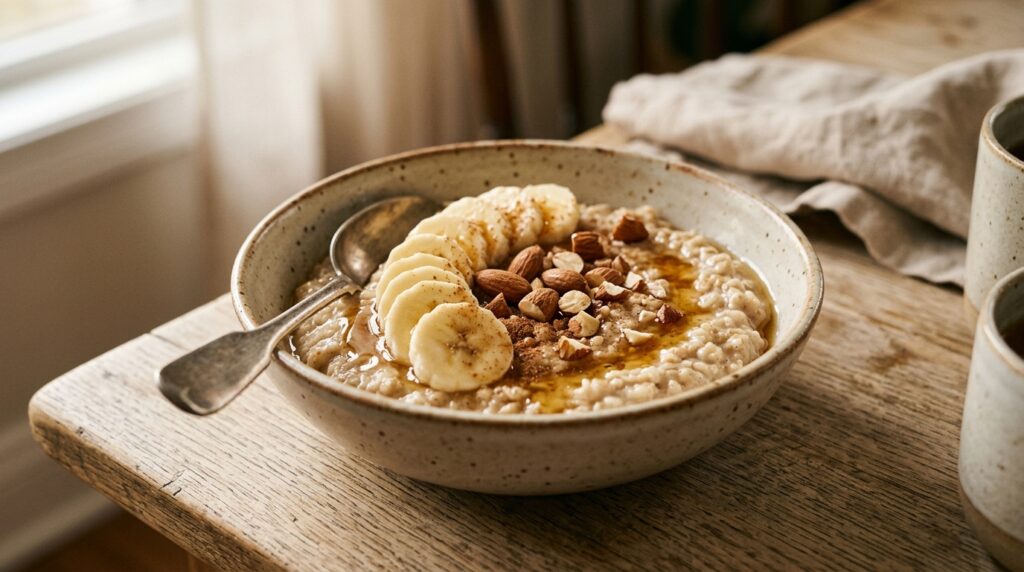
Oats are a surprisingly effective evening food for sleep. They provide both melatonin and tryptophan, making them one of the few plant foods that directly contribute to both phases of the melatonin synthesis pathway. Oats also offer complex carbohydrates that mildly raise insulin levels, which facilitates the transport of tryptophan across the blood-brain barrier — enhancing its conversion to serotonin and melatonin. A small bowl of plain oatmeal with a drizzle of honey and a sprinkle of almonds in the evening creates an ideal combination of sleep-supporting nutrients.
If you are also interested in how dietary choices affect brain function during waking hours, our guide on foods that protect the brain from aging explores the longer-term neuroprotective benefits of a brain-healthy diet.
6. Bananas
Bananas provide tryptophan, magnesium, potassium, and vitamin B6 — all of which contribute to melatonin and serotonin synthesis. Potassium and magnesium act as natural muscle relaxants that reduce physical tension and support nervous system calming before sleep. B6 is a direct cofactor in the conversion of tryptophan to serotonin, making bananas a particularly well-rounded evening snack for sleep support. Their natural sweetness and portability also make them one of the most convenient evening food choices available.
7. Fatty Fish
Salmon and other fatty fish are notable not just for their omega-3 content but for their high vitamin D levels — and the combination of these two nutrients has been specifically linked to better sleep quality in research. A study published in the Journal of Clinical Sleep Medicine found that regular salmon consumption three times per week significantly improved sleep quality and daytime functioning in a controlled trial. The serotonin-supportive effects of omega-3s may be the primary mechanism, as serotonin is both a mood regulator and a direct precursor to melatonin.
8. Chamomile Tea
Chamomile tea contains apigenin, an antioxidant that binds to GABA receptors in the brain — the same receptors targeted by benzodiazepine sleep medications, though with far gentler effects. Clinical studies have found that chamomile extract improves sleep quality and reduces the time it takes to fall asleep, with particular benefits seen in postpartum women and older adults. Drinking a warm cup of chamomile tea 30 to 60 minutes before bed is one of the most widely used and research-supported natural sleep aids available.
9. Walnuts
Walnuts are one of the few whole foods that contain melatonin directly, along with serotonin and omega-3 fatty acids that support healthy sleep architecture. Research has found that eating walnuts increases blood melatonin concentrations and improves overall sleep quality. Their magnesium and healthy fat content additionally supports overnight blood sugar stability, reducing the likelihood of early morning waking. A small serving of walnuts in the evening — perhaps with a piece of fruit — makes a nutritionally coherent and sleep-supportive evening snack.
10. Honey
A small amount of honey before bed may support sleep by slightly raising insulin levels, which facilitates tryptophan entry into the brain, and by providing glycogen stores to the liver that prevent stress hormones from rising during the night to signal the need for fuel. Stuart McOuat’s theory of honey’s sleep benefits, while not extensively studied in clinical trials, is consistent with the known metabolic mechanisms involved in sleep maintenance. A teaspoon of honey stirred into chamomile tea or warm milk is a time-honored and physiologically plausible evening ritual.

Conclusion
The evening hours represent an often-overlooked nutritional window with direct implications for sleep quality and the brain’s overnight recovery. Foods that provide tryptophan, magnesium, melatonin, and GABA-supporting compounds create a neurochemical environment that supports faster sleep onset, deeper sleep stages, and more effective overnight brain repair. Start with one or two evening food habits — a cup of chamomile tea, a handful of almonds, or a small bowl of oats — and notice the difference in your sleep quality over the following weeks. What you eat before bed is just as important as what you eat during the day for your brain’s long-term health.
Frequently Asked Questions
What is the best single food to eat before bed for better sleep? Tart cherry juice and kiwi have the strongest clinical evidence for improving sleep quality and duration as specific evening foods. Both have been tested in randomized controlled trials with consistent positive results across multiple sleep metrics including time to fall asleep, total sleep time, and sleep efficiency.
How long before bed should I eat a sleep-supporting snack? Most sleep research suggests that light sleep-supporting snacks are most effective when consumed 30 to 60 minutes before intended bedtime. Larger meals should ideally be consumed at least two to three hours before bed, as digestion can raise core body temperature and interfere with sleep onset.
Does eating before bed make you gain weight? The relationship between late eating and weight gain is more nuanced than commonly believed. Small, nutritionally appropriate evening snacks — particularly those that prevent nighttime hunger-related waking — do not inherently cause weight gain. The total caloric intake across the day and the quality of foods chosen matter far more than the timing of any individual snack.
Related Articles
- Foods That Protect the Brain from Aging
- Foods That Cause Brain Fog
- Best Vitamins for Brain Health