Introduction
One of the biggest misconceptions about eating fewer calories is that it means being constantly hungry. In reality, hunger has less to do with how many calories you eat and more to do with what kinds of foods you choose. Certain foods are extraordinarily filling relative to their calorie content — allowing you to eat generous portions while still maintaining a calorie deficit or a healthy overall intake.
These foods tend to share a few key characteristics: they are high in water, fiber, or protein, all of which contribute to a sense of fullness and slow the pace of digestion. Including them regularly in your diet makes it much easier to feel satisfied without overeating.
Here are the best low-calorie foods that keep you full and why each one works so effectively.
Why Satiety Matters as Much as Calories
Satiety — the feeling of fullness and satisfaction after eating — is governed by multiple physiological signals, including stomach stretch receptors, hormone levels like leptin and ghrelin, and the rate at which food is digested. Foods that score high on the satiety index tend to be those that take up physical space in the stomach, slow gastric emptying, and stabilize blood sugar rather than causing rapid spikes and crashes.
Choosing foods with high satiety value allows you to maintain a lower overall calorie intake without the willpower battle that comes with constant hunger. This is one of the most sustainable strategies for long-term weight management and healthy eating.
1. Boiled Potatoes
Despite their unfair reputation, plain boiled potatoes consistently rank among the highest on the satiety index — higher than foods like eggs, beef, or oatmeal. A medium boiled potato contains only about 130 calories but provides significant potassium, vitamin C, and resistant starch, which feeds beneficial gut bacteria and promotes feelings of fullness. The key is preparation: boiled or baked without heavy toppings, potatoes are one of the most filling foods per calorie available.
2. Oatmeal
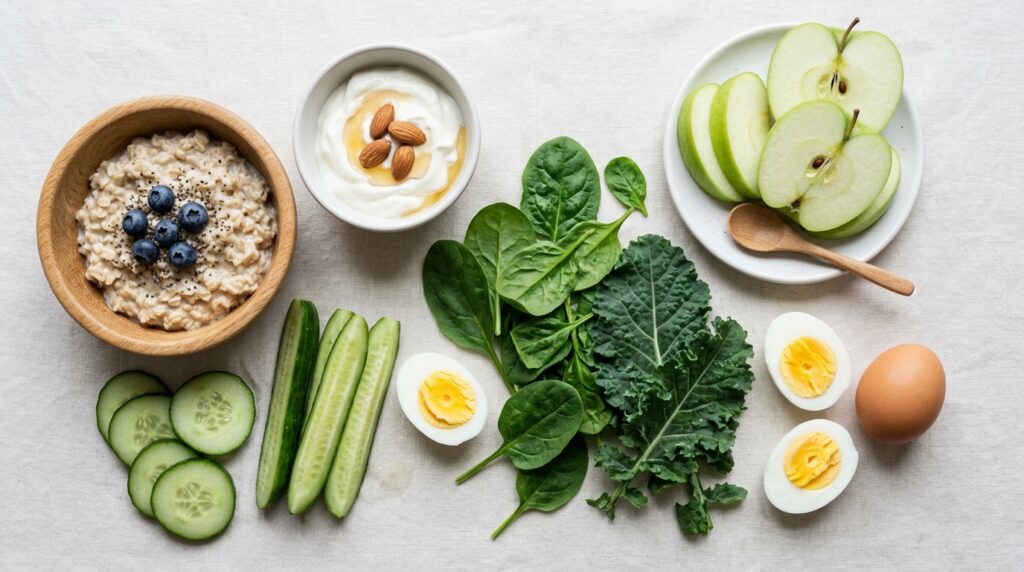
Oatmeal is rich in beta-glucan, a soluble fiber that absorbs water and forms a thick gel in the digestive tract, slowing stomach emptying and sustaining fullness for hours. A standard serving of plain rolled oats contains around 150 calories and provides a substantial amount of fiber and protein compared to most other breakfast options. Research suggests that eating oatmeal for breakfast leads to significantly less calorie consumption at subsequent meals than eating cold breakfast cereals of equivalent calorie content.
3. Eggs
Eggs are a compact, calorie-efficient protein source with a powerful satiety effect. Two large eggs provide roughly 140 calories along with about 12 grams of complete protein and a range of important micronutrients. Studies have shown that eating eggs for breakfast compared to a calorie-matched carbohydrate-based breakfast leads to reduced hunger and lower calorie intake over the rest of the day. The combination of protein and dietary fat makes eggs a particularly satisfying meal foundation.
4. Legumes
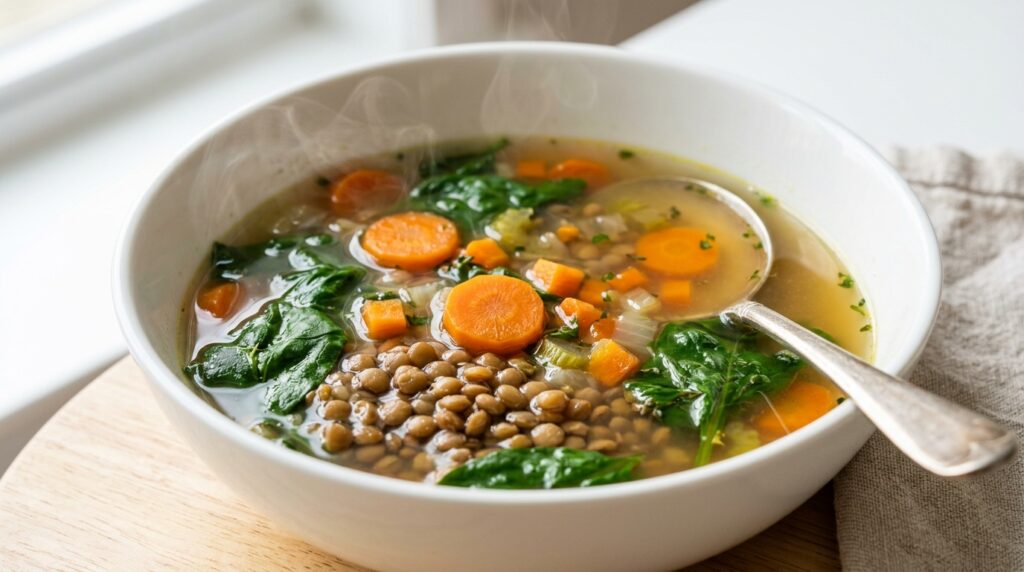
Beans, lentils, and chickpeas are among the most filling foods you can include in a healthy diet. They combine high fiber content with a moderate amount of protein, both of which slow digestion and prolong satiety. A cup of cooked black beans or lentils provides around 15 to 18 grams of protein and nearly half your daily fiber needs for only 200 to 230 calories. Legumes also have a low glycemic index, meaning they release energy gradually without causing the blood sugar crashes that trigger renewed hunger.
5. Soups and Broth-Based Dishes
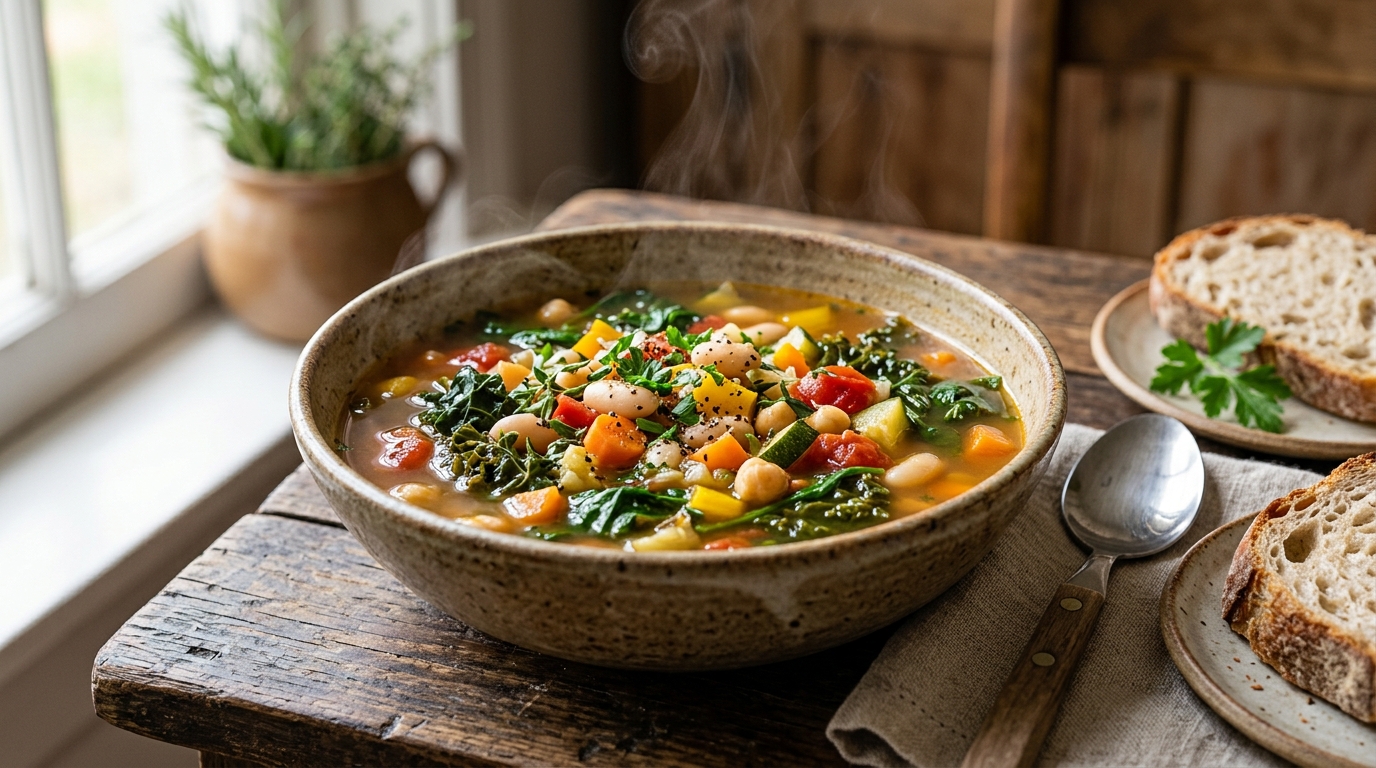
Soup is one of the most underrated tools for managing calorie intake without feeling deprived. The water content in broth-based soups increases the volume of the meal substantially while adding very few calories. Research has found that starting a meal with a low-calorie soup can reduce the total calories consumed during that meal by up to 20 percent. Vegetable-based soups with legumes or lean protein are particularly effective for keeping hunger at bay.
If you are exploring strategies for eating well without excess calories, our guide on healthy eating habits to start today covers additional practical approaches worth considering alongside food choices.
6. Greek Yogurt
Plain Greek yogurt delivers a concentrated amount of protein — often 15 to 20 grams per cup — for approximately 100 to 130 calories, depending on the fat content. Protein is the most satiating macronutrient, and Greek yogurt provides it in a highly bioavailable form. Its thick texture also contributes to a perception of greater volume and satisfaction. Choosing unsweetened versions keeps sugar content low while retaining all the filling benefits.
7. Leafy Greens
Spinach, kale, romaine lettuce, and other leafy greens are essentially calorie-free in practical terms — a large cup of raw spinach contains fewer than 10 calories — yet they provide meaningful amounts of fiber, water, and micronutrients. Adding generous portions of leafy greens to meals increases overall volume significantly without meaningfully increasing calorie intake. They also provide vitamins K, A, and C, along with folate and iron, making them nutritionally dense despite their minimal calorie contribution.
8. Cottage Cheese
Cottage cheese is one of the most protein-dense foods by calorie count. A cup of low-fat cottage cheese provides around 25 grams of protein for only about 180 calories. Much of the protein in cottage cheese is casein, a slow-digesting form that sustains amino acid availability and fullness over several hours. It is mild in flavor and works well both sweet — topped with fruit — and savory, paired with vegetables or whole grain crackers.
9. Apples
Apples are an excellent example of a high-volume, high-fiber fruit that satisfies hunger effectively. A medium apple contains around 95 calories but provides nearly 5 grams of dietary fiber, primarily in the form of pectin, which slows digestion and supports feelings of fullness. The act of chewing a whole apple also takes time and signals satiety cues more effectively than drinking an equivalent amount of apple juice, which provides calories with almost no filling effect.
10. Cucumbers and Non-Starchy Vegetables
Cucumbers, celery, zucchini, bell peppers, and broccoli are all extremely low in calories — most providing fewer than 30 to 50 calories per cup — while offering meaningful amounts of fiber and water. These non-starchy vegetables can be eaten in large quantities without adding significant calories, making them ideal for adding volume and satisfaction to meals and snacks. Pairing them with a protein or healthy fat source — such as hummus or nut butter — increases their satiety even further.
Conclusion
The best low-calorie foods that keep you full share a common theme: they work with your body’s natural hunger signals rather than against them. By prioritizing high-volume, fiber-rich, and protein-containing foods, you can eat satisfying, generous portions while maintaining a healthy overall calorie intake. This approach makes long-term healthy eating feel effortless rather than restrictive — and that sustainability is precisely what makes it so effective.
Frequently Asked Questions
Why do some low-calorie foods not keep you full? Not all low-calorie foods are equally satisfying. Foods that are low in fiber and protein — such as rice cakes, plain crackers, or diet sodas — provide few calories but also fail to trigger adequate satiety signals. Volume, fiber content, protein level, and water content are all more important than calorie count alone when it comes to how full a food makes you feel.
How much fiber do I need each day to feel full? Most health guidelines recommend 25 to 38 grams of fiber per day for adults, though the average person consumes considerably less than this. Even modest increases in fiber intake — adding a serving of legumes, an extra vegetable, or swapping refined grains for whole grains — can meaningfully improve satiety throughout the day.
Is it possible to overeat low-calorie foods? Yes, though it is considerably harder than overeating calorie-dense foods. The body has natural stretch receptors in the stomach that signal fullness based on volume, regardless of calories. However, if low-calorie foods are paired with calorie-dense toppings or sauces, the overall calorie count can increase significantly. Keeping additions minimal preserves the filling benefits of these foods.