Introduction
One of the biggest challenges in eating healthier is dealing with hunger. Many people assume that eating less means feeling hungry constantly — but that assumption rests on choosing the wrong foods. The right low-calorie foods can keep you comfortably full for hours while delivering a wide range of essential nutrients.
This guide covers the best low-calorie foods that keep you full, explaining what makes each one effective at promoting satiety and how to incorporate them into your daily diet.
Why Satiety Matters for Healthy Eating
Hunger is one of the primary reasons people abandon healthy eating habits. When meals leave you feeling unsatisfied, you are far more likely to snack on high-calorie processed foods between meals or overeat at your next sitting. Understanding the science of satiety — and choosing foods that support it — makes the process of eating healthier much more sustainable.
The most filling low-calorie foods share common characteristics: they are high in fiber, high in water content, rich in protein, or some combination of all three. These properties slow digestion, expand in the stomach, and trigger satiety hormones that signal fullness to the brain.
Best Low-Calorie Foods That Keep You Full
1. Oatmeal
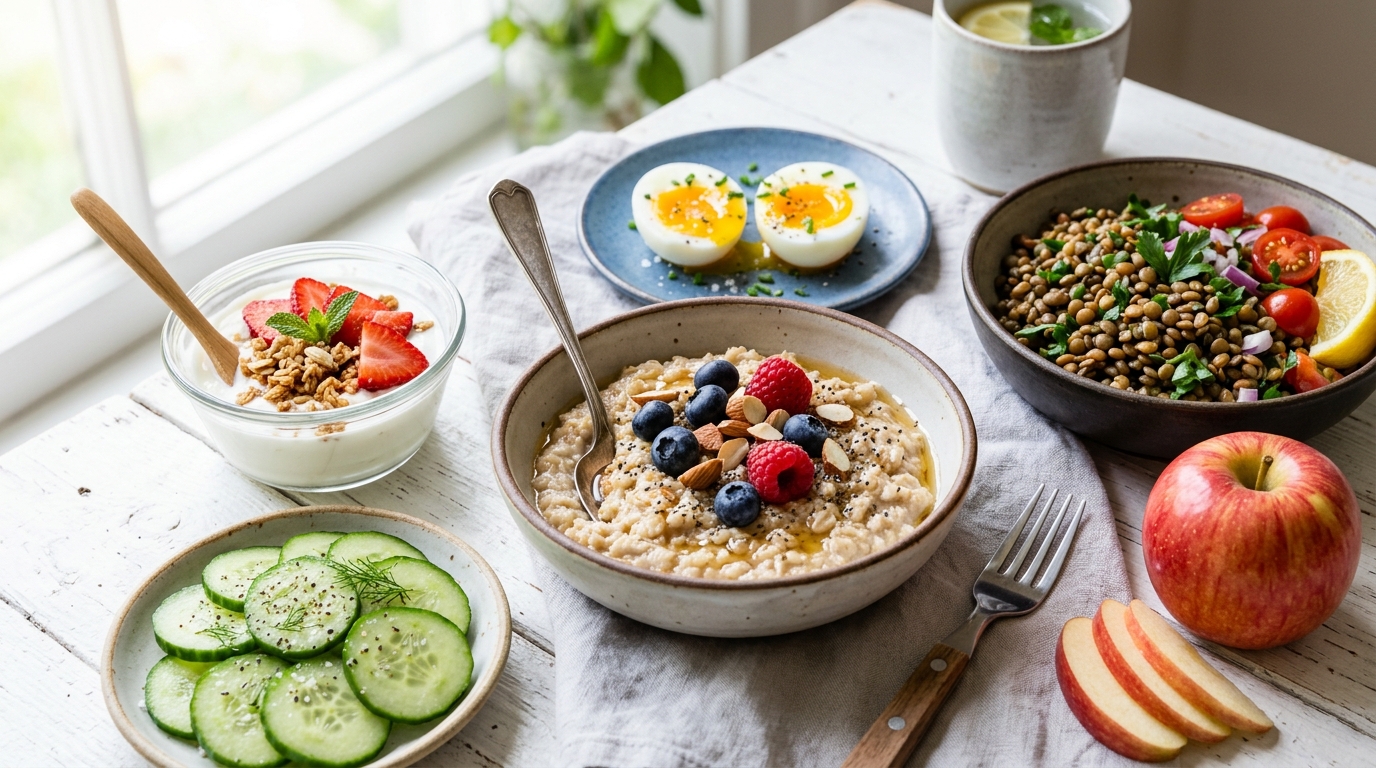
A bowl of plain rolled oats is one of the most filling breakfasts available at a modest calorie count. The beta-glucan fiber in oats absorbs water and forms a thick gel in the stomach, slowing gastric emptying and keeping you satisfied for several hours. Research has specifically compared oatmeal to ready-to-eat cereals and found it produces significantly greater satiety per calorie. Add protein-rich toppings like Greek yogurt or eggs to further extend its fullness effect.
2. Eggs
Eggs are among the highest-satiety foods per calorie available. A two-egg meal provides roughly 150 calories along with complete protein that takes time to digest and actively reduces appetite through hormonal mechanisms. Multiple studies have shown that eating eggs for breakfast reduces total calorie intake for the rest of the day compared to calorie-matched high-carbohydrate breakfasts. Their versatility makes them easy to incorporate into any meal.
3. Legumes
Beans, lentils, and chickpeas are high in both protein and fiber — the two most satiating nutrients. A cup of cooked lentils delivers around 18 grams of protein and 16 grams of fiber for approximately 230 calories. This combination slows digestion substantially and provides a durable feeling of fullness that outlasts most other foods at the same calorie level. Adding legumes to soups, salads, or grain bowls is an effective strategy for extending satiety without adding many calories.
4. Greek Yogurt
Plain Greek yogurt provides high protein content — up to 20 grams per cup — at a relatively low calorie cost. Protein is the macronutrient most associated with satiety, and the casein protein in Greek yogurt is particularly slow-digesting. A serving as a snack significantly delays hunger compared to equally caloric but carbohydrate-based options like crackers or fruit juice. Choose full-fat or low-fat plain varieties to get the most protein with the least added sugar.
5. Vegetables With High Water Content
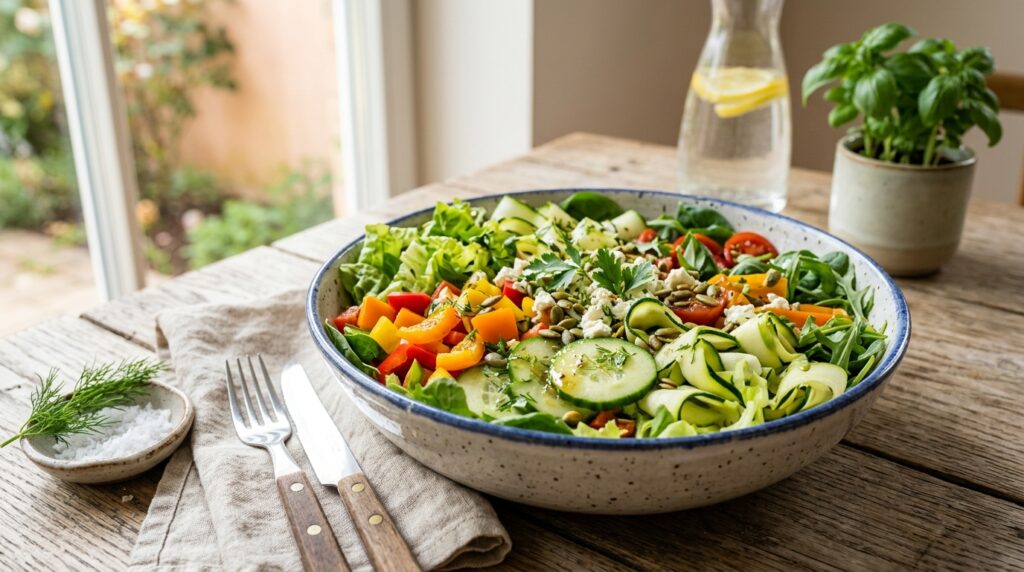
Cucumbers, celery, lettuce, zucchini, and bell peppers are composed of 90 to 95 percent water, making them extremely low in calories while occupying significant space in the stomach. Eating a large vegetable salad before a meal is a well-researched strategy for reducing the total calories consumed at that meal. These foods also provide fiber, vitamins, and antioxidants that make them nutritionally valuable beyond their water content alone.
If you are exploring food strategies for weight management, our article on the best foods for weight loss covers a broader range of options that overlap closely with the satiety-focused foods discussed here.
6. Apples
Apples are high in water, fiber, and pectin — a type of soluble fiber that forms a gel in the gut and slows digestion. A medium apple contains around 95 calories and provides around 4 grams of fiber. Research suggests that eating a whole apple before a meal reduces subsequent calorie intake more than drinking apple juice with the same calories, demonstrating that the physical structure of whole fruit matters for satiety. Eating apples with the skin on maximizes fiber content.
7. Cottage Cheese
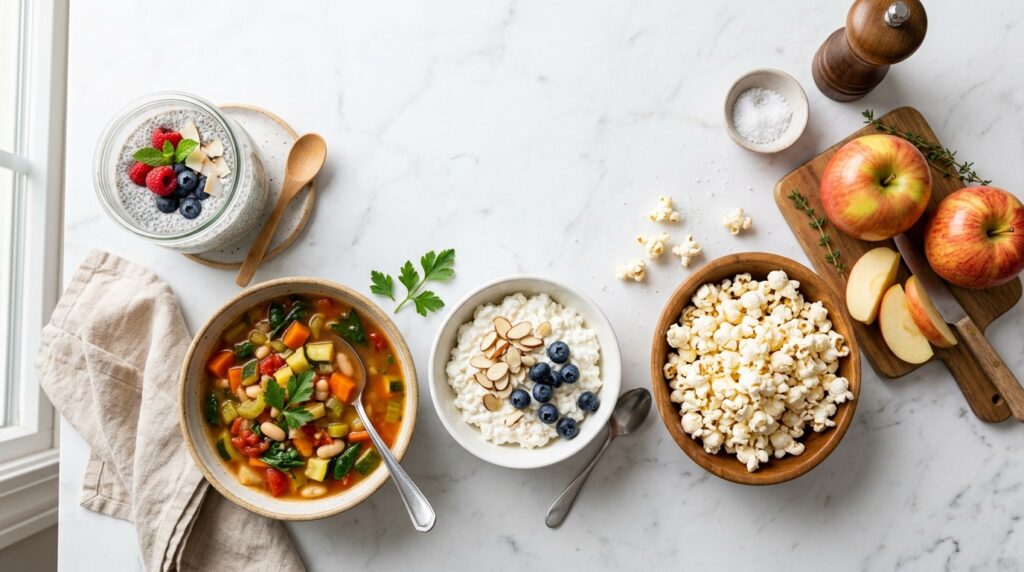
Cottage cheese is a high-protein, low-calorie food with around 25 grams of protein per cup at approximately 180 calories. Its casein protein content makes it particularly effective for prolonged satiety. It is also high in calcium and B vitamins. Eating cottage cheese as a snack or at breakfast significantly reduces hunger in the hours that follow. Its mild, slightly sour taste pairs well with fruit, herbs, or a drizzle of olive oil.
8. Soup
Broth-based soups — particularly those with vegetables, legumes, and lean proteins — have a remarkable ability to fill the stomach with a relatively small calorie contribution. The liquid volume expands the stomach and triggers stretch receptors that communicate fullness to the brain. Studies show that starting a meal with a low-calorie soup reduces the total calorie intake of the meal by an average of 20 percent. Vegetable-based soups are one of the most underused tools in healthy eating.
9. Popcorn
Plain air-popped popcorn is one of the highest-volume, lowest-calorie snacks available. A three-cup serving contains roughly 90 calories with a surprising amount of fiber. Its large volume relative to its calorie content means it takes a while to eat and creates a physical sense of fullness. Without heavy butter or flavoring, plain popcorn satisfies the urge for a crunchy, snackable food without the calorie load of chips or crackers.
10. Chia Seeds
Chia seeds absorb up to ten times their weight in water, swelling significantly when soaked and forming a gel that slows digestion and promotes fullness. Just two tablespoons provide around 140 calories, 4 grams of protein, and 10 grams of fiber — an extraordinary nutrient density. Adding chia seeds to smoothies, oatmeal, or making chia pudding overnight creates satisfying meals and snacks that hold hunger at bay for extended periods.
Conclusion
The best low-calorie foods that keep you full share a clear nutritional logic: they are high in fiber, protein, water, or some combination. Oatmeal, eggs, legumes, Greek yogurt, and water-rich vegetables are all practical, affordable options that make eating less feel far more manageable. Building your diet around these foods means you can manage your calorie intake without fighting constant hunger — which is the most sustainable foundation for any healthy eating approach.
Frequently Asked Questions
What is the most filling low-calorie food? Eggs, Greek yogurt, and legumes consistently rank among the most satiating foods per calorie due to their high protein and fiber content. Soups and water-rich vegetables also perform well in satiety research.
Can eating low-calorie foods help with weight loss? Yes. When high-volume, nutrient-dense foods replace calorie-dense processed options, total daily calorie intake naturally decreases without the need for strict counting. This is the principle behind volume eating approaches to weight management.
How much water should I drink to feel full? Drinking a full glass of water before meals has been shown in research to reduce calorie intake at that meal. However, water alone does not sustain satiety for long — it works best when combined with high-fiber and high-protein foods.
Related Articles