
Introduction
Short-term diet trends come and go, but the science of long-term health consistently points to a core set of foods that protect the body, reduce disease risk, and support a higher quality of life well into old age. The foods that appear most reliably across research on longevity, chronic disease prevention, and healthy aging are not exotic or expensive — they are largely whole, minimally processed staples that have formed the foundation of healthy diets across cultures for centuries.
If your goal is not just to feel good today but to build a body that functions well for decades, the foods you choose regularly matter enormously. Here are the best foods to eat for long-term health, backed by a consistent body of nutritional evidence.
Why Long-Term Diet Quality Shapes Health Outcomes
The relationship between diet and long-term health is one of the most extensively studied areas in medical research. Chronic diseases including type 2 diabetes, cardiovascular disease, certain cancers, and cognitive decline are all strongly influenced by dietary patterns over time. No single food prevents disease or guarantees longevity, but consistent dietary habits — favoring nutrient-dense whole foods over ultra-processed options — significantly reduce cumulative risk.
Studies of populations with the longest healthy lifespans, often called Blue Zones, consistently find diets built around plant foods, legumes, whole grains, fish, and moderate amounts of lean meat or dairy. These dietary patterns share more similarities than differences, suggesting that the fundamental principles of longevity eating are fairly universal.
1. Leafy Green Vegetables
Leafy greens — including spinach, kale, arugula, Swiss chard, and collard greens — are among the most nutrient-dense foods on earth relative to their calorie content. They are rich in vitamins K, A, C, and folate, as well as lutein and zeaxanthin, antioxidants particularly associated with eye health and protection against age-related macular degeneration. Research from the Rush Memory and Aging Project found that consuming leafy greens daily was associated with a slower rate of cognitive decline equivalent to being 11 years younger in brain age.
2. Berries
Berries are exceptional sources of anthocyanins and other polyphenols — plant compounds with potent antioxidant and anti-inflammatory properties. Regular berry consumption has been associated with reduced cardiovascular risk, improved insulin sensitivity, better cognitive performance, and lower markers of systemic inflammation. Blueberries in particular have been studied extensively for their role in brain health and memory preservation. Fresh, frozen, and dried berries without added sugar all retain meaningful amounts of beneficial compounds.
3. Fatty Fish
Salmon, mackerel, sardines, and other fatty fish provide EPA and DHA — the long-chain omega-3 fatty acids that most directly support cardiovascular function, brain health, and inflammation regulation. Regular consumption of fatty fish has been associated with lower rates of heart disease, reduced cognitive decline, and better overall mortality outcomes in large prospective studies. Most health authorities recommend eating fatty fish at least twice per week for optimal long-term benefit.
4. Legumes
Legumes — beans, lentils, chickpeas, and peas — appear in the diets of virtually every long-lived population studied. They are rich in fiber, plant protein, folate, iron, and potassium, and they support gut health through their prebiotic fiber content. Regular legume consumption has been inversely associated with cardiovascular disease risk, type 2 diabetes, and all-cause mortality. They are also among the most affordable nutrient-dense foods widely available.
5. Nuts
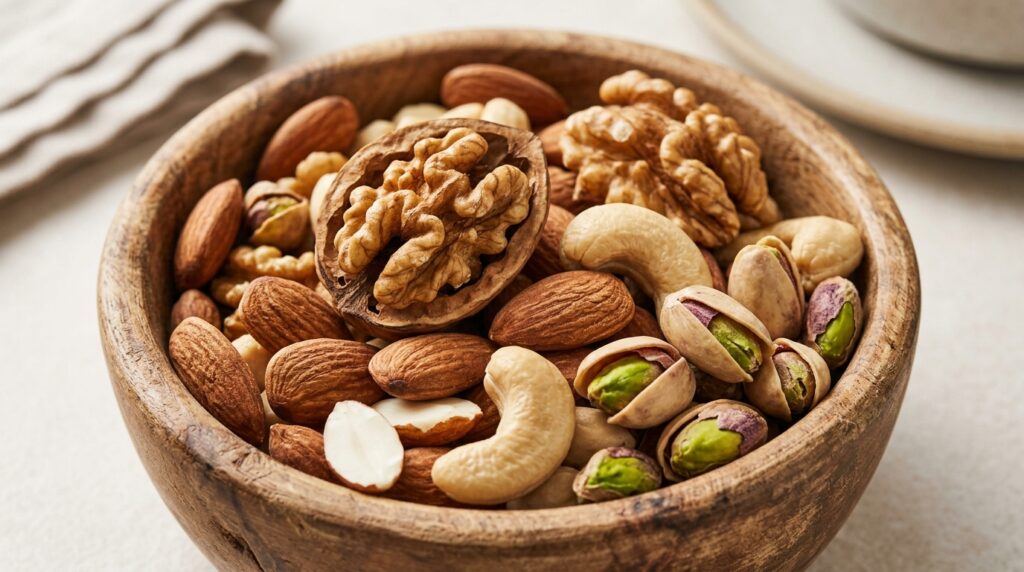
Tree nuts including walnuts, almonds, cashews, and pistachios consistently appear in research as foods associated with lower cardiovascular risk and improved longevity outcomes. A large pooled analysis of multiple cohort studies found that eating a small handful of nuts daily was associated with a significantly lower risk of dying from heart disease, cancer, and respiratory disease. Nuts provide healthy unsaturated fats, plant protein, fiber, magnesium, and vitamin E. Walnuts are particularly notable for their alpha-linolenic acid content, a plant-based omega-3 fatty acid.
If you are looking for ways to structure your meals around these long-term health foods, our guide on how to build a healthy meal plan offers a practical framework for incorporating them consistently throughout the week.
6. Olive Oil
Extra-virgin olive oil is the primary fat in the Mediterranean diet — one of the most extensively studied and consistently health-promoting dietary patterns in the world. It is rich in oleic acid, a monounsaturated fat associated with reduced cardiovascular risk, and contains a range of polyphenols with anti-inflammatory and antioxidant properties. Regular olive oil consumption has been linked to lower rates of heart disease, reduced cognitive decline, and lower overall mortality in large epidemiological studies. Using it as a primary cooking fat and salad dressing base is a simple and impactful dietary choice.
7. Whole Grains
Whole grains — including oats, brown rice, quinoa, barley, and whole wheat — retain the fiber, vitamins, and minerals removed during the refining process. High whole grain intake has been associated with reduced risk of cardiovascular disease, type 2 diabetes, certain cancers, and all-cause mortality across multiple large cohort studies. The fiber in whole grains feeds beneficial gut bacteria, supports stable blood sugar, and contributes to long-term satiety. Replacing refined grain products with whole grain versions is one of the most accessible and impactful long-term dietary changes most people can make.
8. Cruciferous Vegetables
Broccoli, cauliflower, Brussels sprouts, cabbage, and kale are members of the cruciferous vegetable family, notable for their glucosinolate content. When chewed and digested, glucosinolates break down into biologically active compounds including sulforaphane, which has been studied extensively for its potential anti-cancer and anti-inflammatory properties. Regular cruciferous vegetable intake has been associated with reduced risk of lung, colorectal, and breast cancers in observational research. Including them several times per week adds meaningful protective value to any long-term diet.
9. Fermented Foods
Fermented foods — including plain yogurt, kefir, kimchi, sauerkraut, miso, and tempeh — contribute beneficial live bacteria that support a diverse and healthy gut microbiome. A growing body of research links gut microbiome diversity to reduced inflammation, stronger immune function, better mental health outcomes, and lower risk of metabolic disease. A 2021 Stanford study found that consuming fermented foods increased microbiome diversity and reduced inflammatory markers more effectively than a high-fiber diet alone. Including at least one fermented food daily is a straightforward and evidence-supported long-term health habit.
10. Green Tea
Green tea is one of the most studied beverages in longevity research, particularly in populations from Japan and China where consumption is high and rates of certain chronic diseases are comparatively low. It contains a powerful antioxidant compound called epigallocatechin gallate (EGCG) alongside L-theanine, an amino acid that promotes calm focus without sedation. Regular green tea consumption has been associated with lower cardiovascular risk, improved blood sugar regulation, reduced risk of certain cancers, and better cognitive outcomes in aging populations. Drinking two to three cups daily provides a meaningful amount of these beneficial compounds.

Conclusion
The best foods to eat for long-term health are not complicated or out of reach. Leafy greens, berries, fatty fish, legumes, nuts, olive oil, whole grains, cruciferous vegetables, fermented foods, and green tea collectively represent a dietary foundation that is supported by decades of research across diverse populations worldwide. None of these foods work as miracle cures in isolation — what matters is the consistent, daily pattern of including them in your meals. Building your diet around these whole food staples is one of the most powerful investments you can make in your future health.
Frequently Asked Questions
Do I need to eat all of these foods every day for long-term health? Not necessarily. Variety and consistency over time matter more than eating every beneficial food in a single day. Rotating through these foods across your weekly meals — rather than trying to include all of them daily — provides broad nutritional coverage while keeping eating enjoyable and manageable. Even incorporating five or six of these regularly will make a meaningful difference over time.
Can these foods help prevent chronic diseases like heart disease or diabetes? Research suggests that diets consistently rich in these foods are associated with meaningfully lower rates of cardiovascular disease, type 2 diabetes, cognitive decline, and certain cancers. While no food can guarantee disease prevention, and genetics, lifestyle, and other factors also play a role, dietary patterns built around these whole foods represent one of the most modifiable and impactful factors within your control.
What is the single most important dietary change for long-term health? Research most consistently points to increasing vegetable and legume intake while reducing ultra-processed food consumption as the highest-impact shifts most people can make. These two changes address fiber deficiency, reduce inflammatory burden, improve gut microbiome diversity, and improve overall nutrient density without requiring dramatic lifestyle overhauls.