Snacking gets a bad reputation, but the problem is rarely snacking itself. The problem is what most people tend to reach for — chips, cookies, candy, and other highly processed foods that spike blood sugar, leave you hungry again within an hour, and contribute little nutritional value. The solution is not to eliminate snacking but to choose better options.
These best healthy snack recipes are simple to prepare, genuinely satisfying, and nutritious enough to support your health goals rather than undermine them. Whether you are looking for something quick to grab before work, a post-workout bite, or an afternoon pick-me-up, this list has a recipe for every occasion.
Why Healthy Snacking Matters
Snacking strategically can actually support better health outcomes. When you go too long between meals, blood sugar drops, energy fades, and the temptation to make poor food choices at the next meal increases. A well-timed, nutrient-dense snack prevents these pitfalls.
The best healthy snacks share a few common characteristics. They are relatively high in protein and fiber, which slow digestion and extend satiety. They are made from whole, minimally processed ingredients. And ideally, they are convenient enough to prepare and eat without a great deal of effort.
10 Best Healthy Snack Recipes
1. Apple Slices with Almond Butter
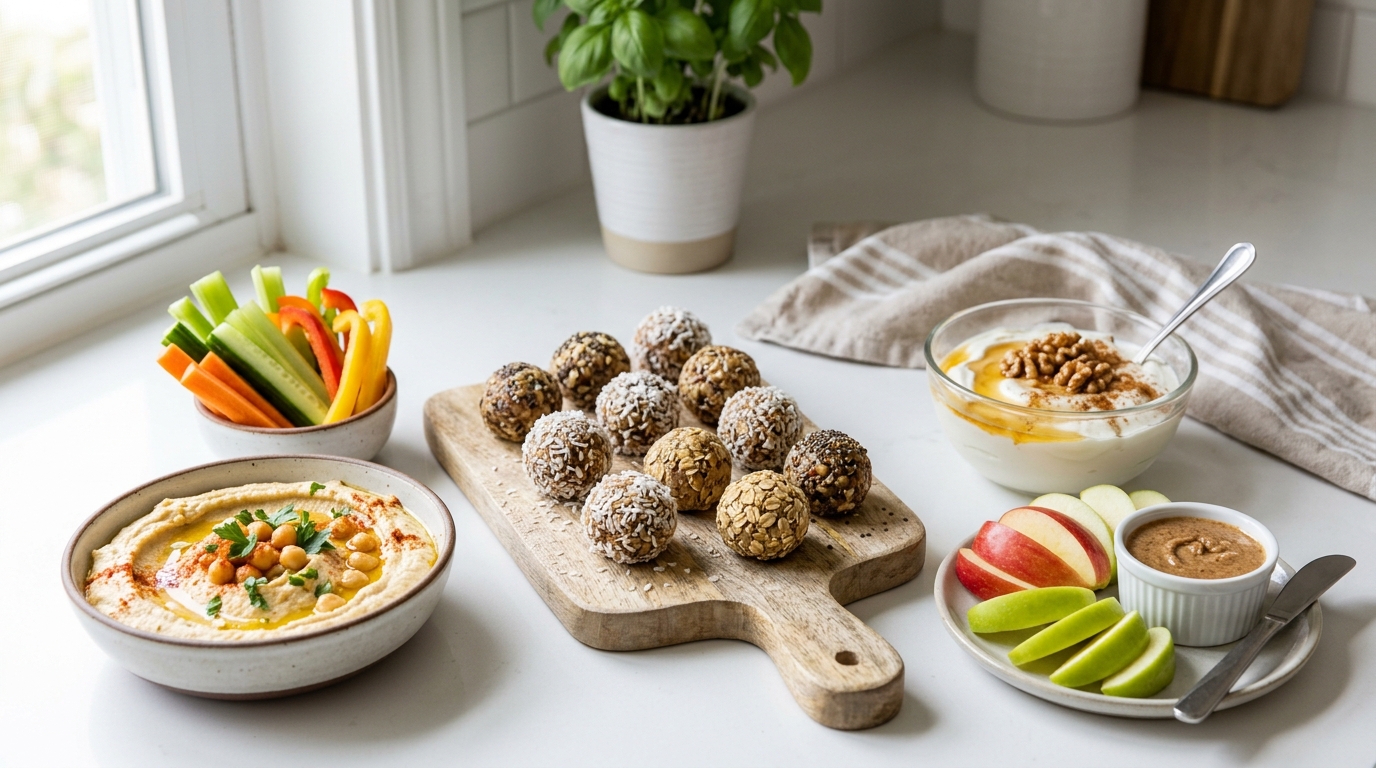
Slice an apple and serve with two tablespoons of natural almond butter for dipping. This is one of the most classic healthy snack combinations for good reason — it provides natural sugars and fiber from the apple alongside protein and healthy fat from the almond butter, creating a balanced snack that keeps blood sugar stable and hunger at bay.
For variety, swap almond butter for peanut butter or cashew butter.
2. Homemade Trail Mix
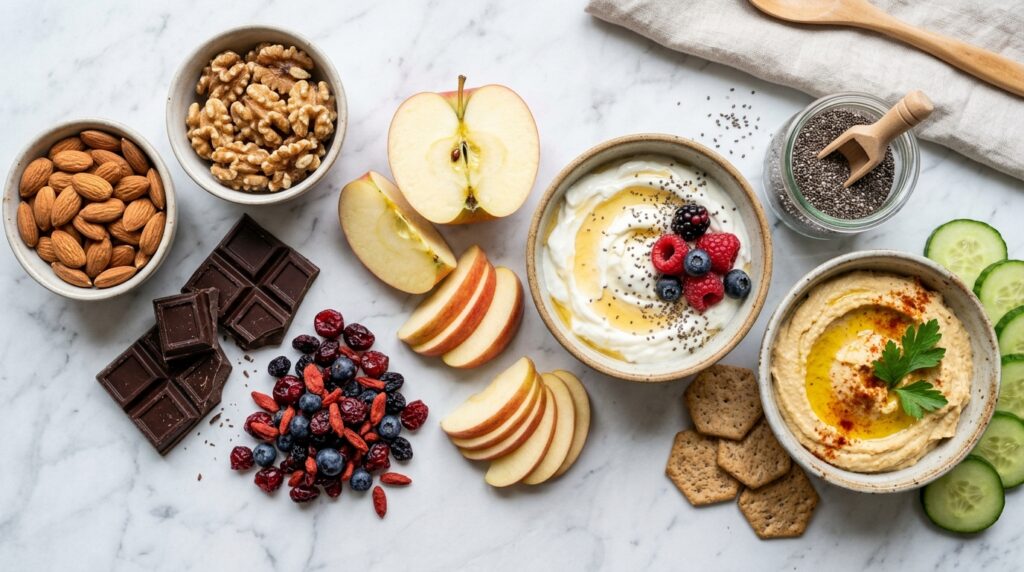
Combine a quarter cup each of raw almonds, walnuts, pumpkin seeds, and dark chocolate chips with a handful of dried cranberries. Portion into small bags or containers for grab-and-go snacking throughout the week. This mix is rich in healthy fats, protein, magnesium, and antioxidants from the dark chocolate.
Making your own trail mix allows you to control the sugar content and avoid the artificial additives found in many commercial versions.
3. Greek Yogurt with Honey and Walnuts
Spoon plain Greek yogurt into a small bowl, drizzle with a teaspoon of honey, and top with chopped walnuts and a pinch of cinnamon. Greek yogurt is one of the most protein-dense snack options available, providing roughly 15 to 20 grams per serving, while walnuts add omega-3 fatty acids and a satisfying crunch.
4. Hummus and Vegetable Sticks
Serve a quarter cup of hummus alongside sliced cucumber, carrot sticks, celery, and bell pepper strips. Hummus is made from chickpeas and tahini, making it rich in plant protein, fiber, and minerals. The raw vegetables add crunch, volume, and a wide range of vitamins with very few calories.
This is an excellent snack for managing hunger between meals without consuming too many calories.
5. Energy Balls
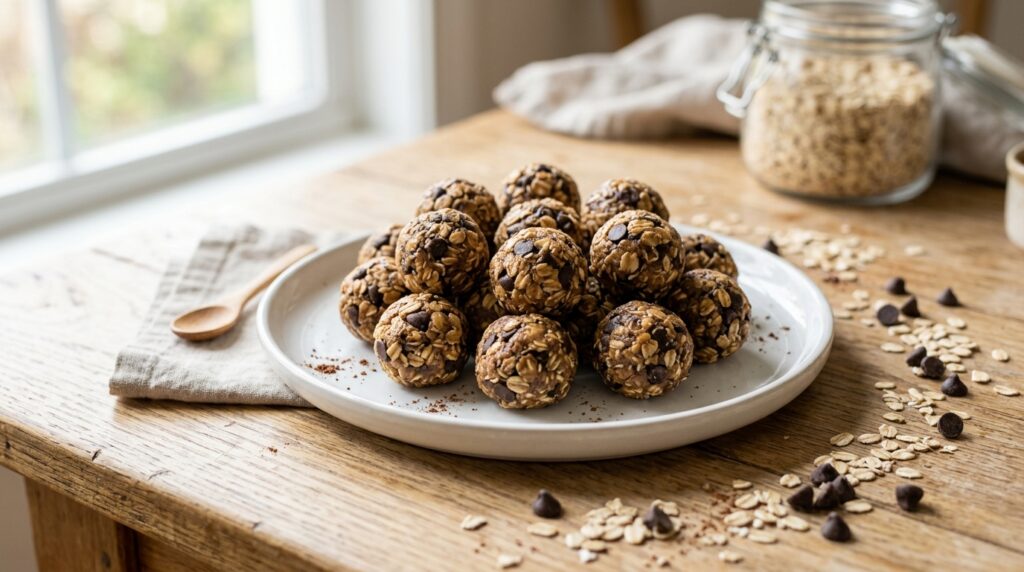
Combine one cup of rolled oats, half a cup of natural peanut butter, a quarter cup of honey, a quarter cup of dark chocolate chips, and two tablespoons of chia seeds. Mix well, roll into small balls, and refrigerate for at least 30 minutes. These no-bake bites are genuinely delicious and provide a balanced combination of carbohydrates, protein, and healthy fats.
A batch of 15 to 20 energy balls can be prepared in advance and kept in the refrigerator for up to a week, making them one of the most convenient healthy snacks available. If you want more ideas for satisfying snacks that align with an anti-inflammatory eating approach, our guide on the best anti-inflammatory snacks offers a range of additional options.
6. Avocado on Rice Cakes
Mash half an avocado with a squeeze of lemon juice, salt, and a pinch of red pepper flakes. Spread over two plain rice cakes and finish with a few cherry tomato halves. This snack is rich in heart-healthy monounsaturated fats and provides a satisfying, creamy texture that makes it feel more indulgent than it actually is.
7. Roasted Chickpeas
Drain and dry a can of chickpeas, toss with olive oil, smoked paprika, cumin, garlic powder, salt, and pepper, then roast at 400°F for 25 to 30 minutes until crispy. Roasted chickpeas are an outstanding replacement for chips, providing a satisfying crunch along with plant protein and dietary fiber.
They can be stored in an airtight container at room temperature for up to three days.
8. Cottage Cheese with Pineapple
Combine half a cup of low-fat cottage cheese with a quarter cup of fresh or canned pineapple chunks. This high-protein snack is light, refreshing, and provides a good balance of protein and natural carbohydrates. Cottage cheese is particularly rich in casein protein, which digests slowly and provides sustained amino acid release.
9. Dark Chocolate and Mixed Nuts
A one-ounce portion of high-quality dark chocolate paired with a small handful of mixed nuts provides a satisfying combination of flavors and nutrients. Dark chocolate contains flavonoids with antioxidant properties, while nuts contribute protein, healthy fats, and a range of minerals including magnesium and zinc.
10. Banana Oat Cookies
Mash two ripe bananas with one cup of rolled oats and a handful of dark chocolate chips. Drop spoonfuls onto a baking sheet and bake at 350°F for 12 minutes. These two-ingredient base cookies contain no added sugar, no flour, and no eggs, yet they are genuinely delicious and portable.
For extra nutrition, add a tablespoon of peanut butter or a teaspoon of cinnamon to the mixture before baking.
Conclusion
The best healthy snack recipes are those you will actually make and genuinely enjoy. This list covers a wide range of textures and flavors — from creamy to crunchy, savory to sweet — so there is something here for every preference and occasion.
Building a healthy snacking habit starts with keeping the right ingredients on hand. Stock your kitchen with nuts, fresh fruit, Greek yogurt, hummus, and rolled oats, and you will always have the components of a nutritious snack within reach.
Frequently Asked Questions
What is the healthiest type of snack to eat between meals? The healthiest snacks combine protein, fiber, and a small amount of healthy fat. This combination stabilizes blood sugar, extends satiety, and provides a steady source of energy. Examples include Greek yogurt with fruit, hummus with vegetables, or a small portion of mixed nuts with fresh fruit.
How many calories should a healthy snack contain? Most nutritionists suggest aiming for snacks in the range of 150 to 250 calories. This provides enough energy to manage hunger without contributing excessive calories to your daily total. Snacks made from whole foods tend to be more satisfying per calorie than processed alternatives.
Can snacking help with weight management? Yes, when done thoughtfully. Strategic snacking can prevent overeating at meals and reduce overall calorie consumption throughout the day. The key is to choose nutrient-dense whole foods and to eat in response to genuine hunger rather than boredom or habit.