Introduction
Breakfast is often called the most important meal of the day, and for cardiovascular health, this holds particular significance. What you eat in the morning sets your blood sugar trajectory, influences your cholesterol metabolism throughout the day, and determines how much fiber, healthy fat, and antioxidants you take in before the afternoon. Consistently choosing a heart-healthy breakfast can compound into meaningful cardiovascular benefits over months and years.
The ideal heart-healthy breakfast combines soluble fiber to support cholesterol management, potassium and magnesium for blood pressure regulation, healthy fats for sustained energy and arterial health, and antioxidants to reduce vascular inflammation. The best part is that these elements come together naturally in many delicious and easy-to-prepare options.
Why Breakfast Matters for Heart Health
Skipping breakfast or eating a refined, high-sugar morning meal leads to blood sugar spikes, increased hunger, and often higher caloric intake later in the day. These patterns are associated with elevated triglycerides, insulin resistance, and unfavorable cholesterol profiles — all of which compound cardiovascular risk over time.
By contrast, a fiber-rich, nutrient-dense breakfast stabilizes blood sugar, reduces morning cortisol-driven LDL elevation, and provides a meaningful portion of the daily micronutrients the heart relies on. Studies have found that regular breakfast consumption — particularly with whole grains and fruits — is associated with lower rates of heart disease in large population cohorts.
Best Heart-Healthy Breakfast Ideas
1. Oatmeal with Berries and Walnuts
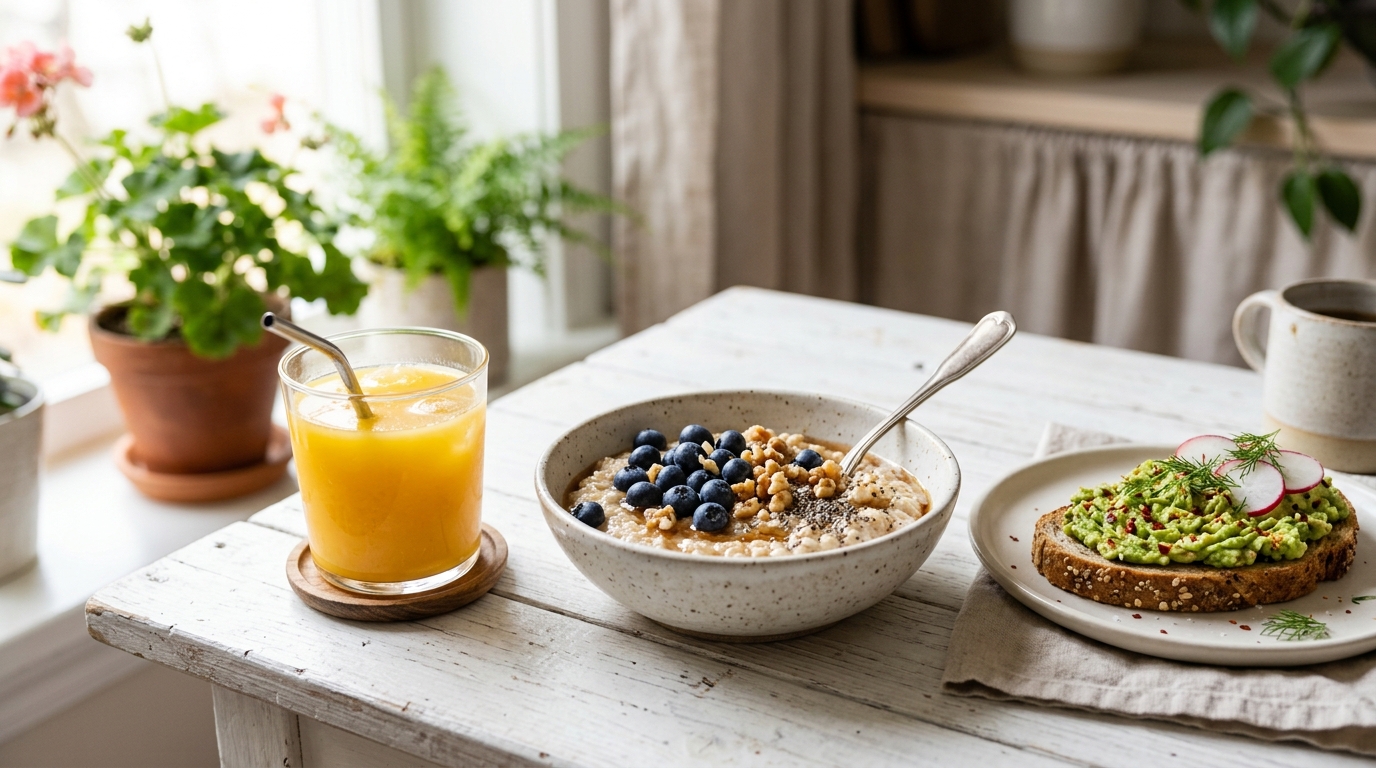
Steel-cut or rolled oatmeal topped with fresh blueberries or strawberries and a handful of walnuts delivers a remarkable combination of heart-healthy nutrients in a single bowl. The beta-glucan fiber in oats lowers LDL cholesterol, the anthocyanins in berries reduce arterial inflammation, and the walnuts provide ALA omega-3 fatty acids and additional fiber. This is arguably the single most well-supported breakfast choice for cardiovascular health.
2. Avocado Toast on Whole Grain Bread
Avocado on whole grain toast provides monounsaturated fats, fiber, potassium, and B vitamins — all relevant to heart function. Choosing 100% whole grain bread adds beta-glucan and complex carbohydrates that support stable blood sugar and cholesterol levels. Adding a poached egg provides high-quality protein and choline, which supports healthy fat metabolism in the liver.
3. Greek Yogurt with Flaxseed and Fruit
Plain low-fat Greek yogurt is high in protein, calcium, and probiotics, all of which have roles in cardiovascular health. Adding one tablespoon of ground flaxseed introduces ALA omega-3 fatty acids and soluble fiber, while fresh fruit contributes potassium, vitamin C, and antioxidants. This breakfast is quick, satisfying, and nutritionally dense.
4. Smoked Salmon with Whole Grain Crackers
For those who prefer a savory breakfast, smoked salmon on whole grain crackers with avocado or a slice of tomato is an excellent heart-healthy option. The salmon provides EPA and DHA omega-3 fatty acids that reduce triglycerides and inflammation. The whole grain crackers add fiber, and the avocado contributes potassium and monounsaturated fats. It is worth noting that smoked salmon can be high in sodium, so pairing it with low-sodium accompaniments balances the nutritional profile.
5. Berry Smoothie with Spinach and Chia Seeds
Blending a mix of frozen berries, fresh spinach, banana, and chia seeds with low-fat milk or unsweetened almond milk creates a nutrient-dense breakfast that addresses multiple cardiovascular risk factors at once. Berries provide anthocyanins, spinach delivers nitrates and potassium, banana adds potassium and natural sweetness, and chia seeds contribute omega-3 fatty acids and soluble fiber.
To discover more ideas for incorporating heart-healthy foods throughout the day, check out our guide on the best healthy lunch ideas for the week for inspiration beyond breakfast.

6. Whole Grain Cereal with Low-Fat Milk and Sliced Almonds
Choosing a whole grain cereal with at least 5 grams of fiber per serving, combined with low-fat milk and a scattering of sliced almonds, provides a practical and portable heart-healthy breakfast. Look for cereals that list whole grain oats, wheat, or barley as the first ingredient and that contain no more than six grams of added sugar per serving.
7. Egg White Omelet with Vegetables
An omelet made primarily with egg whites — which are cholesterol-free — combined with spinach, bell peppers, tomatoes, and mushrooms provides high-quality protein alongside a wide range of heart-protective vitamins, minerals, and antioxidants. Adding a moderate amount of olive oil for cooking and seasoning with herbs rather than salt keeps sodium low while maximizing flavor.
8. Chia Seed Pudding
Made the night before, chia seed pudding is a convenient and nutritionally impressive heart-healthy breakfast. Chia seeds soaked in unsweetened almond milk or low-fat dairy overnight expand into a creamy pudding-like texture. They provide omega-3 fatty acids, soluble fiber, calcium, and magnesium — all of which support cardiovascular function. Topping with fresh mango or berries and a sprinkle of cinnamon adds flavor and additional antioxidants.
9. Whole Grain Pancakes with Banana and a Drizzle of Honey
Made with whole wheat or oat flour, ripe banana blended into the batter, and topped with fresh fruit and a small amount of honey instead of syrup, whole grain pancakes can be a genuinely heart-healthy breakfast option. Using unsweetened plant-based milk and a small amount of olive oil rather than butter keeps saturated fat low while retaining a satisfying texture.
10. Cottage Cheese with Sliced Peaches and Pumpkin Seeds
Low-fat cottage cheese is high in protein and calcium and makes an excellent base for a fruit and seed topping. Fresh peaches or other stone fruits add potassium, fiber, and natural sweetness. Pumpkin seeds contribute magnesium, zinc, and heart-healthy unsaturated fats. This combination is particularly effective at keeping energy stable throughout the morning.

Conclusion
The morning is one of the most impactful opportunities you have each day to support your heart through food. Whether you prefer sweet or savory, cooked or ready-to-eat, there are genuinely delicious and practical options that deliver fiber, healthy fats, potassium, and antioxidants before the day begins. Building a rotation of two or three go-to heart-healthy breakfasts makes consistency easy and removes the daily decision fatigue that often leads to less healthy choices.
Frequently Asked Questions
What is the healthiest breakfast for heart disease prevention? Oatmeal topped with berries and walnuts is widely considered one of the most evidence-backed breakfasts for heart disease prevention. It combines beta-glucan fiber that lowers LDL, anthocyanins that reduce vascular inflammation, and omega-3 fatty acids that support overall cardiovascular function — all in one simple, inexpensive meal.
Are eggs good or bad for heart health? Current evidence suggests that moderate egg consumption — up to one whole egg per day — is not significantly associated with increased cardiovascular risk in healthy individuals. Egg whites are cholesterol-free and high in protein. For those with existing heart disease or diabetes, discussing egg intake with a healthcare provider is advisable, as individual responses to dietary cholesterol vary.
How important is breakfast for people with high blood pressure? Starting the day with a potassium-rich, low-sodium breakfast — such as a berry smoothie with spinach and banana, or oatmeal with fruit — can positively influence blood pressure throughout the morning. Skipping breakfast can increase cortisol and stress hormone levels, which may temporarily elevate blood pressure.
Related Articles
Best Foods to Lower Blood Pressure Foods That Lower Cholesterol Naturally 10 Easy Healthy Breakfast Recipes