Introduction
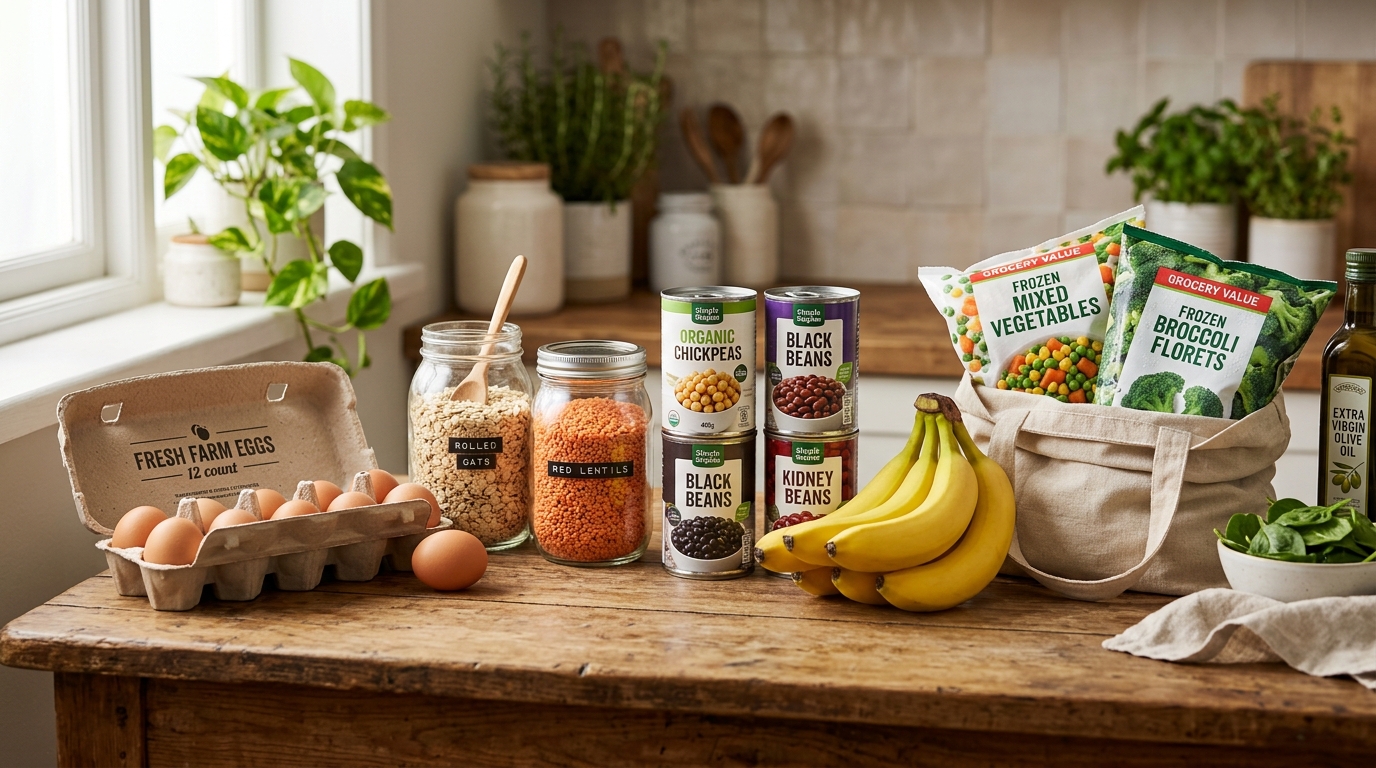
One of the most persistent myths about healthy eating is that it requires spending a lot of money. The reality is that many of the most nutritious foods in the world are also among the most affordable. Beans, oats, eggs, frozen vegetables, and seasonal produce can form the backbone of a health-supporting diet without straining your finances.
This guide covers practical strategies and specific food choices that make healthy eating on a budget not only possible but genuinely enjoyable.
Why Budget-Friendly Healthy Eating Is Achievable
The assumption that healthy food is expensive often comes from comparing it to fast food or processed convenience items — which can appear cheap in the short term. However, when you calculate the cost per serving of whole foods like lentils, brown rice, or canned sardines, they are frequently cheaper than processed alternatives and far more nutritious.
Understanding which whole foods offer the best nutritional value for money is the first step toward eating well on a limited budget.
Healthy Eating on a Budget
1. Make Legumes Your Protein Foundation
Dried or canned beans, lentils, and chickpeas are among the cheapest and most nutritious foods available. A pound of dried lentils costs very little and yields multiple servings of protein, fiber, and iron. They are versatile enough for soups, stews, salads, and curries. If you rely on more expensive proteins like meat and fish for every meal, replacing two or three weekly meals with legume-based dishes can significantly reduce your grocery bill.
2. Buy Oats in Bulk
Rolled oats are one of the best budget-friendly breakfast options available. They are high in beta-glucan fiber, B vitamins, and minerals. A large bag of rolled oats costs very little and provides weeks of healthy breakfasts. Top them with frozen berries, a spoonful of nut butter, and a drizzle of honey for a filling, nutritious meal that costs a fraction of packaged breakfast cereals.
3. Prioritize Frozen Vegetables and Fruits
Fresh produce is valuable, but frozen vegetables and fruits are often just as nutritious — sometimes more so, since they are typically frozen at peak ripeness. Frozen spinach, broccoli, peas, mixed berries, and edamame are excellent choices that keep for months and require no preparation beyond reheating. Buying frozen allows you to maintain variety in your diet without worrying about spoilage.
4. Choose Eggs as an Everyday Staple
Eggs are one of the most nutrient-dense and affordable protein sources on the market. A carton of a dozen eggs typically costs a fraction of the equivalent protein in meat or fish, yet delivers complete protein, choline, vitamin D, and B12 per serving. Scrambled eggs with vegetables, egg-based frittatas, and hard-boiled eggs as snacks are all economical and nutritious options.
5. Cook in Large Batches
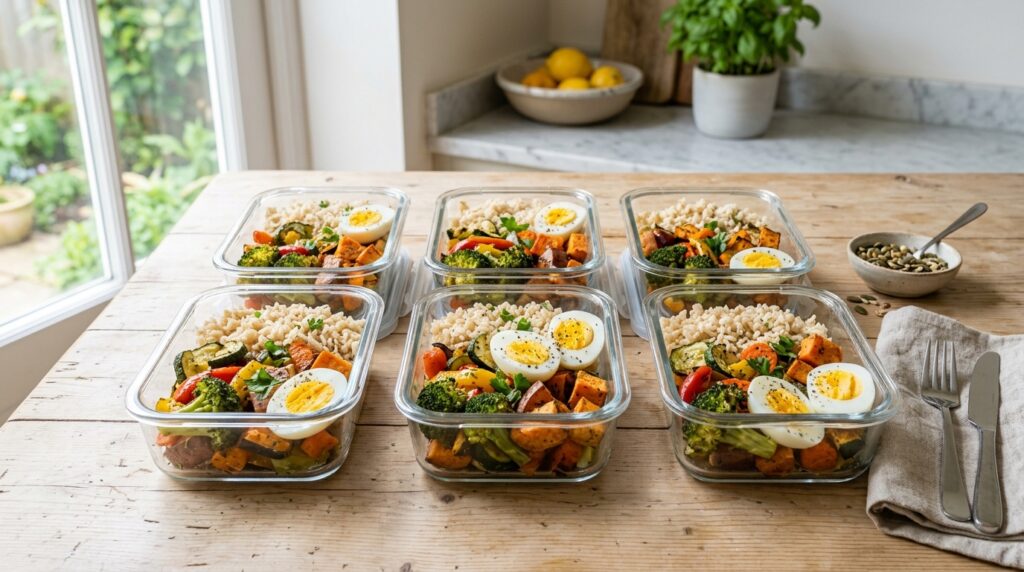
Batch cooking — preparing large quantities of food at once to eat over several days — dramatically reduces both the cost and time associated with healthy eating. Cook a big pot of brown rice, roast a sheet pan of mixed vegetables, and bake a large batch of chicken thighs on one afternoon, then mix and match those ingredients for several meals throughout the week. This approach eliminates the temptation to spend money on takeout when you are tired and do not feel like cooking.
Building a consistent batch cooking habit pairs naturally with a structured meal plan. Our article on how to build a healthy meal plan provides a practical framework for planning your week efficiently.
6. Use Canned Fish
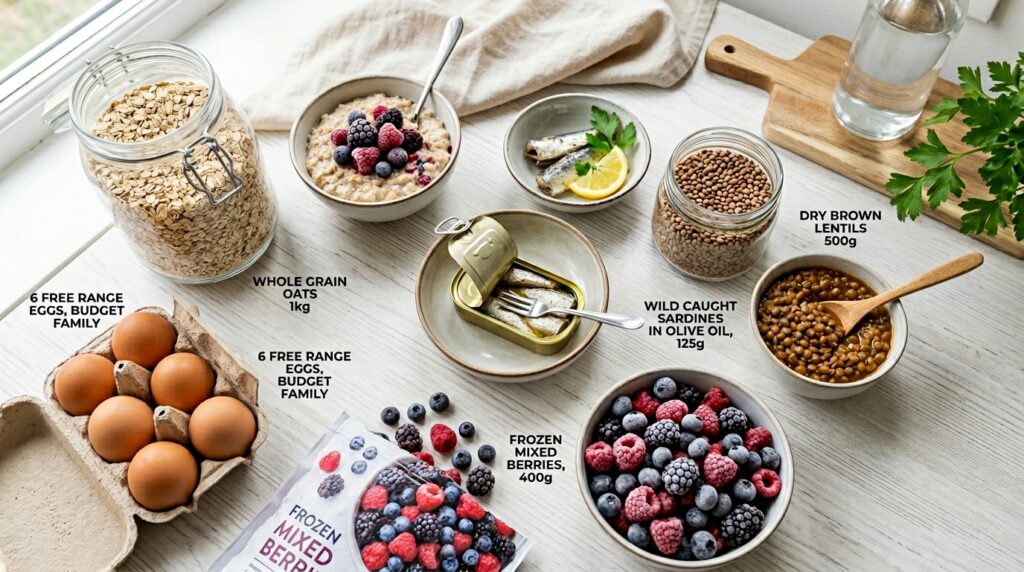
Canned sardines, tuna, mackerel, and salmon are affordable sources of omega-3 fatty acids, high-quality protein, and vitamin D. They are shelf-stable, require no preparation, and can be added to salads, sandwiches, pasta dishes, or eaten on whole grain crackers. Canned fatty fish provides many of the same health benefits as fresh fish at a fraction of the cost.
7. Shop Seasonal Produce
Fruits and vegetables are significantly cheaper when they are in season locally. Out-of-season produce must be shipped from distant regions, which increases its price. A simple habit of checking which fruits and vegetables are currently in season in your area before shopping can reduce your produce costs considerably while also ensuring better freshness and flavor.
8. Buy Generic or Store Brands
For pantry staples like canned beans, whole grain pasta, oats, olive oil, and frozen vegetables, store brands are typically nutritionally identical to name brands and cost substantially less. Reading the ingredient labels of store brand products confirms that you are getting the same quality without paying for marketing and packaging.
9. Minimize Beverages With Added Costs
Specialty coffees, sodas, bottled juices, and energy drinks can quietly add significant costs to your weekly spending while offering little nutritional value. Switching to water, herbal teas, and home-brewed coffee or tea is one of the simplest ways to save money while supporting your health. Water is the most important dietary beverage and costs almost nothing.
10. Plan Before You Shop
Going to a grocery store without a list almost always results in impulse purchases and food waste. Before every shopping trip, plan your meals for the week and write a specific list of what you need. Stick to the list as closely as possible. This reduces both overspending and the likelihood of buying foods that go unused and eventually get thrown away.
Conclusion
Healthy eating on a budget is entirely achievable when you focus on the right foods and apply a few strategic habits. Legumes, oats, eggs, frozen produce, and canned fish are all affordable, nutritious staples that form the foundation of a health-supporting diet. Combine these with batch cooking, seasonal shopping, and meal planning, and you will find that eating well costs far less than most people assume.
Frequently Asked Questions
What are the cheapest healthy foods to buy? Dried lentils, rolled oats, eggs, frozen vegetables, canned fish, and bananas are consistently among the most affordable and nutritious foods available at most grocery stores.
How can I eat healthy with only fifty dollars a week? Focus your budget on legumes, whole grains, eggs, frozen produce, and in-season vegetables. Minimize spending on meat, packaged snacks, and beverages with added sugars. Batch cooking helps stretch every dollar further.
Is frozen produce as healthy as fresh? In most cases, yes. Frozen fruits and vegetables are harvested at peak ripeness and frozen quickly, which preserves most of their vitamins and minerals. For budget-conscious shoppers, frozen produce is an excellent substitute for fresh.
Related Articles