Introduction
Dietary fiber is the single most important nutrient for gut health. Yet studies consistently show that most adults in Western countries consume only about half of the recommended daily intake. This fiber gap has real consequences — reduced gut microbiome diversity, increased digestive discomfort, higher levels of chronic inflammation, and greater risk of colorectal disease.
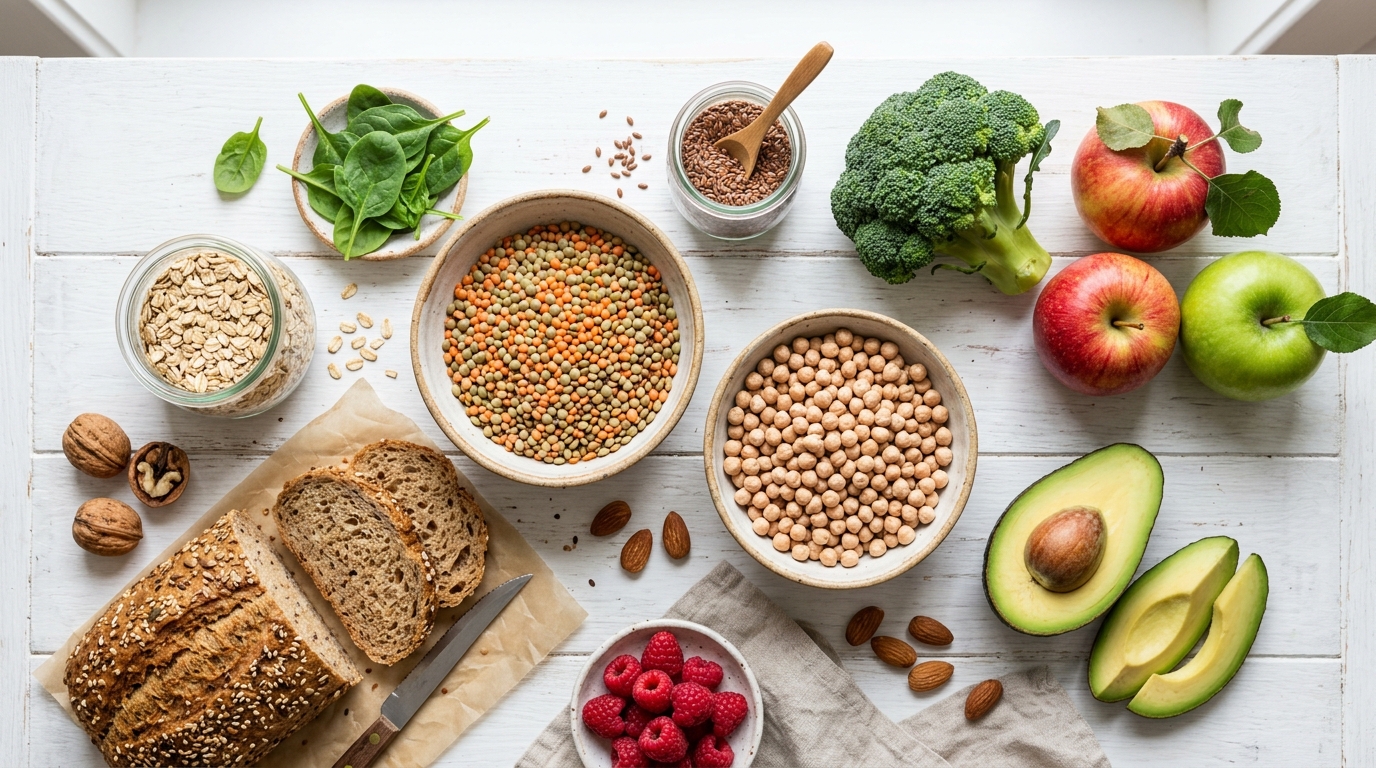
The good news is that increasing your fiber intake through whole foods is straightforward and delicious. This guide covers the best high-fiber foods for a healthy gut, explaining how each one supports your digestive system and the trillions of beneficial bacteria that depend on fiber to thrive.
Why Fiber Is Essential for Gut Health
Dietary fiber does far more than prevent constipation. When beneficial gut bacteria ferment soluble fiber in the colon, they produce short-chain fatty acids — particularly butyrate, propionate, and acetate — that nourish the cells of the intestinal lining, regulate immune responses, and reduce gut inflammation. Insoluble fiber adds bulk to stools and supports healthy transit time, reducing the risk of constipation and diverticular disease.
A diet consistently rich in diverse fiber sources is the most reliable way to build and maintain a diverse, resilient gut microbiome that supports whole-body health.
Best High-Fiber Foods for a Healthy Gut
1. Lentils
Lentils are among the highest-fiber foods available, providing around 15 grams of fiber per cooked cup. They contain both soluble and insoluble fiber, as well as resistant starch that acts as a potent prebiotic for beneficial gut bacteria. Lentils are also an excellent source of plant-based protein, folate, and iron. They are inexpensive, quick to cook without soaking, and highly versatile in soups, stews, salads, and curries.
2. Chickpeas
Chickpeas deliver approximately 12 grams of fiber per cooked cup and are rich in resistant starch that specifically promotes the growth of Bifidobacterium strains in the gut. Regular chickpea consumption has been associated with improved bowel regularity, reduced bloating, and measurable increases in gut microbiome diversity. Include them in salads, roast them as a snack, or blend them into hummus for a convenient daily fiber boost.
3. Black Beans
Black beans provide around 15 grams of fiber per cooked cup, making them one of the densest fiber sources available. They contain high levels of resistant starch and polyphenols that feed beneficial gut bacteria and help reduce gut inflammation. Studies have specifically linked black bean consumption to increased production of butyrate — the short-chain fatty acid most strongly associated with colon health and reduced colorectal cancer risk.
4. Oats
Oats are one of the best whole grain sources of soluble fiber, particularly beta-glucan — a type of fiber shown to significantly increase Bifidobacterium populations in the gut while reducing harmful bacteria. A single serving of rolled oats provides around 4 grams of fiber. Consuming oats regularly is also associated with improved cholesterol levels, more stable blood sugar, and enhanced feelings of fullness. Overnight oats, porridge, or oat-based granola are all practical daily options.
5. Chia Seeds
Chia seeds are nutritional powerhouses, providing around 10 grams of fiber per two-tablespoon serving — approximately one-third of the daily recommended intake in a single small portion. When exposed to liquid, chia seeds form a gel-like substance due to their soluble fiber content, which slows digestion and provides sustained prebiotic nourishment for gut bacteria. They are also rich in omega-3 fatty acids that support gut lining integrity. Add them to smoothies, yogurt, or overnight oats for an effortless fiber boost. If you are building a comprehensive gut-supportive diet, our guide on the gut health diet for beginners provides a practical framework for getting started.

6. Broccoli
Broccoli is one of the most gut-supportive vegetables available. It provides around 5 grams of fiber per cooked cup and contains sulforaphane — a compound shown to support the integrity of the gut lining and reduce harmful bacterial populations. Research has also found that broccoli consumption promotes the production of indole-3-carbinol, a compound that supports gut immune function. Lightly steaming or roasting broccoli preserves its fiber content and bioactive compounds better than boiling.
7. Apples
Apples are a convenient and accessible high-fiber fruit, with a medium apple providing around 4 to 5 grams of fiber, primarily in the form of pectin. Pectin is a soluble fiber that acts as a prebiotic, specifically promoting the growth of Lactobacillus and Bifidobacterium in the gut. Eating apples with the skin on maximizes their fiber content. Research has found that regular apple consumption is associated with greater gut microbiome diversity and increased short-chain fatty acid production.
8. Avocado
Avocado is one of the most fiber-dense fruits available, with a whole avocado delivering around 13 grams of fiber. It is also rich in healthy monounsaturated fats that support gut lining integrity and the absorption of fat-soluble vitamins. A study published in the Journal of Nutrition found that daily avocado consumption significantly increased the abundance of fiber-fermenting gut bacteria and elevated fecal butyrate concentrations. Half an avocado added to meals daily is a practical and highly effective gut health strategy.
9. Flaxseeds
Flaxseeds provide a uniquely valuable combination of soluble and insoluble fiber alongside lignans — polyphenolic compounds that beneficial gut bacteria convert into hormone-balancing compounds. Ground flaxseeds are more bioavailable than whole seeds, as the tough outer hull can pass through the digestive tract undigested. Two tablespoons of ground flaxseed provide around 4 grams of fiber and have been shown to support regular bowel movements, reduce gut inflammation, and promote beneficial bacterial growth.
10. Sweet Potatoes
Sweet potatoes provide around 4 grams of fiber per medium baked potato, primarily in the form of both soluble and insoluble fiber. They are also rich in resistant starch — particularly when cooled after cooking — which serves as an excellent prebiotic for beneficial gut bacteria. Sweet potatoes are additionally high in beta-carotene, vitamin C, and potassium, making them a highly nutritious and gut-supportive addition to any meal. Eating the skin further increases their fiber contribution.
Conclusion
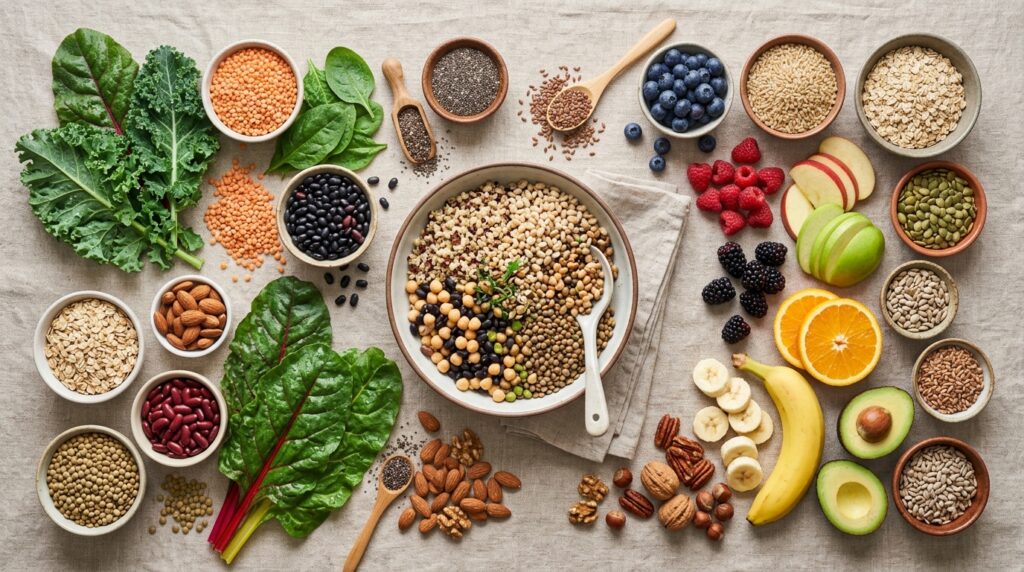
A diet rich in diverse high-fiber foods is the most powerful nutritional strategy for building and maintaining a healthy gut microbiome. By regularly including lentils, chickpeas, oats, chia seeds, broccoli, apples, avocado, and other fiber-rich whole foods in your meals, you provide beneficial gut bacteria with the fuel they need to produce gut-protective compounds and support whole-body health.
Start by identifying two or three of the foods on this list that you enjoy and can realistically add to your regular meals. Build from there, increasing variety over time. Even modest increases in daily fiber intake — when sustained consistently — can produce meaningful improvements in gut microbiome diversity, digestive comfort, and long-term health outcomes.
Frequently Asked Questions
How much fiber do I need per day for good gut health? Health guidelines generally recommend 25 to 38 grams of fiber per day for adults. Most people consume significantly less than this. Increasing fiber intake gradually — rather than all at once — helps the gut microbiome adjust comfortably and reduces the likelihood of temporary bloating or gas during the transition.
What is the difference between soluble and insoluble fiber for gut health? Soluble fiber dissolves in water to form a gel-like substance that feeds beneficial gut bacteria and supports microbiome diversity. Insoluble fiber does not dissolve and adds bulk to stools, supporting regular bowel movements and healthy transit time. Both types are important, and most whole plant foods contain a natural combination of both.
Can too much fiber cause digestive problems? Increasing fiber intake too rapidly can temporarily cause bloating, gas, or cramping as the gut microbiome adjusts. The solution is to increase fiber gradually over several weeks and ensure adequate water intake, which helps fiber move efficiently through the digestive tract. Once the gut adapts, higher fiber intake typically improves rather than disrupts digestive comfort.
Related Articles
Gut Health Diet for Beginners How to Improve Gut Health Naturally Best Prebiotic Foods You Should Eat Daily