Introduction
A well-made smoothie is one of the fastest and most efficient ways to consume a broad range of nutrients in a single serving. In two to three minutes, you can blend a combination of fruits, vegetables, protein, healthy fats, and superfoods into a portable meal or snack that provides genuine, lasting energy.
But not all smoothies are created equal. Many commercially available smoothies and popular recipes contain excessive amounts of added sugar, fruit juice, and sweetened yogurt that create a rapid blood sugar spike followed by an energy crash — the opposite of what a smoothie should deliver. The difference between an energy-boosting smoothie and a glorified sugar drink comes down to ingredients and balance.
This guide covers ten healthy smoothie recipes specifically formulated for sustained energy, with practical ingredient combinations that provide protein, fiber, healthy fats, and a range of micronutrients.
Why Smoothies Are an Effective Energy Source
The key to an energy-sustaining smoothie is balancing natural sugars with protein, fat, and fiber. When fruit sugars are consumed alongside protein from sources like Greek yogurt or protein powder, fat from nut butter or avocado, and fiber from seeds or leafy greens, glucose absorption is significantly slowed — producing a steady energy release rather than a rapid spike and crash.
This balance also creates genuine satiety, meaning a well-constructed smoothie can function as a complete meal replacement rather than merely a snack. Understanding these principles allows you to create smoothies that energize rather than deplete.
Healthy Smoothie Recipes for Energy
1. Green Power Smoothie
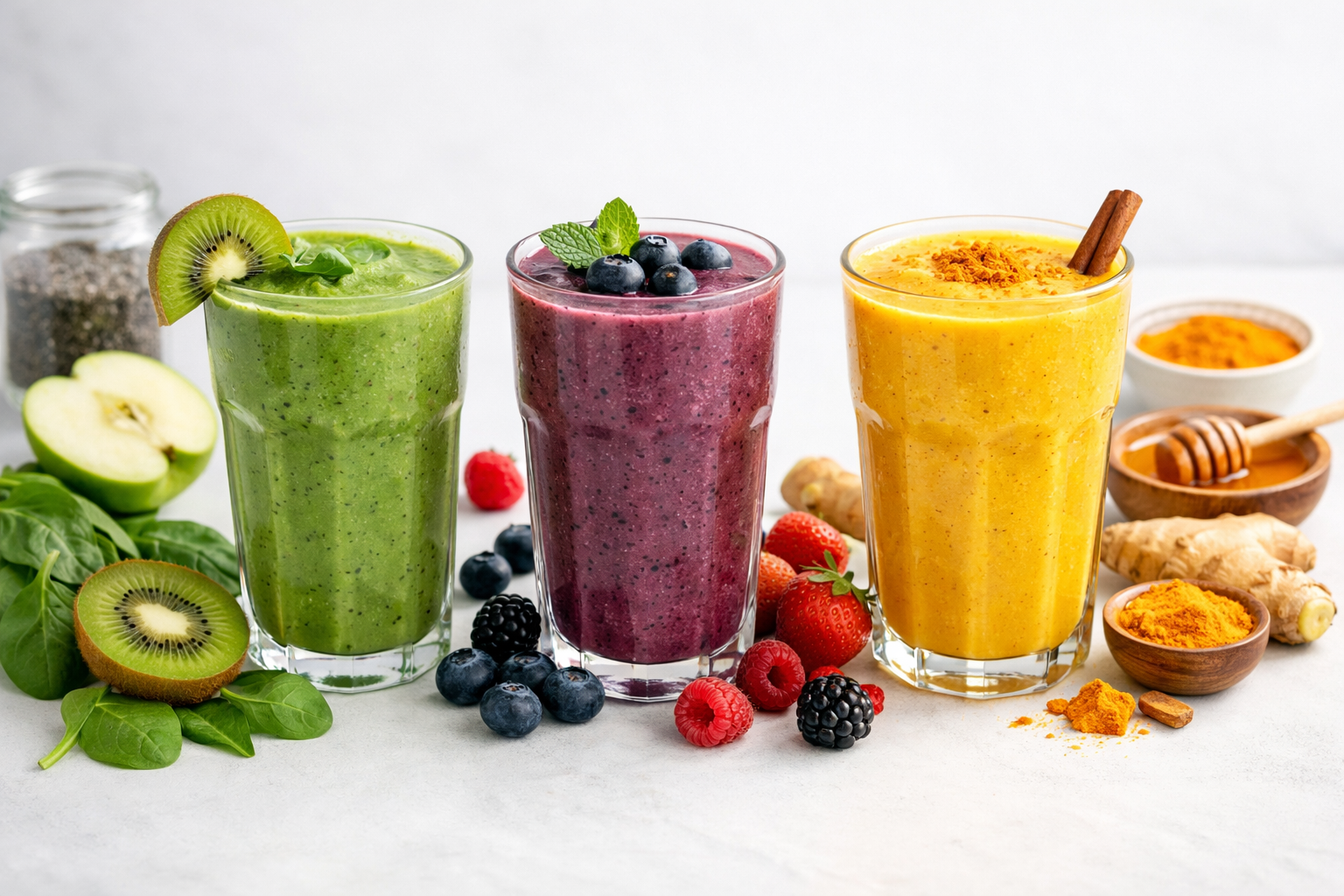
Blend one cup of baby spinach, half a frozen banana, half an avocado, one cup of unsweetened almond milk, a tablespoon of hemp seeds, and a teaspoon of matcha powder. Blend until completely smooth.
This smoothie provides iron and folate from the spinach, healthy monounsaturated fats from the avocado, plant-based protein and omega-3s from the hemp seeds, and a gentle caffeine boost from the matcha. It is one of the most nutrient-dense smoothie combinations available and has a mild, pleasant flavor despite its vibrant green color.
2. Peanut Butter Banana Protein Smoothie
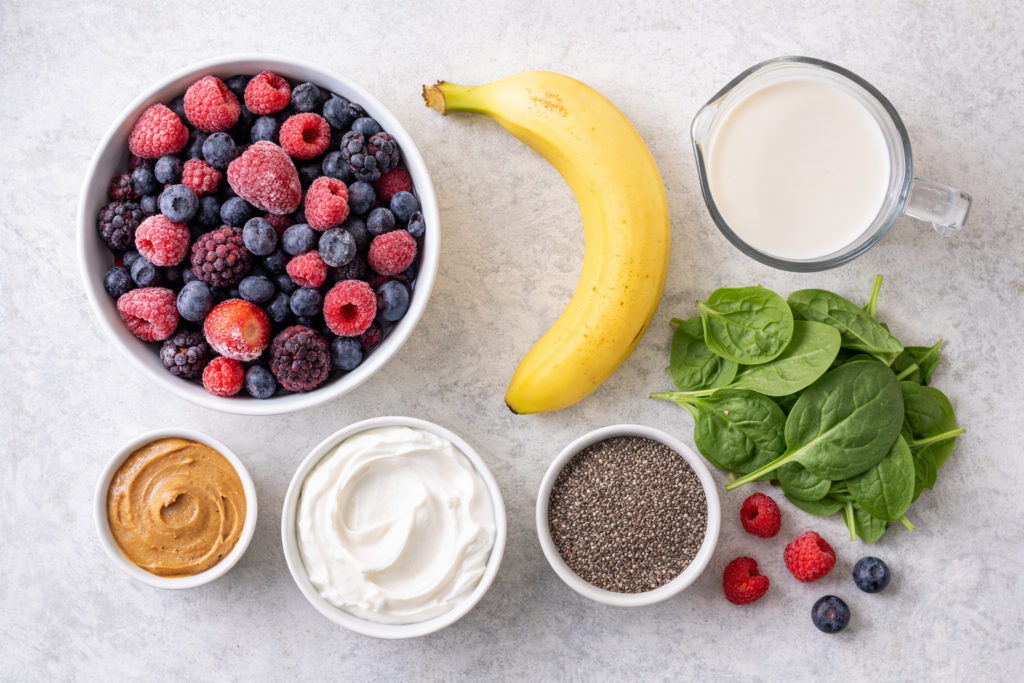
Blend one frozen banana, two tablespoons of natural peanut butter, one cup of unsweetened oat milk, a scoop of vanilla protein powder, a tablespoon of chia seeds, and a pinch of cinnamon until smooth.
This smoothie is a meal-replacement staple that provides complete protein, complex carbohydrates from the banana and oats, and sustained energy from the healthy fats in the peanut butter. The chia seeds add fiber and omega-3 fatty acids while thickening the texture pleasantly.
3. Blueberry Almond Antioxidant Smoothie
Blend one cup of frozen blueberries, half a cup of plain Greek yogurt, a tablespoon of almond butter, one cup of unsweetened almond milk, a tablespoon of flaxseeds, and a teaspoon of honey. Blend until smooth.
Blueberries are among the highest antioxidant foods available and combine beautifully with the protein from Greek yogurt and the healthy fats from almond butter. This smoothie supports both immediate energy and long-term cellular protection from oxidative stress.
4. Tropical Mango Turmeric Smoothie
Blend one cup of frozen mango, half a cup of frozen pineapple, one cup of coconut milk, a teaspoon of turmeric powder, a small piece of fresh ginger, a tablespoon of chia seeds, and a squeeze of lime juice until smooth.
The combination of mango and pineapple provides vitamin C and natural enzymes that support digestion and immune function. Turmeric and ginger add powerful anti-inflammatory compounds that reduce exercise-related muscle soreness and support recovery — making this an excellent pre- or post-workout smoothie.
5. Spinach and Berry Smoothie with Flaxseeds
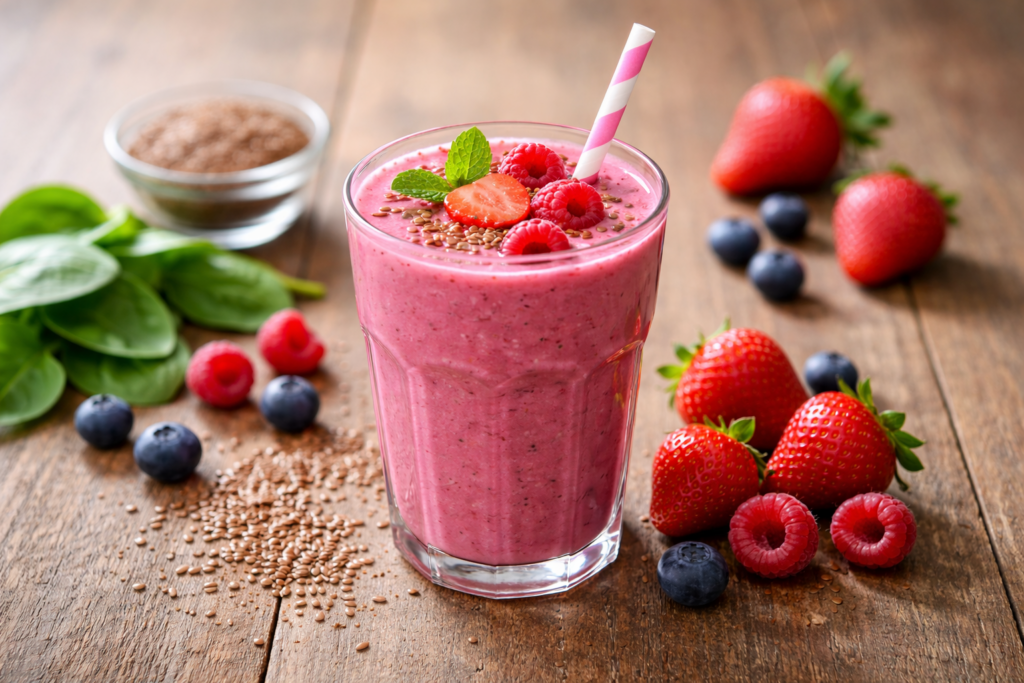
Blend one cup of baby spinach, half a cup of frozen strawberries, half a cup of frozen raspberries, one cup of unsweetened almond milk, a tablespoon of ground flaxseeds, and half a cup of plain Greek yogurt until completely smooth.
This smoothie is an excellent example of how leafy greens can be incorporated into a sweet, fruit-forward recipe without altering the flavor significantly. The berries completely mask the spinach, while the flaxseeds add lignans and omega-3 fatty acids that support hormonal balance and cardiovascular health.
If you are interested in more ways to use these ingredients in your morning routine, our guide on easy healthy breakfast recipes includes additional ideas for nutrient-dense morning meals.
6. Coffee Banana Smoothie
Blend one frozen banana, half a cup of cold brew coffee or strongly brewed chilled coffee, half a cup of plain Greek yogurt, a tablespoon of almond butter, a cup of oat milk, and a pinch of cinnamon until smooth.
This smoothie combines the natural energy of caffeine from the coffee with the sustained fuel of protein from the yogurt and healthy fats from the almond butter. It is a particularly effective pre-workout or early morning option for those who enjoy the flavor of coffee and want a portable, nutritious alternative to a traditional breakfast.
7. Avocado Cacao Smoothie
Blend half a ripe avocado, two tablespoons of raw cacao powder, one frozen banana, one cup of unsweetened almond milk, a tablespoon of honey, and a pinch of sea salt until completely smooth. Top with a sprinkle of cacao nibs.
Raw cacao is one of the highest magnesium foods available and contains compounds that support mood and cognitive function. Combined with the healthy fats of avocado and the natural sweetness of banana, this smoothie has the flavor profile of chocolate milkshake while delivering genuine nutritional value.
8. Beet and Berry Pre-Workout Smoothie
Blend half a small cooked or raw beet, half a cup of frozen cherries, half a cup of frozen strawberries, one cup of coconut water, a tablespoon of chia seeds, and a squeeze of lemon juice until smooth.
Beets contain dietary nitrates that have been shown in research to improve oxygen delivery to muscles, reduce exercise fatigue, and enhance endurance performance. Combined with the antioxidants in cherries and strawberries, this smoothie is one of the most evidence-based pre-workout nutrition options available in a natural food form.
9. Pumpkin Spice Protein Smoothie
Blend half a cup of canned pumpkin puree, one frozen banana, a scoop of vanilla protein powder, one cup of unsweetened almond milk, a teaspoon of pumpkin spice blend, a tablespoon of almond butter, and a small amount of maple syrup until smooth.
Canned pumpkin is an underused smoothie ingredient that provides significant amounts of beta-carotene, vitamin A, and fiber at minimal calorie cost. This smoothie has a warm, satisfying flavor profile that works particularly well as an autumn and winter energy drink.
10. Kale, Apple, and Ginger Detox Smoothie
Blend one cup of chopped kale, one small green apple cored and diced, a one-inch piece of fresh ginger, half a frozen banana, one cup of cold water or coconut water, and a tablespoon of hemp seeds until completely smooth.
Kale is nutritionally superior to spinach in several categories — particularly vitamin K, vitamin C, and glucosinolates, which support liver detoxification pathways. Green apple provides natural sweetness and pectin fiber, while ginger adds anti-inflammatory gingerols and supports digestive health.
Conclusion
Healthy smoothies for energy are built on a simple principle: balance natural sugars with protein, fiber, and healthy fats. Green power smoothies, nut butter and banana blends, antioxidant berry combinations, and anti-inflammatory turmeric recipes all deliver genuine, sustained energy when their macronutrient ratios are thoughtfully constructed.
Using these ten recipes as a starting point, you can experiment with ingredient combinations that match your taste preferences and nutritional goals. The most effective smoothie is the one you will actually make and enjoy consistently — so prioritize flavor alongside nutrition as you build your routine.
Frequently Asked Questions
What ingredients make a smoothie more energizing? Protein sources such as Greek yogurt, protein powder, or hemp seeds slow glucose absorption and sustain energy longer. Healthy fats from nut butter, avocado, or chia seeds further slow digestion, while complex carbohydrates from oats or banana provide the fuel itself. This combination produces a steady, lasting energy release.
Can smoothies replace a meal? Yes, when constructed with sufficient protein, healthy fats, and fiber, a smoothie can function as a complete meal replacement. A smoothie that contains at least fifteen to twenty grams of protein, five or more grams of fiber, and meaningful amounts of healthy fat will provide satiety comparable to a solid meal for most people.
What is the best time to drink an energy smoothie? Morning is the most popular time for energy smoothies as they provide a fast, nutritious start to the day without heavy digestion. Pre-workout smoothies consumed thirty to sixty minutes before exercise are also highly effective. Smoothies with beets, caffeine, or natural sugars are particularly well-suited to pre-exercise timing.
Related Articles
- 10 Easy Healthy Breakfast Recipes
- Best Superfoods for Energy and Vitality
- 10 Best Superfoods You Should Eat Daily