
Introduction
Heart disease is largely preventable, and food is one of the most powerful preventive tools available. While genetics and aging play a role in cardiovascular risk, research consistently shows that dietary choices account for a significant proportion of heart disease cases — meaning that what ends up on your plate directly influences whether or not cardiovascular disease develops over your lifetime.
The foods most effective at reducing heart disease risk do not work through a single mechanism. They work through several simultaneously: lowering LDL cholesterol, reducing arterial inflammation, improving blood pressure, stabilizing blood sugar, supporting healthy body weight, and protecting the endothelium — the lining of blood vessels that is the first site of cardiovascular damage. This multi-targeted approach is why consistent dietary habits produce stronger protective effects than any single supplement or intervention.
Why Food-Based Heart Disease Prevention Works
Cardiovascular disease develops along a predictable pathway. Arterial inflammation creates micro-injuries in vessel walls. LDL cholesterol deposits at these injury sites. Oxidized LDL attracts immune cells, forming plaques that narrow arteries over years or decades. High blood pressure accelerates this damage. Eventually, a plaque rupture or arterial blockage causes a heart attack or stroke.
Foods rich in antioxidants interrupt oxidative stress at the beginning of this chain. Foods high in soluble fiber remove cholesterol before it can deposit. Foods with healthy fats improve the ratio of protective to harmful cholesterol. Foods rich in potassium and nitrates keep blood pressure in check. Building a diet around these foods consistently creates multiple layers of protection against the disease process.
10 Foods That Reduce the Risk of Heart Disease
1. Salmon and Fatty Fish
The evidence linking fatty fish consumption to reduced heart disease risk is among the strongest in cardiovascular nutrition. EPA and DHA omega-3 fatty acids reduce triglycerides, decrease arterial inflammation, lower blood pressure, and stabilize cardiac rhythm. Large population studies consistently show that people who eat fatty fish two or more times per week have significantly lower rates of heart disease, sudden cardiac death, and stroke compared to those who rarely eat fish.
2. Blueberries
Blueberries have one of the highest anthocyanin concentrations of any commonly consumed fruit. These compounds improve endothelial function, reduce arterial stiffness, lower blood pressure, and inhibit platelet aggregation — all processes directly relevant to heart disease prevention. A long-term study of over 93,000 women found that those who ate the most blueberries had a 32% lower risk of heart attack compared to those who ate the least.
3. Olive Oil
The cardiovascular case for extra virgin olive oil is exceptionally strong. The landmark PREDIMED trial — involving nearly 7,500 high-cardiovascular-risk adults — found that those assigned to a Mediterranean diet supplemented with extra virgin olive oil had a 30% reduction in major cardiovascular events compared to a low-fat diet group. Olive oil’s polyphenols protect LDL from oxidation, reduce endothelial inflammation, and improve cholesterol ratios through consistent, daily use.
4. Nuts
Both tree nuts and peanuts are associated with reduced cardiovascular risk in large-scale epidemiological studies. The Harvard Nurses’ Health Study found that eating nuts five or more times per week was associated with a 35% lower risk of heart disease compared to rarely or never eating nuts. The combination of monounsaturated fats, omega-3 fatty acids, fiber, arginine (a precursor to nitric oxide), and antioxidants in nuts makes them one of the most cardioprotective snack foods available.
5. Legumes
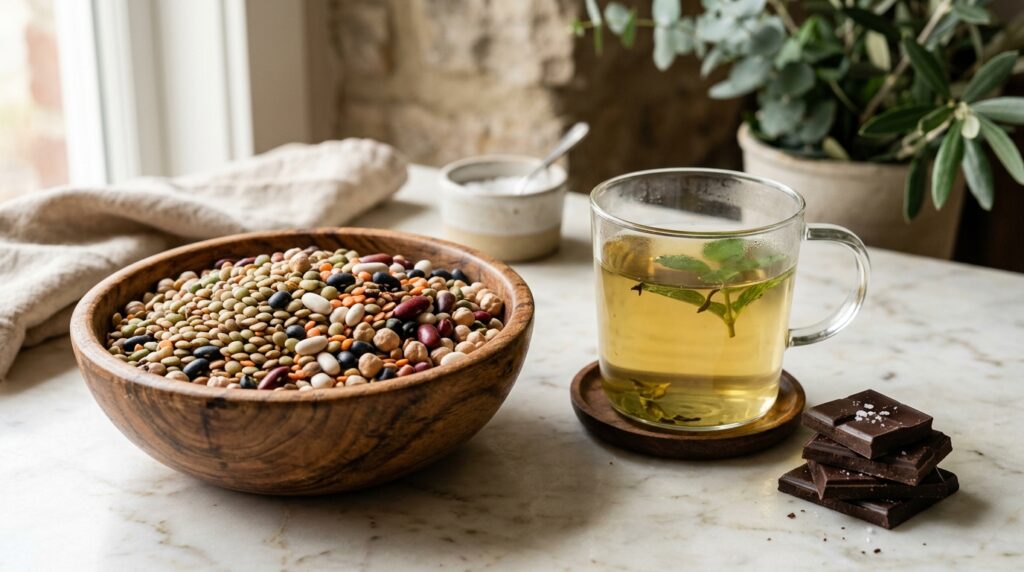
Beans, lentils, and chickpeas are high in fiber, plant protein, magnesium, and potassium — a nutritional profile that directly addresses multiple heart disease risk factors. Studies show that eating legumes four times per week is associated with a 22% lower risk of coronary heart disease. They are also an effective replacement for red and processed meat in the diet, which independently reduces cardiovascular risk through reduced saturated fat and heme iron intake.
Our guide on anti-inflammatory diet for beginners provides a practical framework for building a diet around many of these same heart-protective foods with an anti-inflammatory focus.
6. Dark Leafy Greens
Kale, spinach, collard greens, and Swiss chard provide folate, which lowers homocysteine — an amino acid elevated in the blood of many heart disease patients. They also deliver dietary nitrates for blood pressure support, vitamin K for arterial health, and powerful antioxidants including lutein and zeaxanthin that specifically protect against arterial plaque formation. Populations with the highest leafy green consumption consistently show lower cardiovascular disease rates.
7. Whole Grains
Whole grains — including oats, barley, whole wheat, and brown rice — contain fiber, B vitamins, magnesium, and phytochemicals that collectively reduce cardiovascular risk. A meta-analysis of 45 studies found that three servings of whole grains per day was associated with a 20% reduction in heart disease risk. Replacing refined grains with whole grains improves cholesterol, reduces arterial inflammation, and helps maintain a healthy body weight, all of which are relevant to long-term cardiovascular health.
8. Green Tea
Regular green tea consumption is associated with reduced rates of heart disease in population studies, particularly in Japan where intake is high. The catechins in green tea — especially EGCG — improve endothelial function, lower LDL cholesterol, reduce blood pressure, and inhibit platelet clumping. A meta-analysis found that three cups of green tea per day was associated with a meaningful reduction in the risk of coronary heart disease and cardiovascular mortality.
9. Tomatoes
Tomatoes are one of the best dietary sources of lycopene — a carotenoid antioxidant with strong evidence for cardiovascular protection. Lycopene reduces LDL oxidation, inhibits platelet aggregation, and lowers arterial inflammation. Notably, lycopene from cooked or processed tomatoes — such as tomato paste or sauce — is more bioavailable than from raw tomatoes because heat breaks down cell walls and releases more lycopene for absorption.
10. Dark Chocolate
High-quality dark chocolate with at least 70% cacao content provides flavanols that improve endothelial function, lower blood pressure, and reduce platelet stickiness. Observational studies have found that moderate dark chocolate consumption — around two to three squares daily — is associated with lower rates of cardiovascular events. The mechanisms are consistent with those of other polyphenol-rich foods: improved nitric oxide production, reduced oxidative stress, and lower arterial inflammation.
Conclusion
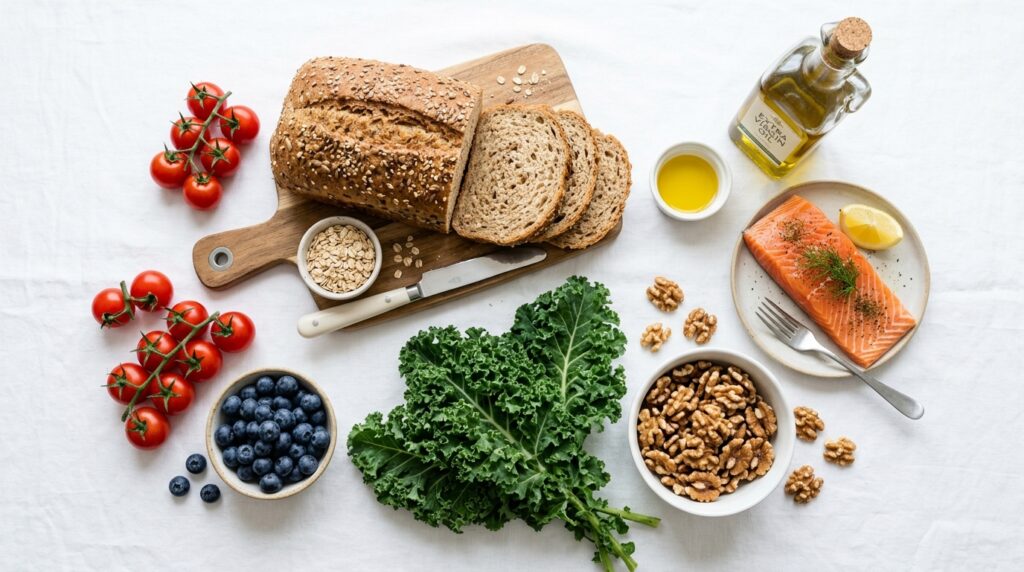
Reducing your risk of heart disease through diet is one of the most powerful and accessible health investments available. The foods highlighted here — fatty fish, berries, olive oil, nuts, legumes, leafy greens, whole grains, green tea, tomatoes, and dark chocolate — address cardiovascular risk through multiple overlapping mechanisms that compound over time with consistent intake. The strongest protection comes not from any single food but from a dietary pattern rich in all of these elements. Building meals around these foods, over months and years, creates a meaningful and measurable reduction in your lifetime cardiovascular risk.
Frequently Asked Questions
Can eating the right foods actually prevent a heart attack? Research strongly suggests that long-term dietary patterns significantly reduce the risk of heart attacks. The PREDIMED trial and Nurses’ Health Study, among many others, show 20 to 35% reductions in cardiovascular events among those with the healthiest dietary patterns. While diet cannot provide absolute prevention, it is one of the most potent modifiable risk factors available.
What is the most heart-protective dietary pattern overall? The Mediterranean diet consistently shows the strongest evidence for comprehensive cardiovascular protection, followed closely by the DASH diet, particularly for blood pressure management. Both share an emphasis on whole plant foods, olive oil, fish, legumes, and nuts, with minimal processed and red meat.
Do superfoods alone protect against heart disease? No single food — regardless of how nutrient-dense — can compensate for an otherwise poor dietary pattern. The cardiovascular protection from foods like blueberries, olive oil, or salmon comes from regular, consistent inclusion within a broadly healthy diet. The cumulative effect of a heart-healthy dietary pattern is far greater than the effect of any individual food.
Related Articles
10 Best Foods for Heart Health Best Omega-3 Foods for Heart Health How Diet Affects Your Heart Health