Introduction
What you drink throughout the day has a significant and often underestimated impact on liver health. While food choices rightly receive the most attention, beverages can deliver concentrated doses of liver-protective compounds — or, in the case of alcohol and sugary drinks, place an outsized burden on the liver that compounds damage over time.
The good news is that several of the most accessible and enjoyable beverages have strong scientific evidence supporting their liver-protective effects. Coffee, green tea, lemon water, and beet juice each interact with liver function through distinct and well-understood mechanisms. Building a daily beverage routine around these options provides consistent, meaningful support for one of the body’s hardest-working organs.
Why Drinks Matter for Liver Health
The liver processes everything that enters the bloodstream — including every beverage consumed. Sugary drinks deliver fructose directly to the liver where excess amounts are converted to fat, contributing to non-alcoholic fatty liver disease. Alcohol is metabolized almost entirely in the liver, generating toxic byproducts that cause oxidative stress and inflammatory damage. By contrast, beverages rich in polyphenols, antioxidants, and liver-supportive compounds actively reduce hepatic fat accumulation, neutralize oxidative stress, and stimulate bile production.
Best Drinks for Liver Health
1. Coffee
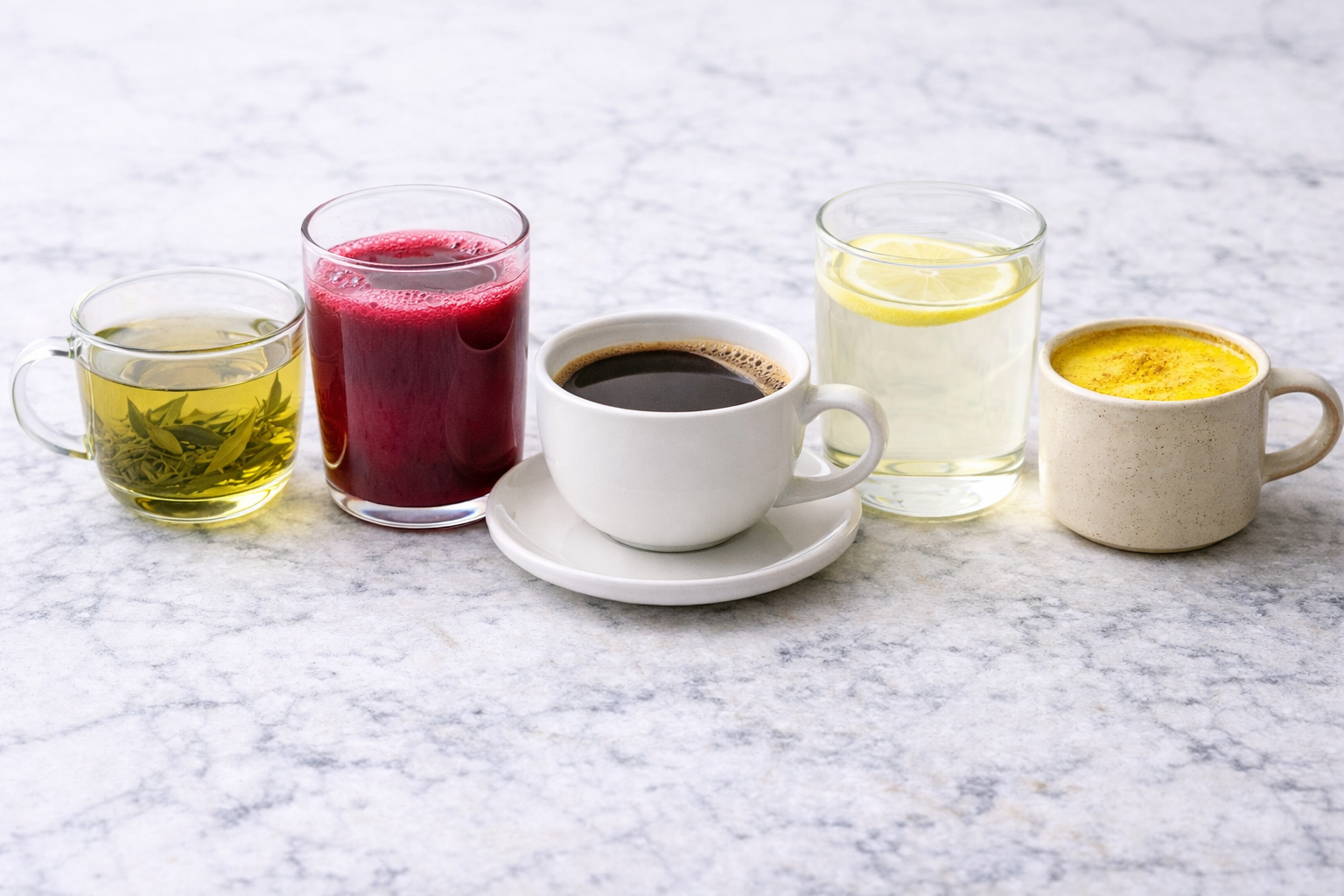
Coffee is arguably the most thoroughly studied beverage for liver protection, with an exceptionally consistent body of evidence spanning multiple continents, study designs, and population groups. Regular coffee consumption — two to four cups per day — is associated with significantly lower rates of liver fibrosis, cirrhosis, and hepatocellular carcinoma (liver cancer). Coffee reduces liver inflammation, lowers liver enzyme levels, inhibits fibrosis-promoting signaling pathways, and improves insulin sensitivity. Both caffeinated and decaffeinated coffee appear to provide liver benefits, suggesting the protective effects come from chlorogenic acids and other polyphenols rather than caffeine alone.
2. Green Tea
Green tea’s catechins — particularly EGCG — have been shown in multiple clinical studies to reduce liver fat, lower liver enzyme levels, and improve antioxidant enzyme activity in hepatic tissue. A meta-analysis of randomized controlled trials found that green tea supplementation significantly reduced AST and ALT — two primary markers of liver cell stress. Drinking two to three cups of unsweetened green tea per day provides a consistent and meaningful dose of liver-protective catechins.
3. Warm Lemon Water
While lemon water’s liver benefits are more modest than those of coffee or green tea, it provides a daily dose of vitamin C — a water-soluble antioxidant that supports Phase I detoxification enzyme activity — and d-limonene from lemon zest, which induces Phase II detoxification enzymes. Starting each morning with a glass of warm lemon water is a simple and low-cost habit that contributes to daily antioxidant intake and gently stimulates bile production.
4. Beet Juice
Beets contain betaine, nitrates, and betalain pigments that collectively support liver methylation, reduce hepatic fat accumulation, and protect liver cells from oxidative damage. A clinical study found that regular beetroot juice consumption significantly reduced markers of liver inflammation and improved antioxidant status in people with non-alcoholic fatty liver disease. Beet juice also improves blood flow to the liver, enhancing the delivery of oxygen and nutrients to hepatic tissue.
5. Dandelion Tea
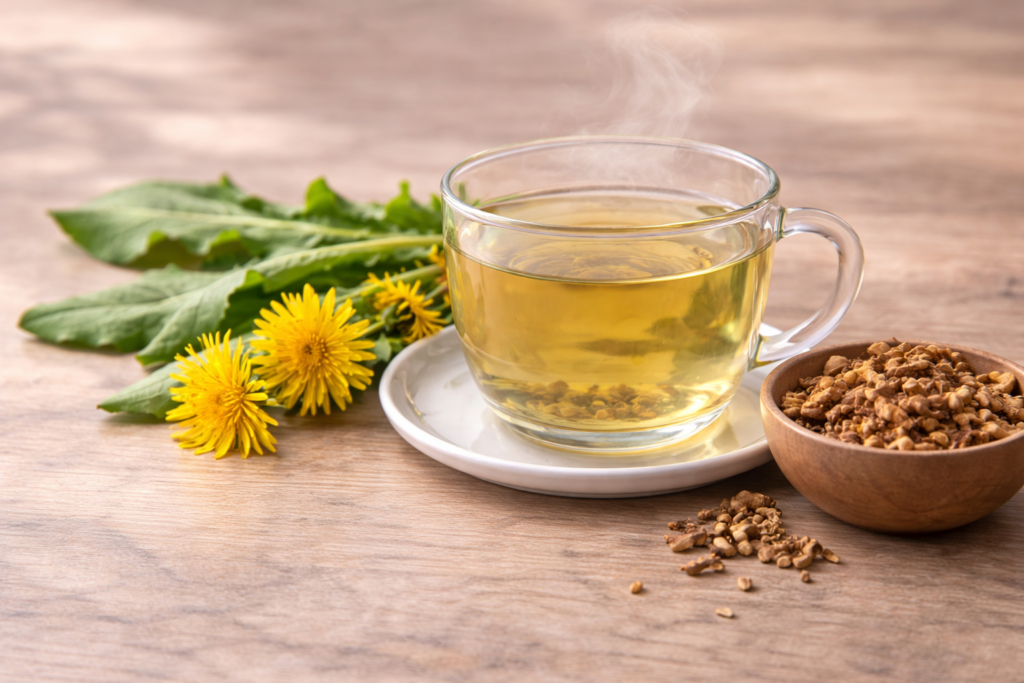
Dandelion root tea stimulates bile production and flow — the liver’s primary route for excreting processed toxins — and contains antioxidant compounds that protect liver cells from oxidative stress. Traditional herbalism has used dandelion as a liver tonic for centuries, and modern animal research confirms meaningful hepatoprotective effects. Human studies are more limited but supportive, and dandelion tea is caffeine-free, making it a practical option for afternoon and evening liver support.
Building a daily liver-supportive beverage routine works best when combined with whole foods that address liver health from a nutritional standpoint. Our guide on 10 best foods for liver health provides the complementary food-based strategies to pair with these drinks.
6. Turmeric Tea or Golden Milk
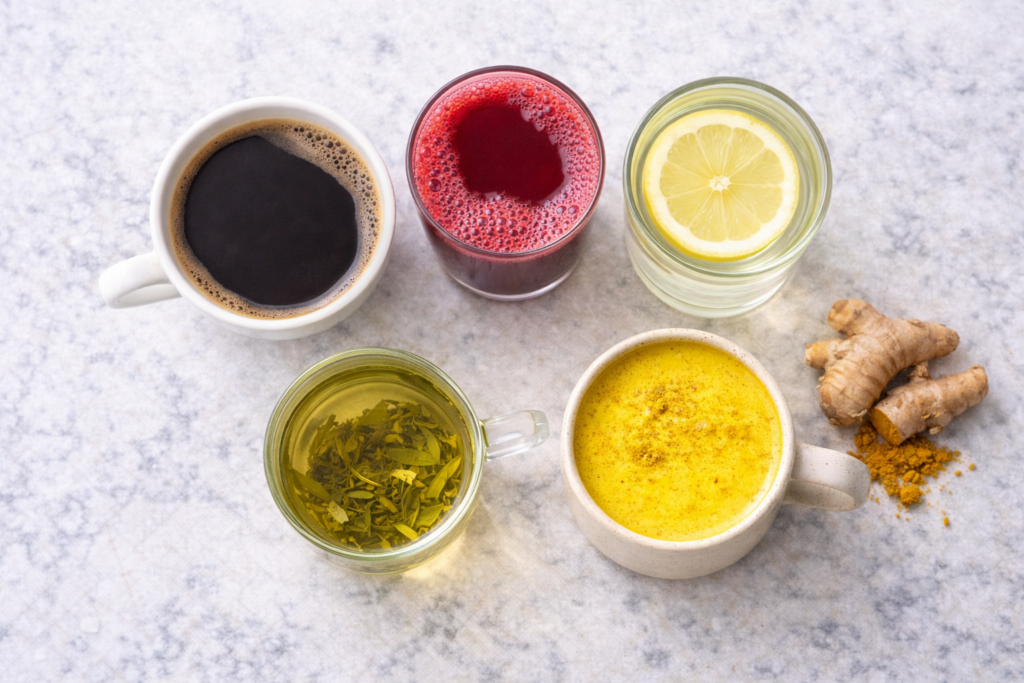
Curcumin — the active compound in turmeric — reduces liver inflammation, activates antioxidant enzyme pathways, and has been shown in clinical trials to lower liver enzyme levels in people with NAFLD. Consuming it as a warm turmeric tea or golden milk (turmeric with plant-based milk and black pepper) improves bioavailability compared to raw turmeric. The addition of black pepper is important as piperine increases curcumin absorption by up to 2,000 percent.
7. Grapefruit Juice
Fresh grapefruit juice provides naringenin and naringin — flavonoids with documented hepatoprotective effects in both animal and human research. These compounds activate fat-burning enzymes in the liver, reduce inflammation, and inhibit the fibrosis pathways that cause permanent liver scarring. An important caution: grapefruit juice interacts with a wide range of medications by inhibiting CYP450 liver enzymes, and those taking prescription drugs should confirm safety with their healthcare provider before regular consumption.
8. Peppermint Tea
Peppermint tea stimulates bile flow from the gallbladder into the small intestine, supporting fat digestion and reducing the bile back-pressure that can stress liver cells. It also contains menthol and rosmarinic acid — compounds with anti-inflammatory and antispasmodic properties relevant to digestive and hepatic comfort. Caffeine-free and widely available, peppermint tea is a practical after-meal beverage choice for liver and digestive health.
9. Oat Milk (Unsweetened)
Unsweetened oat milk provides beta-glucan fiber that reduces dietary fat absorption in the small intestine, lowering the fat load delivered to the liver via the portal circulation. It also contains avenanthramides — polyphenols with direct anti-inflammatory activity in liver tissue. Choosing unsweetened versions is essential, as sweetened oat milk can contain enough added sugar to partially offset these benefits.
10. Water
Adequate water intake is fundamental to liver health and is frequently overlooked in conversations about liver-supportive beverages. The liver requires sufficient hydration to produce bile effectively, flush water-soluble toxins through the kidneys, and maintain the blood volume necessary for efficient toxin filtration. Chronic mild dehydration impairs all of these functions. Aiming for eight to ten glasses of water daily, spread throughout the day, provides the hydration baseline that all other liver-supportive habits depend on.
Conclusion
Building a daily beverage routine that supports liver health is one of the simplest and most consistent interventions available. Starting the morning with warm lemon water or coffee, drinking green tea through the afternoon, including beet juice or turmeric golden milk a few times per week, and maintaining adequate water intake throughout the day creates a comprehensive beverage strategy that addresses liver detoxification, inflammation, and fat metabolism simultaneously. The most important step is replacing sugar-sweetened beverages and excess alcohol with these liver-supportive alternatives.
Frequently Asked Questions
Is coffee really good for the liver? Yes. Coffee has more consistent and robust evidence for liver protection than almost any other beverage. Multiple large-scale studies across different countries have found that regular coffee drinkers have significantly lower rates of liver fibrosis, cirrhosis, and liver cancer. Even people with existing liver disease show slower progression with regular coffee consumption.
How much green tea is good for the liver? Most clinical research showing liver benefits from green tea uses two to three cups per day of brewed green tea or equivalent supplementation. Higher amounts — particularly in supplement form — may paradoxically cause liver stress in rare cases, so food-form green tea at two to three daily cups is the best-evidenced and safest approach.
What drinks should be avoided for liver health? Alcohol is the most damaging beverage for the liver and should be minimized or eliminated for optimal liver health. Sugary beverages — sodas, fruit juices, sweetened teas, and energy drinks — deliver fructose that drives hepatic fat accumulation and should be replaced with water, unsweetened teas, or coffee for liver protection.
Related Articles
10 Best Foods for Liver Health Foods That Detox and Cleanse the Liver Best Drinks for Brain Health