Introduction
The word “detox” has become heavily associated with commercial cleanses, expensive juice programs, and fasting protocols that promise rapid liver purification. The reality of liver detoxification is both more nuanced and more accessible than these products suggest. The liver performs detoxification continuously and automatically — it does not need periodic cleanses to function. What it does need is a consistent supply of specific nutrients that power its detoxification enzyme systems and protect its cells from oxidative damage in the process.
True liver detox support comes from everyday food choices that provide the compounds the liver actually uses to neutralize and eliminate toxins: sulfur-containing amino acids, glutathione precursors, B vitamins, antioxidants, and fiber that prevents reabsorption of processed toxins from the gut. These are found not in expensive supplements but in a range of whole foods that are both affordable and widely available.
Why Natural Liver Detoxification Needs Nutritional Support
The liver’s detoxification process occurs in two phases. Phase I uses cytochrome P450 enzymes to chemically transform fat-soluble toxins into intermediate compounds — a process that generates free radicals as a byproduct. Phase II then conjugates these intermediates with molecules like glutathione or sulfate, making them water-soluble so they can be excreted through bile or urine.
Both phases require specific nutritional cofactors. Phase I depends on B vitamins, iron, and magnesium. Phase II requires amino acids — particularly cysteine, glycine, and glutamine — as well as sulfur compounds. Antioxidants are needed throughout both phases to neutralize the free radicals generated. When any of these nutritional inputs are inadequate, detoxification becomes less efficient and partially processed toxin intermediates can accumulate.
Foods That Detox and Cleanse the Liver
1. Cruciferous Vegetables
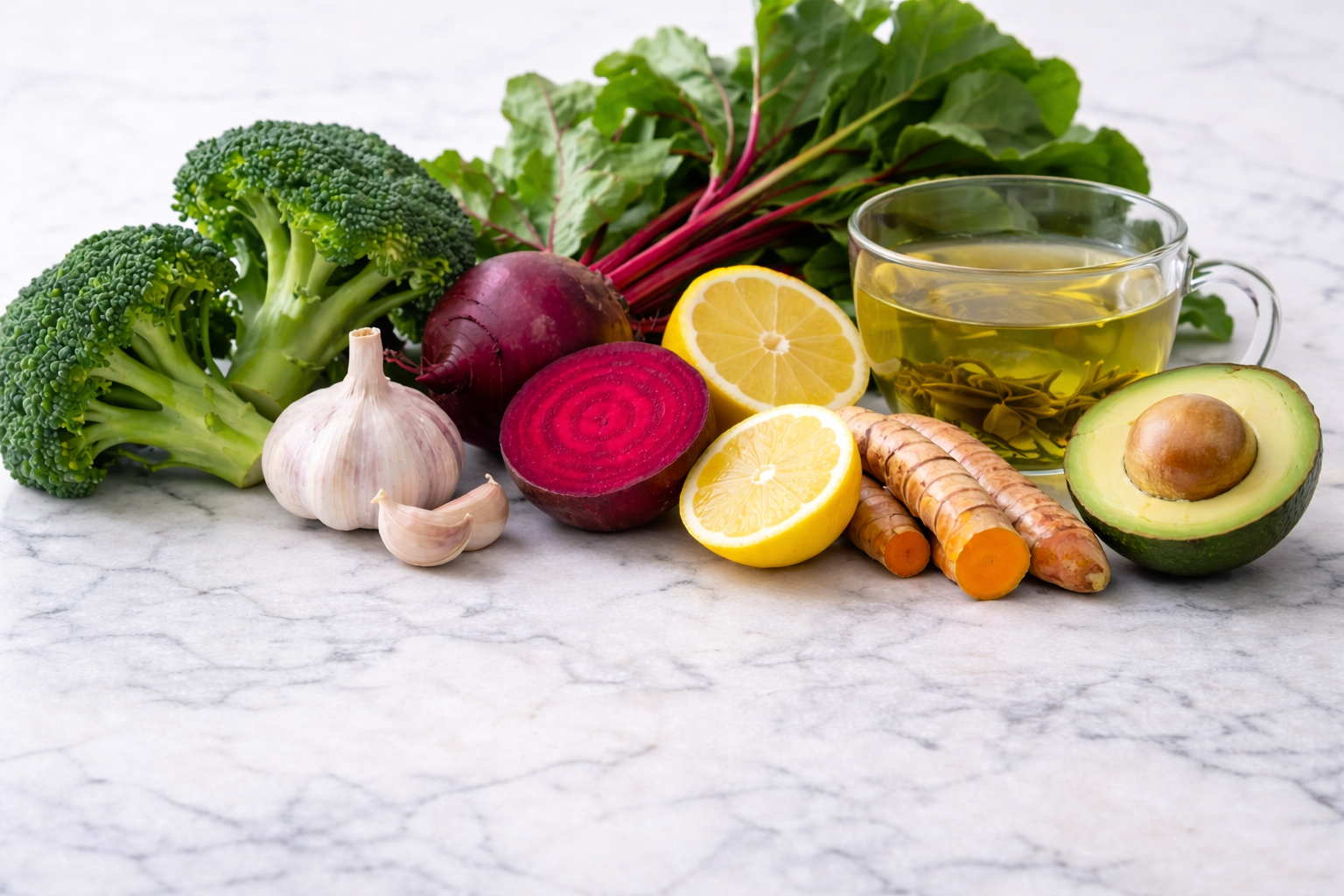
Broccoli, cauliflower, Brussels sprouts, and cabbage are the most potent food sources of glucosinolates — compounds that are hydrolyzed in the gut to produce sulforaphane and indole-3-carbinol, which powerfully induce both Phase I and Phase II liver detoxification enzymes. Regular cruciferous vegetable consumption measurably increases the liver’s capacity to process and eliminate carcinogens, heavy metals, and environmental pollutants. Lightly steaming rather than boiling preserves the most glucosinolate activity.
2. Garlic
Garlic’s sulfur compounds — allicin, alliin, and diallyl sulfide — activate glutathione S-transferase enzymes in the liver, which are responsible for conjugating toxins in Phase II detoxification. Garlic also provides selenium, a mineral essential for the function of glutathione peroxidase — the liver’s primary antioxidant enzyme. Studies show that garlic consumption significantly reduces markers of liver inflammation and improves enzyme activity in people with elevated liver stress.
3. Beets
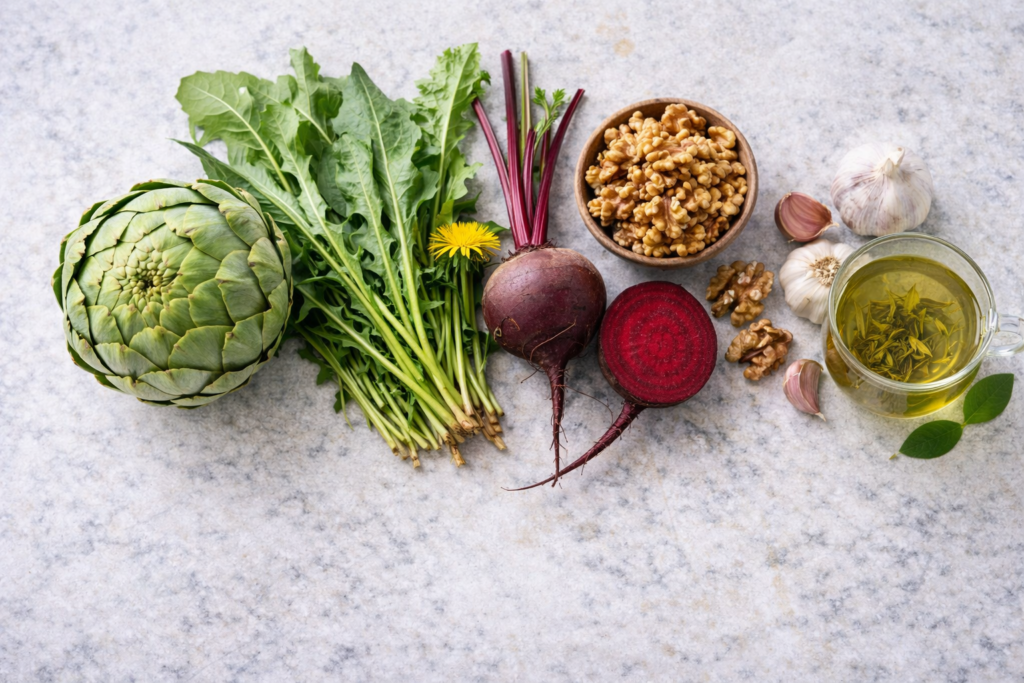
Beets contain betaine, a compound that supports liver methylation — a critical Phase II detoxification pathway that neutralizes homocysteine and processes hormones, neurotransmitters, and certain toxins. Betaine also reduces fat accumulation in liver cells. Clinical research has found that betaine supplementation significantly reduces liver fat and improves liver enzyme levels in people with NAFLD. Beet greens are equally valuable, providing additional folate and antioxidants.
4. Dandelion Greens
Dandelion has been used in traditional medicine as a liver tonic for centuries, and modern research has begun to validate this use. Dandelion root and leaves contain compounds that stimulate bile production — which is the liver’s primary route for excreting processed toxins — and reduce hepatic oxidative stress. Available as a salad green, tea, or supplement, dandelion is one of the most accessible and historically supported liver cleansing foods.
5. Lemon and Citrus
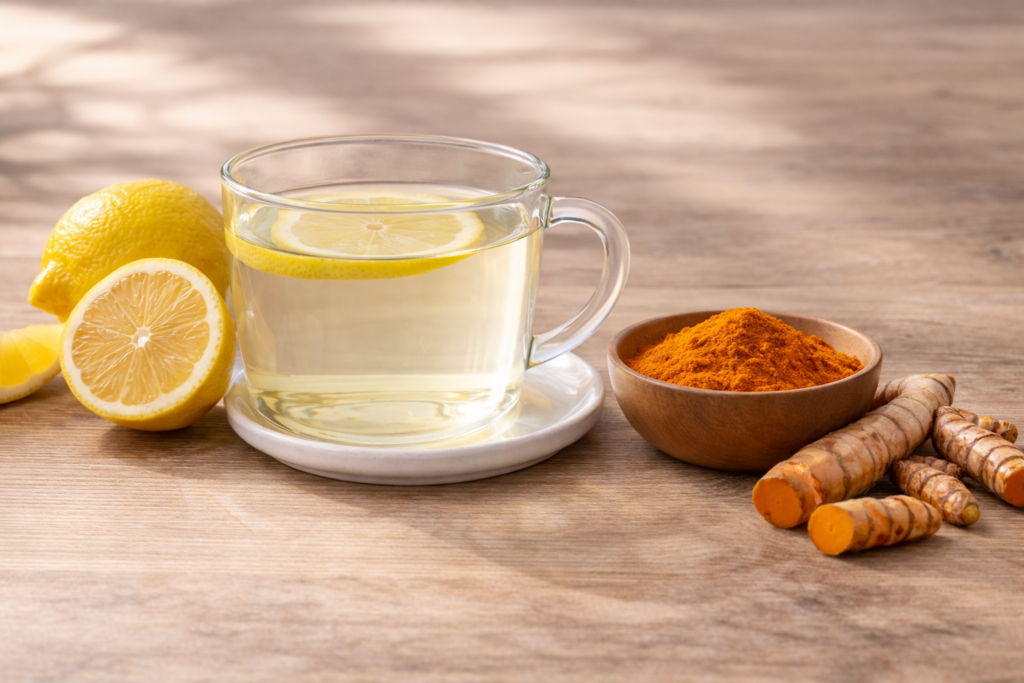
Lemon juice and other citrus fruits provide vitamin C — a powerful water-soluble antioxidant that protects Phase I enzyme activity from free radical damage — and d-limonene, a terpene found in citrus peel that specifically induces Phase II detoxification enzymes. Starting the day with warm lemon water is a widely recommended liver support habit that, while modest in effect, provides a consistent daily dose of vitamin C and d-limonene with no downside.
Combining liver-cleansing foods with broader anti-inflammatory eating patterns enhances their protective effects. Our guide on foods that reduce inflammation naturally covers the dietary strategies most effective at reducing the inflammatory burden the liver must process.
6. Turmeric
Curcumin — the active compound in turmeric — is one of the most studied natural hepatoprotective agents available. It reduces liver inflammation, increases bile secretion, activates Nrf2 pathways that induce antioxidant enzyme production, and has been shown in clinical trials to lower liver enzyme levels and reduce hepatic fat in people with NAFLD. Adding turmeric to cooking regularly, or consuming it with black pepper to improve bioavailability, is one of the most evidence-supported dietary strategies for liver protection.
7. Green Tea
EGCG and other catechins in green tea are metabolized in the liver and directly activate antioxidant enzyme systems including superoxide dismutase and glutathione peroxidase. They also inhibit the inflammatory signaling pathways that drive liver fibrosis. Multiple clinical studies show that green tea consumption reduces serum liver enzyme levels — a key marker of liver cell stress — and lowers hepatic fat in at-risk populations.
8. Avocado
Avocados contain glutathione precursors — particularly cysteine — alongside healthy fats, vitamin E, and B vitamins that collectively support both phases of liver detoxification. A Japanese study found that people who ate avocado regularly had significantly lower liver enzyme levels and slower progression of liver damage caused by hepatitis compared to those who ate other fruits. Avocados’ combination of glutathione support and anti-inflammatory fats makes them a particularly complete liver-protective food.
9. Walnuts
Walnuts provide arginine — an amino acid used by the liver to neutralize and excrete ammonia, a toxic byproduct of protein metabolism — along with glutathione precursors and omega-3 fatty acids. They are one of the few plant foods that directly support the urea cycle, the liver’s primary pathway for processing nitrogen waste. Clinical research shows that regular walnut consumption improves liver function test results in people with NAFLD.
10. Artichoke
Artichoke is among the most clinically studied foods for liver protection. Its active compounds — cynarin and silymarin-like flavonoids — stimulate bile production and flow, improve liver cell regeneration, and reduce oxidative stress in hepatic tissue. A systematic review of clinical studies found that artichoke leaf extract significantly reduced liver enzyme levels, total cholesterol, and triglycerides in people with elevated liver markers. Fresh artichoke provides similar compounds in lower but still beneficial concentrations.
Conclusion
Supporting the liver’s natural detoxification capacity requires no expensive protocols or extreme dietary measures. What the liver needs most is a steady supply of sulfur compounds from garlic and cruciferous vegetables, antioxidants from berries and green tea, glutathione precursors from avocado and walnuts, and bile-stimulating compounds from artichoke and beets. Building these foods into regular meals provides the liver with the nutritional foundation it needs to carry out its detoxification work efficiently — day after day, without interruption.
Frequently Asked Questions
Do liver detox products actually work? Most commercial liver detox products have little or no clinical evidence supporting their efficacy. The liver does not require periodic cleansing — it detoxifies continuously. What does work is consistently consuming foods that provide the nutritional cofactors liver detoxification enzymes depend on. Whole foods are generally more effective and significantly less expensive than commercial detox products.
What is the most powerful liver-cleansing food? Cruciferous vegetables — particularly broccoli — have the most direct and well-documented effect on liver detoxification enzyme induction. Garlic and turmeric are close rivals for their complementary effects on Phase II detoxification and antioxidant enzyme activation. Consuming all three regularly provides comprehensive detoxification support.
Is it necessary to fast to detox the liver? Fasting produces some short-term metabolic shifts that can reduce liver fat temporarily, but it is not necessary for liver detoxification and can actually impair Phase II detoxification by reducing the supply of amino acid cofactors the liver needs. Consistent nutritional support from a balanced whole-food diet is more effective than intermittent fasting for sustained liver detox capacity.
Related Articles
10 Best Foods for Liver Health Foods That Reduce Inflammation Naturally 10 Best Anti-Inflammatory Foods