Introduction
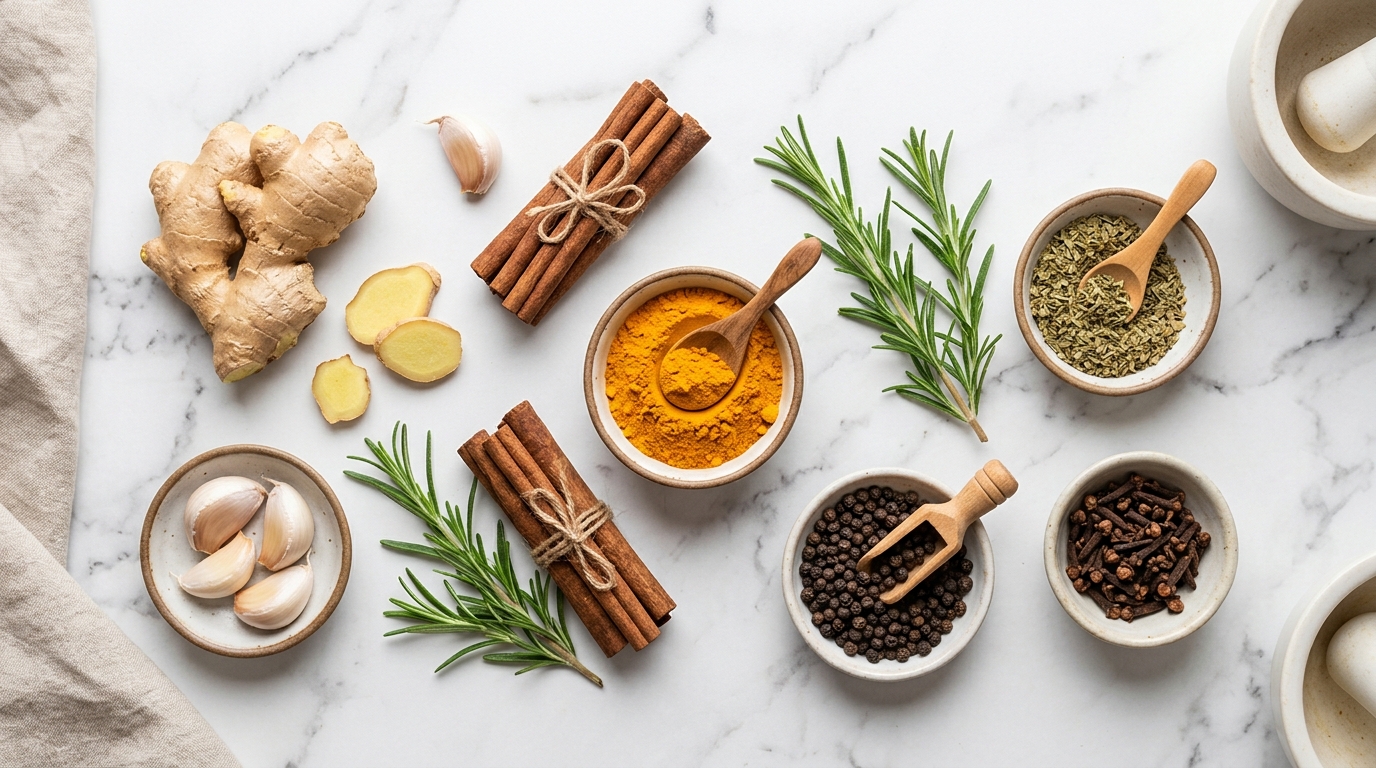
Among all the dietary tools available for reducing chronic inflammation, herbs and spices occupy a uniquely powerful position. Gram for gram, many herbs and spices contain concentrations of anti-inflammatory compounds that far exceed those found in even the most nutrient-dense whole foods. A teaspoon of turmeric, a pinch of rosemary, or a few cloves of garlic can deliver a meaningful dose of anti-inflammatory phytochemicals in a form that adds flavor rather than calories. Understanding which herbs and spices have the strongest scientific backing for anti-inflammatory activity helps you make more targeted and effective choices in the kitchen.
Why Herbs and Spices Deserve More Attention
The anti-inflammatory properties of culinary herbs and spices have been studied extensively, and the evidence is substantial. Many of the most potent anti-inflammatory compounds found in the diet — curcumin, gingerols, eugenol, rosmarinic acid, and allicin among them — come from plants that have been used as herbs and spices for thousands of years across diverse culinary traditions. Modern pharmacological research has confirmed what traditional medicine systems long recognized: these plants contain biologically active molecules that modulate inflammation through mechanisms that overlap significantly with those of pharmaceutical anti-inflammatory drugs, but without the same risk profiles.
10 Best Anti-Inflammatory Herbs and Spices
1. Turmeric
Turmeric is the most researched spice in the world for its anti-inflammatory properties. Its active compound, curcumin, inhibits NF-kB — the master regulator of inflammatory gene expression — as well as COX-2 and multiple inflammatory cytokine pathways simultaneously. This broad spectrum of activity is unusual among natural compounds and helps explain why turmeric is effective for such a wide range of inflammatory conditions.
Clinical studies have demonstrated curcumin’s effectiveness in reducing inflammation in rheumatoid arthritis, inflammatory bowel disease, and metabolic syndrome. Combining turmeric with black pepper increases curcumin absorption by up to 2,000 percent. Using one teaspoon of turmeric with a pinch of black pepper daily in cooking provides a practical therapeutic dose.
2. Ginger
Ginger is another foundational anti-inflammatory spice with strong scientific support. Its primary active compounds — 6-gingerol in fresh ginger and 6-shogaol in dried ginger — inhibit the production of prostaglandins and leukotrienes through mechanisms similar to those of NSAIDs, providing natural anti-inflammatory and analgesic effects.
Clinical studies have shown ginger to be effective for reducing inflammation and pain in osteoarthritis, muscle soreness, and menstrual pain. Fresh ginger can be grated into stir-fries, teas, and soups. Dried ginger powder is convenient for adding to smoothies, oatmeal, baked goods, and spice blends.
3. Garlic
Garlic is one of the most powerful anti-inflammatory foods in the entire plant kingdom. When raw garlic is crushed or chopped, a reaction occurs that converts alliin to allicin — one of the most potent anti-inflammatory sulfur compounds found in nature. Allicin inhibits NF-kB activation, reduces the production of inflammatory cytokines, and has been shown to reduce CRP and other blood markers of inflammation in clinical trials.
The anti-inflammatory properties of garlic are best preserved when it is consumed raw or lightly cooked. Allowing crushed garlic to sit for ten minutes before applying heat helps preserve more allicin.
4. Rosemary
Rosemary contains two primary anti-inflammatory compounds: rosmarinic acid and carnosic acid. Both have been shown in research to reduce the production of COX-2 enzymes and inhibit NF-kB signaling. Rosemary is also a powerful antioxidant that protects cells from the oxidative stress that accompanies and amplifies inflammation.
It pairs well with roasted vegetables, poultry, fish, potatoes, and whole grain breads. Using fresh or dried rosemary generously in cooking is an easy way to incorporate these anti-inflammatory compounds daily.
5. Cinnamon
Ceylon cinnamon — the true cinnamon variety — contains potent anti-inflammatory polyphenols including cinnamaldehyde and epicatechin that have been shown to reduce NF-kB activation, decrease inflammatory cytokine levels, and improve insulin sensitivity. Improved insulin sensitivity is directly relevant to inflammation management because insulin resistance is one of the most significant drivers of systemic chronic inflammation.
Clinical studies have found that regular cinnamon consumption lowers CRP and other inflammatory markers, particularly in individuals with metabolic syndrome or type 2 diabetes. Adding half a teaspoon of Ceylon cinnamon to oatmeal, yogurt, smoothies, or coffee each day provides a practical daily dose.
For more ways to reduce inflammation naturally through your daily food choices, you may also want to read our guide on Anti-Inflammatory Foods That Fight Chronic Pain.
6. Black Pepper
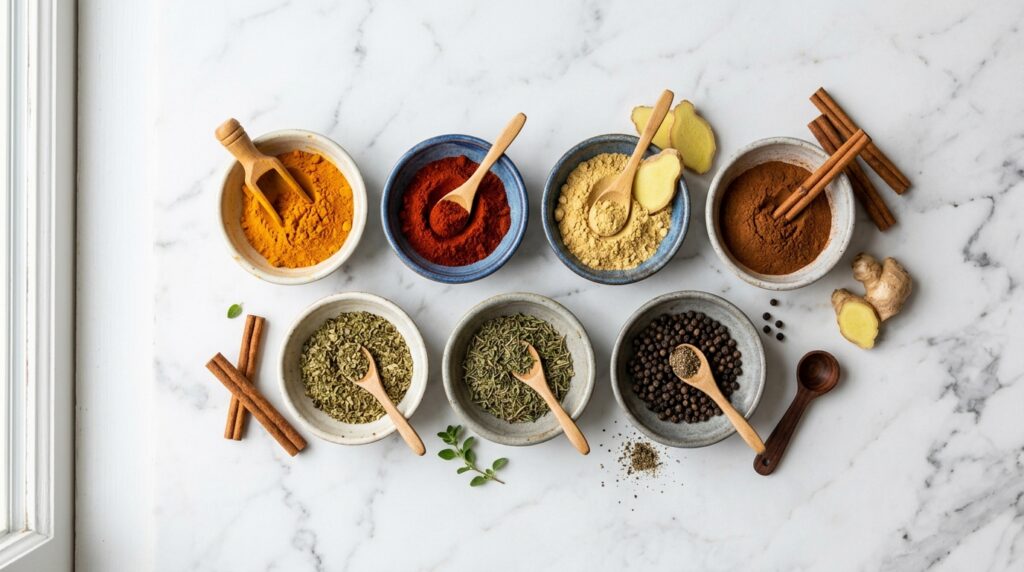
Black pepper contains piperine, a compound that most commonly known for dramatically increasing the bioavailability of curcumin from turmeric. However, piperine itself also has significant anti-inflammatory properties, inhibiting NF-kB activation and reducing the production of inflammatory cytokines including IL-1β and TNF-alpha.
Piperine also improves the absorption of a wide range of other nutrients and phytochemicals. Using black pepper generously in cooking, particularly alongside turmeric, garlic, and other anti-inflammatory spices, synergistically increases the overall anti-inflammatory impact of meals.
7. Cloves
Cloves are one of the highest-antioxidant spices available, and their primary anti-inflammatory compound, eugenol, has been extensively studied for its ability to reduce inflammation through multiple molecular pathways. Eugenol inhibits COX enzymes, reducing prostaglandin production, and also inhibits NF-kB — making cloves one of the few spices with proven multi-pathway anti-inflammatory activity.
Cloves pair beautifully with warming dishes, rice, soups, stews, spiced teas, and baked goods. Even small amounts of ground cloves provide meaningful antioxidant and anti-inflammatory activity.
8. Oregano
Fresh and dried oregano is exceptionally rich in rosmarinic acid and carvacrol — two powerful anti-inflammatory phenolic compounds. Carvacrol has been shown in research to inhibit the production of inflammatory molecules including TNF-alpha and IL-1β, and to suppress NF-kB activation.
Culinary use of oregano — added generously to tomato sauces, salads, roasted vegetables, and grain dishes — provides regular doses of these anti-inflammatory compounds. Mediterranean cuisine, which uses oregano extensively, is one of the most consistently anti-inflammatory dietary patterns in the world.
9. Cayenne Pepper
Cayenne pepper and other hot peppers contain capsaicin, one of the most studied natural anti-inflammatory compounds available. Capsaicin works by binding to TRPV1 receptors, subsequently desensitizing pain receptors and reducing the neurogenic inflammation associated with chronic pain conditions. It also inhibits substance P — a neuropeptide involved in pain transmission and inflammation.
Regular consumption of small amounts of cayenne pepper reduces systemic inflammation over time. Adding a small pinch of cayenne to soups, stews, dressings, and savory dishes daily is an easy way to incorporate capsaicin into the anti-inflammatory diet.
10. Thyme
Thyme contains thymol and carvacrol — phenolic compounds with potent anti-inflammatory and antimicrobial properties. Thymol has been shown in research to reduce the production of inflammatory cytokines and to inhibit COX-2 enzyme activity. Thyme is also rich in vitamin C and vitamin K, which support anti-inflammatory processes at the cellular level.
Fresh and dried thyme is versatile in cooking — it pairs well with poultry, fish, roasted vegetables, soups, and Mediterranean-style dishes. Using thyme liberally as a culinary herb alongside other anti-inflammatory spices creates meals that are both flavorful and powerfully anti-inflammatory.
Conclusion
The spice rack and herb garden hold some of the most potent anti-inflammatory tools available in everyday cooking. Turmeric, ginger, garlic, rosemary, cinnamon, black pepper, and the other spices discussed here are not exotic supplements — they are accessible, affordable flavoring agents that have earned scientific validation for their health benefits. The more variety and generosity with which you use anti-inflammatory herbs and spices in your daily cooking, the more consistently you reduce the inflammatory signaling that underlies chronic disease.
Frequently Asked Questions
Which anti-inflammatory spice is the most powerful? Turmeric, specifically its active compound curcumin, has the strongest scientific evidence base for anti-inflammatory activity. However, ginger and garlic are close runners-up, and combining multiple spices provides broader anti-inflammatory coverage than relying on any single one.
How much turmeric should you use daily for anti-inflammatory benefits? Most research suggests that half a teaspoon to one teaspoon of turmeric per day, consistently consumed with black pepper and a small amount of fat for absorption, provides meaningful anti-inflammatory activity.
Can cooking with spices reduce CRP levels? Yes. Multiple clinical studies have found that regular consumption of anti-inflammatory spices including turmeric, ginger, and cinnamon reduces CRP — a primary blood marker of systemic inflammation — over periods of four to twelve weeks.
Related Articles
- 10 Best Anti-Inflammatory Foods to Eat Daily
- Anti-Inflammatory Foods That Fight Chronic Pain
- Anti-Inflammatory Foods for Joint Health