Introduction
Heart disease remains the leading cause of death worldwide, yet research consistently shows that dietary choices play a profound role in cardiovascular risk. What you eat every day directly influences cholesterol levels, blood pressure, inflammation, and arterial health — all of which determine how well your heart functions over the long term.
The encouraging reality is that many of the most powerful foods for heart health are simple, widely available, and easy to incorporate into daily meals. No extreme dietary overhaul is required. Building a diet around a core group of evidence-backed heart-healthy foods creates meaningful, measurable improvements in cardiovascular health markers over time.
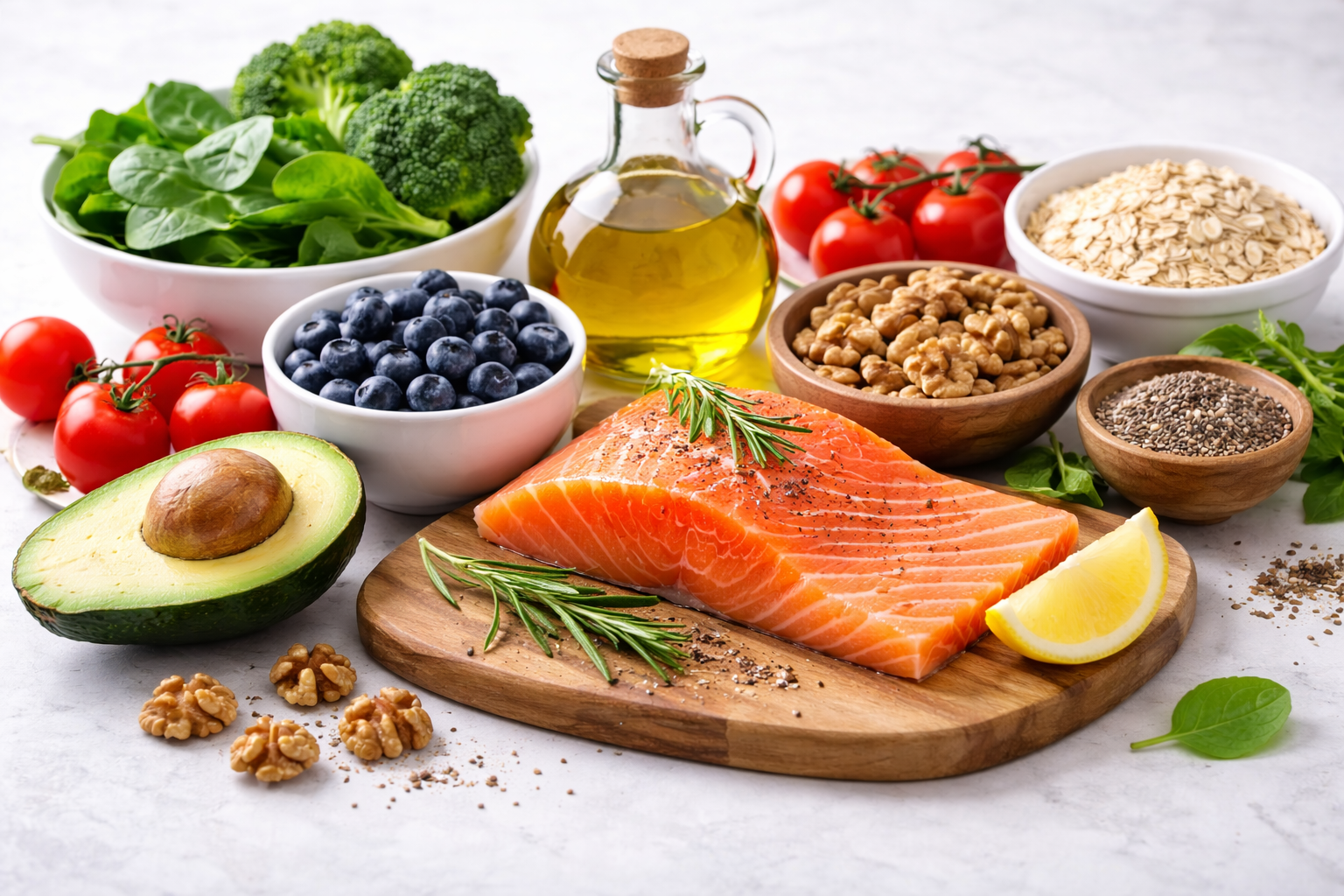
This guide covers the ten best foods for heart health, each with strong scientific support and practical versatility in everyday cooking.
Why Diet Is One of the Most Powerful Tools for Heart Health
The relationship between diet and heart disease has been studied more extensively than almost any other area of nutritional science. Large-scale studies consistently show that people who eat diets rich in whole grains, vegetables, fatty fish, nuts, and olive oil have significantly lower rates of heart attacks, strokes, and cardiovascular mortality compared to those consuming diets high in processed foods, refined carbohydrates, and industrial seed oils.
Dietary improvements can lower LDL cholesterol, reduce blood pressure, decrease inflammatory markers, improve arterial flexibility, and support healthy body weight — all without the side effects associated with pharmaceutical interventions. Food is genuinely one of the most powerful cardiovascular medicines available.
10 Best Foods for Heart Health
1. Fatty Fish
Salmon, mackerel, sardines, herring, and trout are the most evidence-backed foods for cardiovascular protection available. They are the richest dietary sources of EPA and DHA — the long-chain omega-3 fatty acids that reduce triglycerides, lower blood pressure, decrease inflammation, reduce the risk of arrhythmia, and improve overall cardiac function.
The American Heart Association recommends eating fatty fish at least twice per week for meaningful cardiovascular benefit. Canned sardines and mackerel provide the same omega-3 content as fresh fish at a fraction of the cost, making daily or near-daily inclusion entirely practical.
2. Oats
Oats contain beta-glucan — a soluble fiber that has been shown in numerous clinical trials to significantly reduce LDL cholesterol levels. Beta-glucan forms a gel-like substance in the digestive tract that binds to cholesterol-rich bile acids and removes them from the body before they can be reabsorbed.
Eating just three grams of beta-glucan daily — achievable with one bowl of oatmeal — has been shown to reduce LDL cholesterol by five to ten percent. Oats also provide magnesium, potassium, and antioxidant avenanthramides that further support cardiovascular health.
3. Berries
Blueberries, strawberries, raspberries, and blackberries are exceptionally rich in anthocyanins — pigment compounds that give berries their deep colors and provide powerful cardiovascular protection. Regular berry consumption has been associated with reduced blood pressure, improved arterial function, lower LDL oxidation, and decreased inflammatory markers.
A landmark study found that women who ate three or more servings of blueberries and strawberries per week had a significantly lower risk of heart attack compared to those who rarely consumed berries. Fresh or frozen berries are equally effective and can be added to oatmeal, yogurt, or smoothies daily.
4. Dark Leafy Greens
Spinach, kale, Swiss chard, and collard greens are among the most nutrient-dense foods for cardiovascular health. They are exceptionally rich in vitamin K, which supports healthy blood clotting and arterial calcification prevention. They also provide dietary nitrates that relax blood vessels and lower blood pressure, along with folate, magnesium, and potassium.
Higher leafy green intake is consistently associated with reduced risk of heart disease and stroke in population studies. Including at least one to two servings of leafy greens per day provides cardiovascular benefits that are difficult to replicate with supplements alone.
5. Nuts
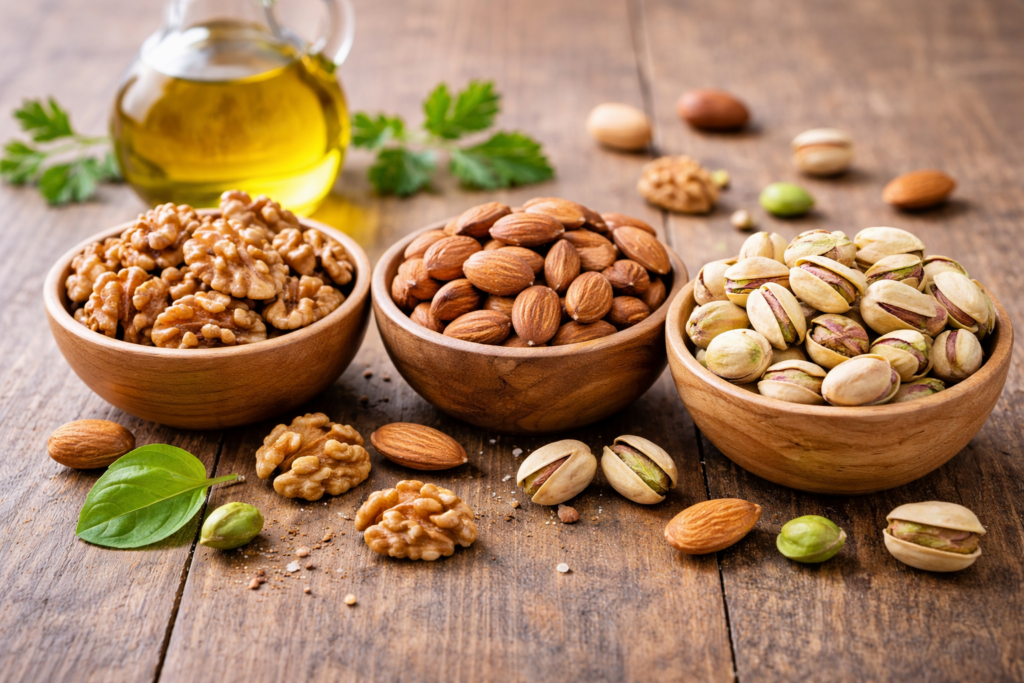
Walnuts, almonds, pistachios, and other tree nuts provide heart-protective benefits through multiple pathways. Walnuts are particularly rich in plant-based omega-3 fatty acids (ALA), while almonds are high in vitamin E and monounsaturated fats. All nuts provide fiber, magnesium, and plant sterols that reduce LDL cholesterol.
Large-scale studies including the PREDIMED trial have found that regular nut consumption significantly reduces the risk of cardiovascular events. A daily handful of mixed nuts — approximately thirty grams — is the most commonly studied dose and represents an easy, practical daily habit.
If you are looking to build a complete heart-supportive eating plan, our guide on the heart-healthy meal plan seven-day guide provides a structured framework to get started.
6. Olive Oil
Extra virgin olive oil is the most extensively studied dietary fat in cardiovascular research, largely due to its central role in the Mediterranean diet. It is rich in oleic acid — a monounsaturated fat that improves cholesterol ratios — and polyphenolic antioxidants including oleocanthal and oleuropein that reduce arterial inflammation and oxidative stress.
The PREDIMED study — one of the largest dietary intervention trials ever conducted — found that a Mediterranean diet supplemented with extra virgin olive oil reduced the risk of major cardiovascular events by approximately thirty percent compared to a low-fat diet. Using olive oil as the primary cooking and dressing fat is one of the most evidence-based single dietary changes for heart health.
7. Legumes
Beans, lentils, chickpeas, and other legumes are high in soluble fiber, plant-based protein, and potassium — a combination that simultaneously lowers LDL cholesterol, reduces blood pressure, and supports healthy body weight. They also have a very low glycemic index, helping to prevent the blood sugar spikes that contribute to cardiovascular inflammation over time.
Meta-analyses of clinical trials consistently find that regular legume consumption reduces LDL cholesterol and blood pressure in a dose-dependent manner. Including legumes three to four times per week as a replacement for refined carbohydrates or processed meat provides particularly strong cardiovascular benefit.
8. Avocado
Avocados are one of the richest food sources of potassium — a mineral essential for blood pressure regulation — providing more potassium per serving than bananas. They are also high in monounsaturated fats that raise HDL cholesterol and reduce LDL cholesterol when they replace saturated or refined fats in the diet.
Research published in the Journal of the American Heart Association found that eating one avocado per day as part of a moderate-fat diet significantly reduced LDL cholesterol in participants with elevated levels. Avocado is also rich in beta-sitosterol, a plant sterol that competes with dietary cholesterol for absorption.
9. Tomatoes
Tomatoes are the richest food source of lycopene — a carotenoid antioxidant that has been specifically linked to cardiovascular protection. Lycopene reduces LDL oxidation, lowers blood pressure, and decreases arterial stiffness. Cooking tomatoes in olive oil significantly increases lycopene bioavailability, making tomato-based sauces and soups particularly heart-protective.
Regular tomato consumption is also associated with reduced levels of C-reactive protein — a key marker of systemic inflammation and cardiovascular risk. Cherry tomatoes, canned tomatoes, tomato sauce, and tomato soup are all effective delivery vehicles for these benefits.
10. Green Tea
Green tea is rich in catechins — a class of polyphenol antioxidants that support cardiovascular health through multiple mechanisms. Regular green tea consumption has been associated with lower LDL cholesterol, reduced blood pressure, decreased arterial stiffness, and lower risk of coronary artery disease and stroke.
Population studies in Japan, where green tea consumption is among the highest in the world, consistently find lower rates of cardiovascular disease associated with daily tea drinking. Two to three cups of green tea per day is the most commonly studied dose for cardiovascular benefit.
Conclusion
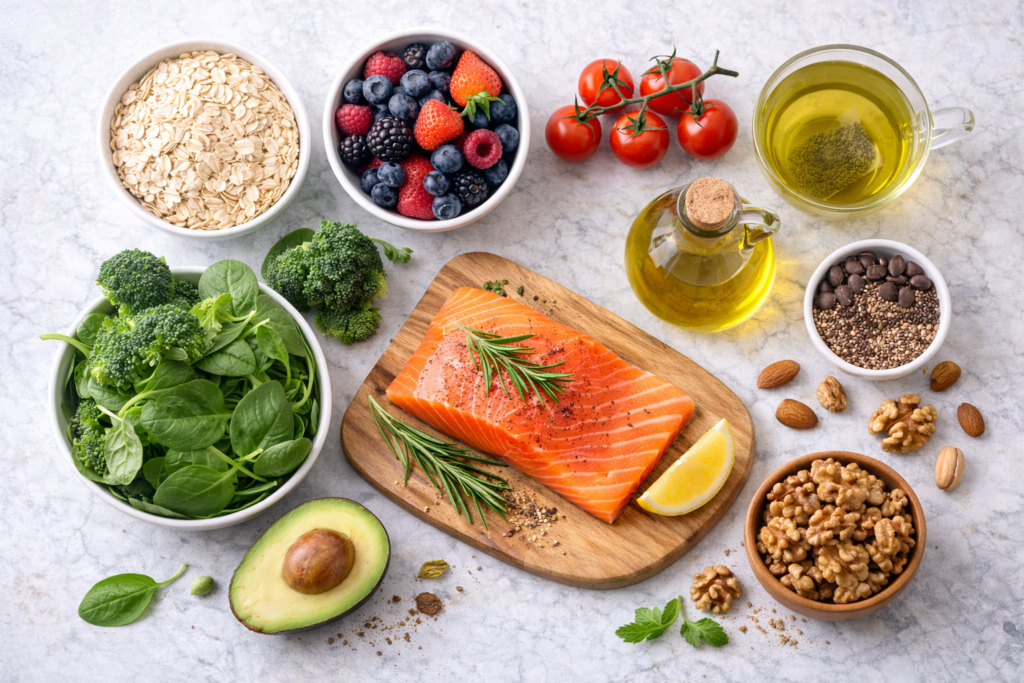
Protecting your heart through diet does not require perfection — it requires consistency and the right foundational choices. Fatty fish, oats, berries, leafy greens, nuts, olive oil, legumes, avocado, tomatoes, and green tea each contribute to cardiovascular health through distinct and complementary mechanisms.
Incorporating these foods into your regular diet creates a comprehensive, evidence-based approach to heart health that supports healthy cholesterol, blood pressure, inflammation, and arterial function simultaneously. Start with two or three additions and build from there — small, consistent changes create the most lasting cardiovascular benefits.
Frequently Asked Questions
What is the single best food for heart health? Fatty fish — particularly salmon, sardines, and mackerel — is widely considered the most evidence-backed single food for cardiovascular protection due to its exceptional omega-3 fatty acid content. However, heart health is best supported by a diverse dietary pattern rather than relying on any single food.
How quickly can diet improve heart health? Measurable improvements in blood pressure and cholesterol can occur within two to four weeks of consistent dietary changes. Reducing sodium, increasing potassium-rich vegetables and fruits, replacing saturated fats with olive oil and nuts, and adding soluble fiber from oats and legumes all produce relatively rapid cardiovascular effects.
Are eggs good or bad for heart health? Current research supports eggs as heart-healthy for most people when consumed as part of a balanced whole-food diet. The earlier concern about dietary cholesterol from eggs raising cardiovascular risk has been largely revised, with saturated and trans fats from processed foods now recognized as more significant drivers of cardiovascular risk than dietary cholesterol.