Introduction
High cholesterol affects hundreds of millions of people worldwide and is one of the leading modifiable risk factors for heart disease and stroke. While medication is sometimes necessary, dietary changes alone can produce significant reductions in LDL cholesterol — often enough to avoid or reduce reliance on pharmaceutical intervention.
The science behind dietary cholesterol management is well established. Certain foods actively reduce LDL cholesterol through several distinct mechanisms — binding cholesterol in the digestive tract, reducing cholesterol synthesis in the liver, replacing harmful dietary fats, and reducing the inflammation that makes LDL cholesterol particularly damaging.
This guide covers the most effective foods for lowering cholesterol naturally, with practical guidance on how to incorporate them into your daily diet for maximum benefit.
How Food Affects Cholesterol Levels
Cholesterol levels are influenced by multiple dietary factors. Soluble fiber reduces LDL by forming a gel that binds bile acids — cholesterol-rich compounds used in digestion — and removes them from the body. The liver must then use circulating cholesterol to produce replacement bile acids, lowering blood LDL as a result.
Plant sterols and stanols, found naturally in vegetable oils, nuts, and seeds, compete with dietary cholesterol for absorption in the intestine, reducing the amount that enters the bloodstream. Monounsaturated and polyunsaturated fats improve cholesterol ratios when they replace saturated fats in the diet. Understanding these mechanisms helps explain why certain foods are consistently recommended for cholesterol management.
Foods That Lower Cholesterol Naturally
1. Oats and Oat Bran
Oats are the most clinically studied food for LDL cholesterol reduction. Their effectiveness comes from beta-glucan — a soluble fiber that forms a viscous gel in the digestive tract and binds cholesterol-rich bile acids before they can be reabsorbed. The liver compensates by drawing on circulating LDL cholesterol to produce new bile acids, directly lowering blood cholesterol levels.
Clinical research shows that consuming three to four grams of beta-glucan daily — the amount in one and a half cups of cooked oatmeal — can reduce LDL cholesterol by five to ten percent. Oat bran provides even higher concentrations of beta-glucan than rolled oats and can be added to smoothies, yogurt, or baked goods.
2. Legumes
Beans, lentils, chickpeas, and peas are among the most effective plant foods for lowering LDL cholesterol. They provide soluble fiber similar to oats, along with plant sterols and protein that collectively reduce cholesterol absorption and synthesis. Replacing one serving of refined carbohydrates or processed meat with legumes per day has been shown to reduce LDL cholesterol meaningfully.
A meta-analysis of clinical trials found that eating one serving of legumes daily — approximately three-quarters of a cup of cooked beans — reduced LDL cholesterol by an average of five percent. Lentil soup, bean chili, chickpea curry, and black bean bowls are all practical ways to meet this daily target.
3. Nuts
Regular nut consumption consistently reduces LDL cholesterol in clinical trials across multiple nut varieties. Almonds, walnuts, pistachios, and pecans all reduce LDL through a combination of monounsaturated and polyunsaturated fats, fiber, plant sterols, and antioxidants that work through different but complementary pathways.
A review of twenty-five clinical trials found that eating a daily serving of nuts — approximately thirty grams — reduced LDL cholesterol by an average of five percent. Walnuts have the additional advantage of being rich in ALA omega-3 fatty acids that further support cardiovascular health beyond cholesterol reduction alone.
4. Fatty Fish
While fatty fish does not directly lower LDL cholesterol, it powerfully addresses another major cardiovascular risk factor — elevated triglycerides. Omega-3 fatty acids EPA and DHA from salmon, sardines, mackerel, and herring reduce triglyceride levels by twenty to thirty percent and increase HDL cholesterol, significantly improving the overall lipid profile.
Replacing red meat and processed meat with fatty fish two to three times per week also reduces saturated fat intake — a dietary change that itself contributes to lower LDL cholesterol. The combination of triglyceride reduction, HDL increase, and saturated fat reduction makes fatty fish one of the most comprehensive dietary strategies for improving overall cholesterol balance.
5. Avocado
Avocados are one of the most potassium and monounsaturated fat-rich foods available. Multiple clinical trials have specifically examined avocado’s effect on cholesterol and consistently found that replacing saturated fat in the diet with avocado reduces LDL cholesterol while maintaining or raising HDL cholesterol — a favorable exchange for cardiovascular risk.
A study published in the Journal of the American Heart Association found that participants who ate one avocado per day on a moderate-fat diet had significantly lower LDL levels than those on the same diet without avocado. Adding half an avocado to daily meals is a practical strategy for improving cholesterol profiles naturally.
For more heart-supportive dietary strategies, you may also want to read our guide on the best foods to lower blood pressure.

6. Olive Oil
Replacing saturated fats from butter, lard, or processed vegetable oils with extra virgin olive oil consistently improves cholesterol profiles. The oleic acid in olive oil raises HDL while either lowering or maintaining LDL levels, and the polyphenol antioxidants in extra virgin olive oil specifically protect LDL particles from oxidation — a critical factor in cardiovascular risk.
Oxidized LDL is significantly more dangerous than standard LDL because it triggers arterial inflammation and plaque formation. Olive oil’s antioxidant content makes it uniquely protective against this process compared to other unsaturated fat sources.
7. Dark Chocolate and Cocoa
High-quality dark chocolate and raw cocoa powder contain flavanols that reduce LDL oxidation, lower blood pressure, and improve arterial flexibility. The stearic acid in dark chocolate — unlike most saturated fats — does not raise LDL cholesterol and is converted in the body to oleic acid, the same heart-healthy fat found in olive oil.
Studies show that regular consumption of dark chocolate with seventy percent or higher cocoa content is associated with reduced LDL cholesterol and improved overall cardiovascular markers. A small daily serving of one to two squares is sufficient to gain these benefits without excess sugar or calorie intake.
8. Flaxseeds
Flaxseeds are one of the richest plant sources of ALA omega-3 fatty acids and also provide significant amounts of soluble fiber and lignans — compounds that reduce LDL cholesterol and decrease LDL oxidation. Ground flaxseeds are significantly more bioavailable than whole seeds because the tough outer shell prevents absorption in whole form.
Adding one to two tablespoons of ground flaxseeds to oatmeal, smoothies, yogurt, or baked goods daily provides measurable LDL-lowering benefits. Clinical trials have shown reductions in LDL cholesterol of six to eleven percent with regular ground flaxseed consumption.
9. Garlic
Garlic contains allicin — a sulfur compound produced when garlic is crushed or chopped — that has been shown to reduce total and LDL cholesterol and inhibit cholesterol synthesis in the liver. Regular garlic consumption is also associated with lower blood pressure and reduced platelet aggregation, providing cardiovascular benefits beyond cholesterol management alone.
Meta-analyses of clinical trials find modest but consistent reductions in total cholesterol of four to eight percent with regular garlic consumption. Using fresh garlic generously in cooking — in sauces, soups, roasted vegetables, and dressings — is the most practical way to incorporate it daily.
10. Barley and Whole Grains
Like oats, barley is exceptionally rich in beta-glucan soluble fiber and provides similar LDL-lowering effects through the same bile acid binding mechanism. Whole grains in general — including brown rice, whole wheat, quinoa, and rye — provide fiber and plant compounds that reduce cholesterol absorption and improve metabolic health.
Research indicates that replacing refined grains with whole grains reduces LDL cholesterol and improves insulin sensitivity, creating a favorable metabolic environment for cardiovascular health. Incorporating barley into soups and stews, choosing whole grain bread, and replacing white rice with brown rice or quinoa are all practical whole grain upgrades.

Conclusion
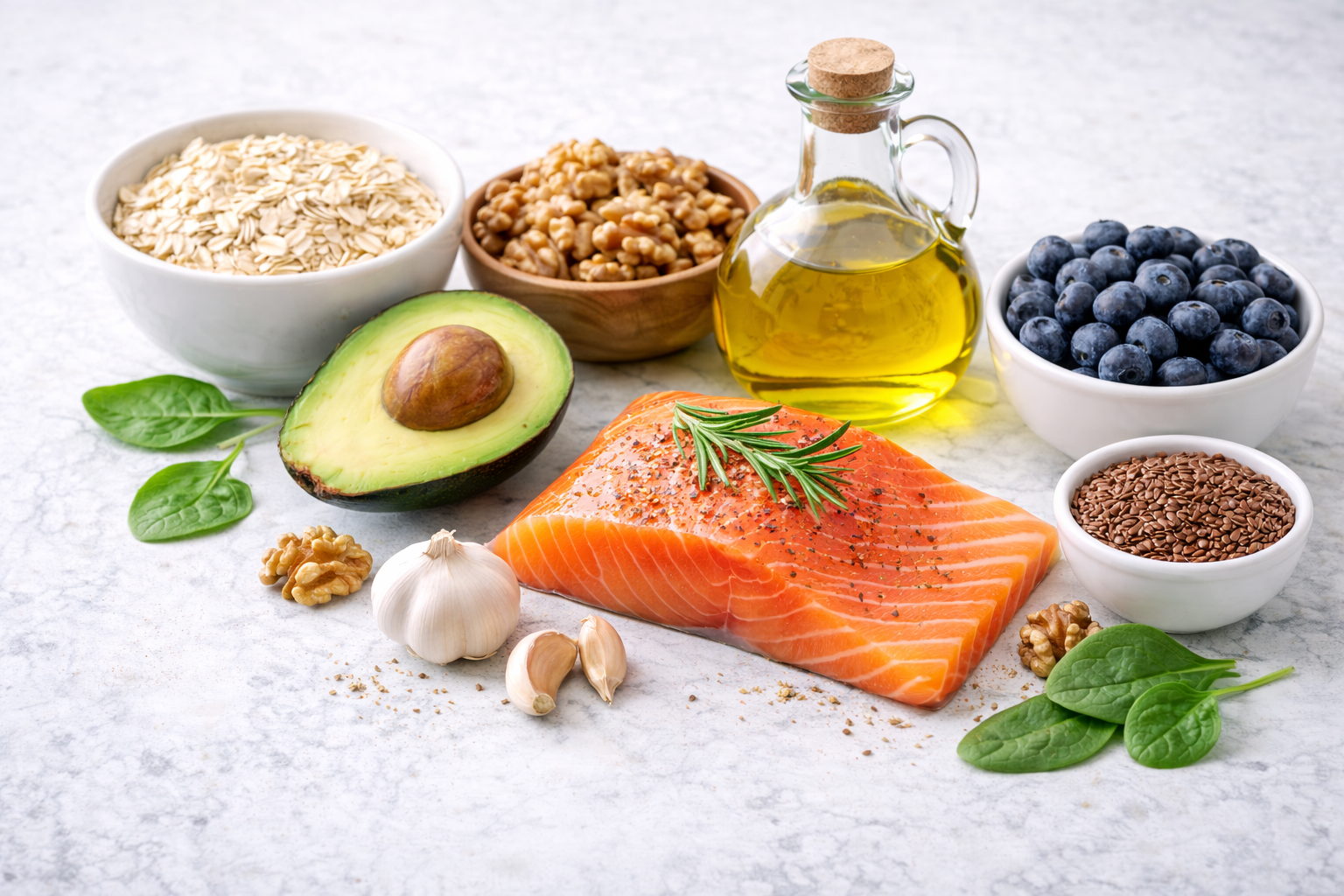
Lowering cholesterol naturally through diet is achievable and well-supported by clinical evidence. Oats, legumes, nuts, fatty fish, avocado, olive oil, flaxseeds, garlic, and whole grains each reduce LDL cholesterol through distinct mechanisms that are additive when combined in a comprehensive dietary pattern.
The most effective approach is not to focus on a single food but to build a dietary foundation around multiple cholesterol-lowering foods simultaneously. Even modest changes — replacing refined carbohydrates with legumes, switching to olive oil, adding a daily handful of nuts, and eating oatmeal for breakfast — can produce clinically meaningful reductions in LDL cholesterol within four to eight weeks.
Frequently Asked Questions
How much can diet alone lower cholesterol? Diet changes alone can reduce LDL cholesterol by fifteen to thirty percent in motivated individuals who make comprehensive dietary changes. The most impactful strategies include replacing saturated fats with unsaturated fats, adding soluble fiber from oats and legumes, and including nuts and plant sterols daily.
How long does it take for food to lower cholesterol? Measurable reductions in LDL cholesterol typically appear within four to eight weeks of consistent dietary changes. The most rapid responses are seen with the addition of beta-glucan fiber from oats and barley, and the replacement of saturated fats with olive oil and nuts.
Are plant sterols effective for lowering cholesterol? Yes. Plant sterols and stanols — found naturally in nuts, seeds, vegetable oils, and some fortified foods — consistently reduce LDL cholesterol by seven to twelve percent when consumed at doses of two grams per day. They work by competing with dietary cholesterol for absorption in the intestine.